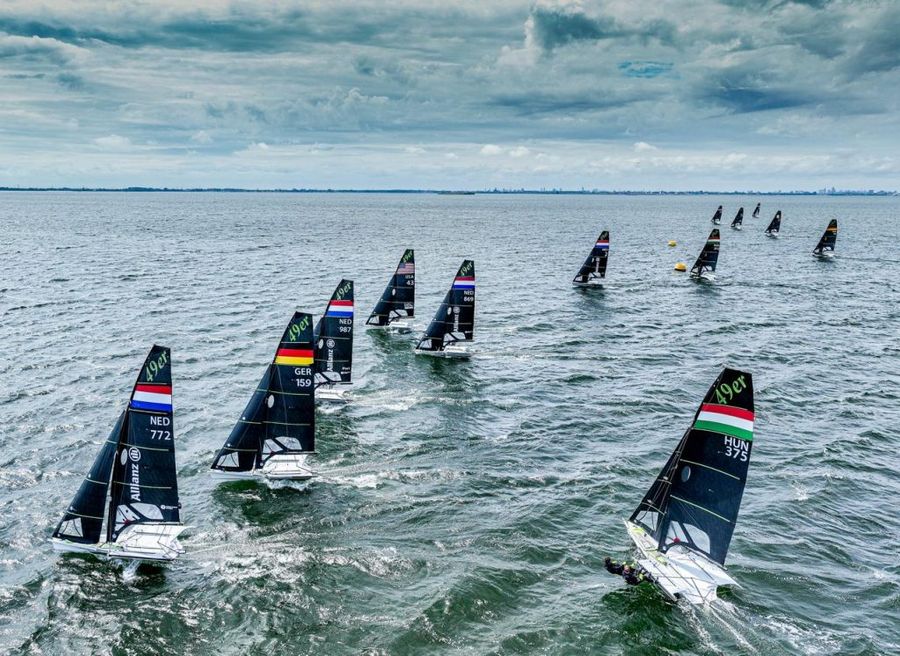
Racing on the IJmeer off the coast of Almere delivered a tough opening day for the Sailing Grand Slam, with squalls pushing gusts to 25 knots over a base wind of 12 to 15 knots and enough directional shifts to keep the race committee waiting for a stable window before getting under way. Once conditions settled, three races were completed for the 49er fleet before the end of the day.
Almere is the third stop on the Sailing Grand Slam circuit this season, following Palma de Mallorca and Hyères, with Kiel and the United States still to come. The circuit is the global World Cup series for Olympic classes in the lead-up to Los Angeles 2028.
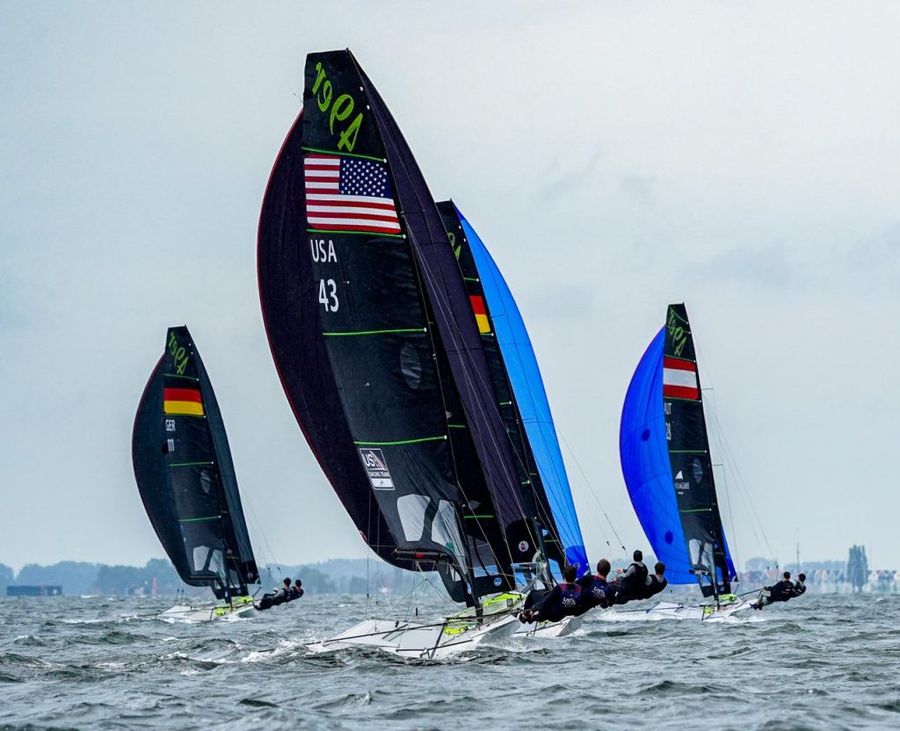
American pair Andrew Mollerus and Trevor Bornarth lead the 49er standings after day one, having finished fifth at the previous Grand Slam in Hyères. "We have this event, then another Grand Slam in Kiel, and then the Europeans. It's only going to get more intense from here, so we're just trying to see what we can learn from this," Mollerus said.
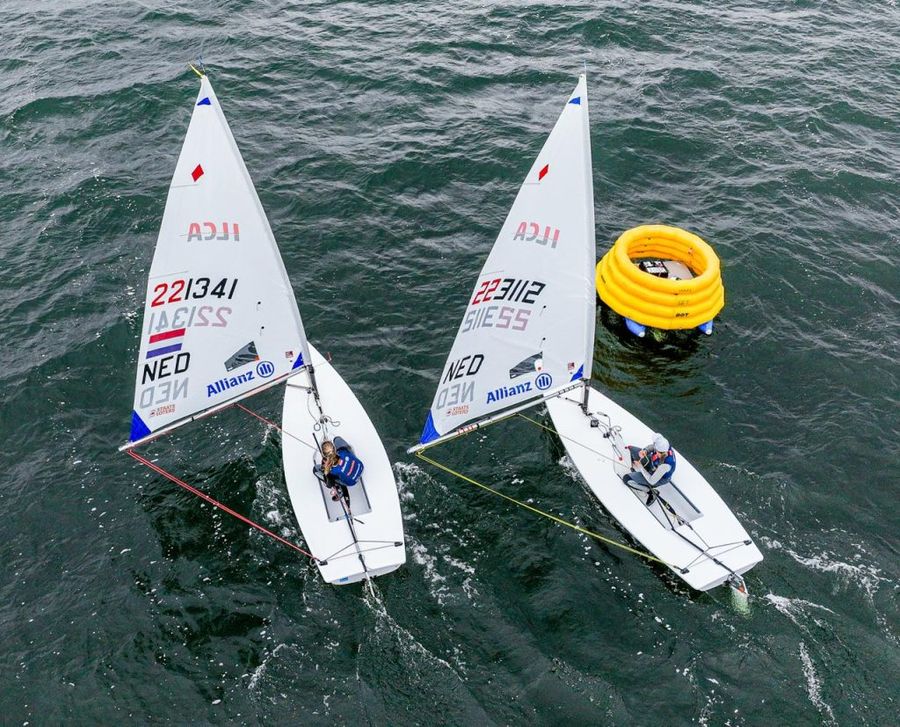
The ILCA fleet is smaller than the sixty-boat fields typical at major championships. Dutch sailor Willem Wiersema saw that as useful preparation rather than a limitation. "Normally, you only encounter such a small fleet at the very end of a regatta during the top-ten medal race. That introduces a very specific dynamic that is almost impossible to replicate in standard training. Here, we can simulate that exact scenario for an entire week and focus entirely on executing our own race."
ILCA 6 sailor Roos Wind, who recently took silver at the U23 World Championships, made a similar point about the compact format. "Because the courses are shorter, the sequence of mark roundings happens much faster. That forces you to prepare your starts and maneuvers with extreme precision."
Wind was candid about her own day. "To be honest, today didn't go very well; I missed the shifts tactically a few times. But that's fine. These regattas are intended precisely for these types of learning moments. We will analyze the data with the coach and adjust our approach for tomorrow."
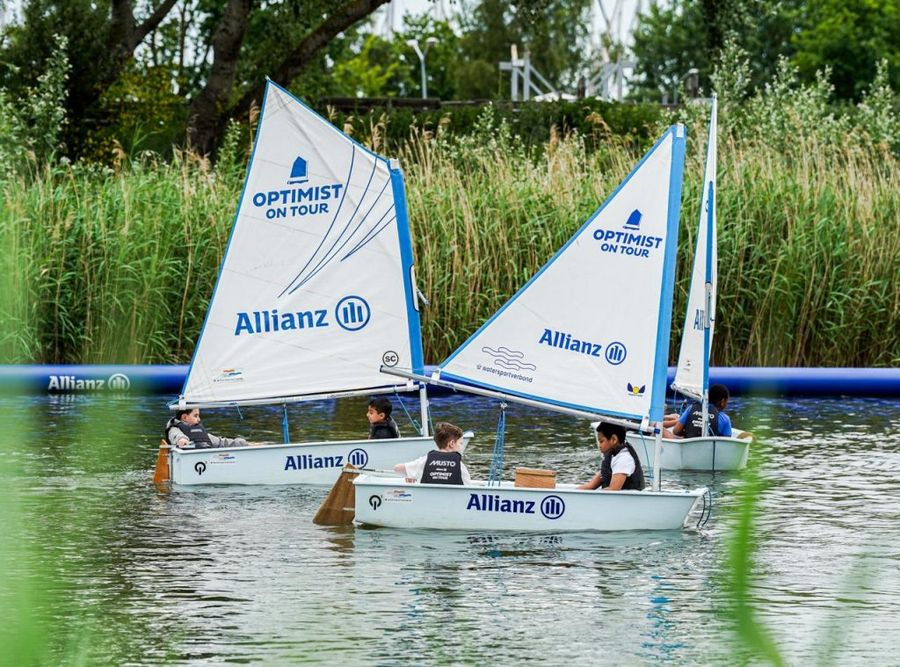
Away from the racing, the Dutch Water Week programme brought local primary school children to the water for free introductions to sailing, canoeing, and stand-up paddleboarding through the Optimist on Tour initiative.