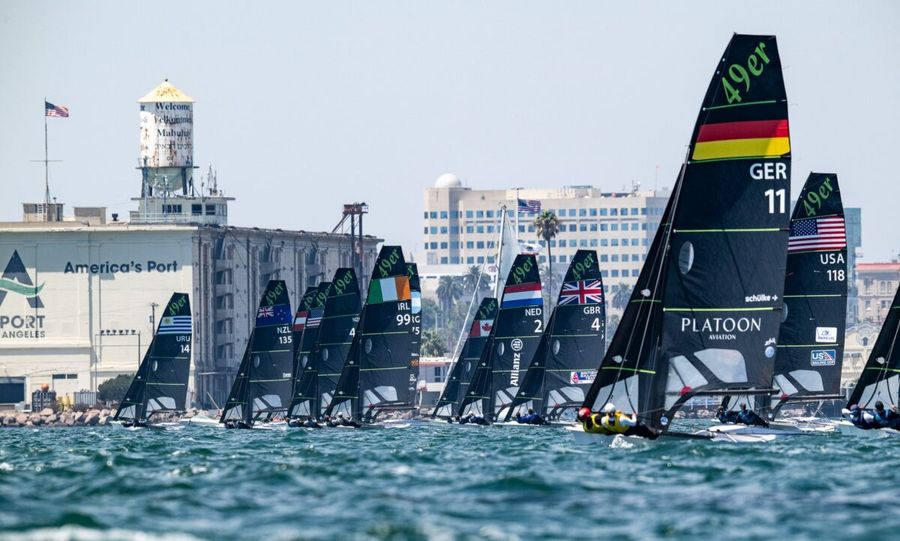
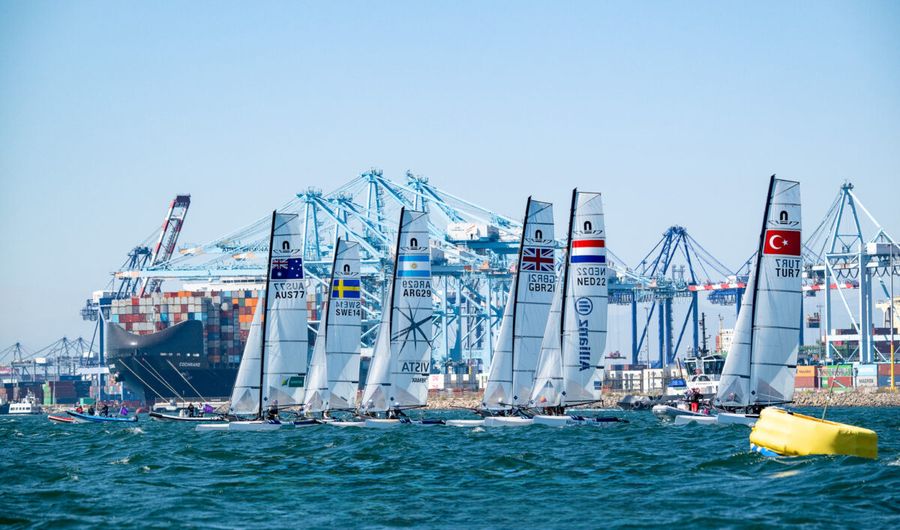
Three nations claimed the top honours at the San Pedro Olympic Classes Regatta's second week, with Sweden sweeping the 49erFX and Nacra 17 titles and Germany taking the 49er, all on the water earmarked for LA 2028.
Vilma Bobeck and Ebba Berntsson won the 49erFX after a week that, by their own admission, didn't start smoothly. Bobeck was among those stung by San Pedro's local stingray population in the early days. "I made some friends," she laughed. "Or perhaps not!"
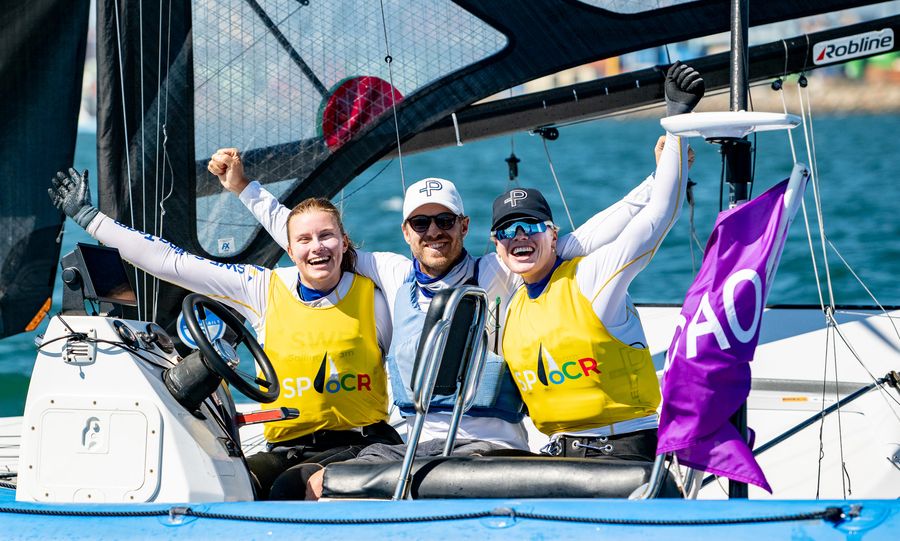
The Swedish pair entered the medal races in first and never relinquished it, finishing second in the opening sprint before winning the final race of the regatta. The turnaround came down to simplicity. "We for sure learnt how to keep it simple throughout the week," Berntsson said. "We did not in the beginning."
With a nine-point cushion heading into the Final, they executed when it mattered. "We just enjoyed it. It was so much fun," Bobeck said. Berntsson put the significance of the venue plainly: "It's here we want to be at our best."
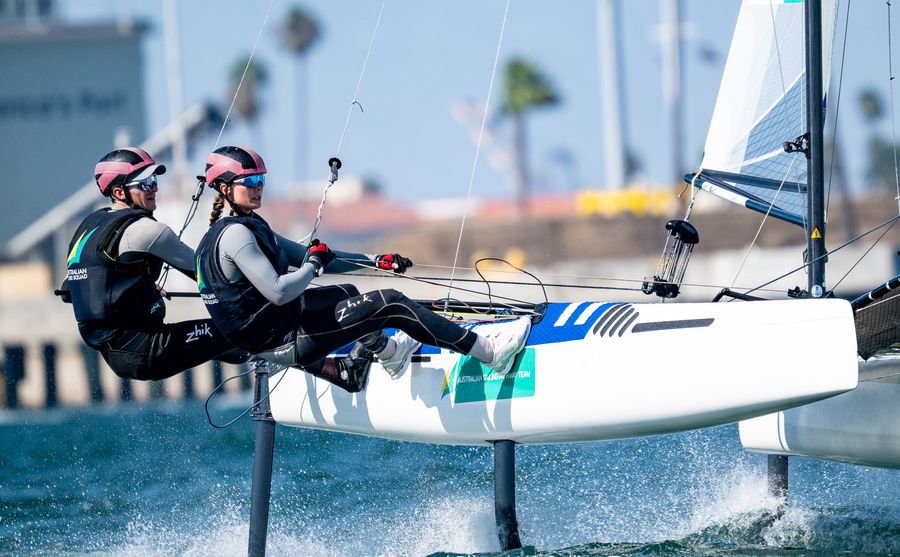
Germany's Richard Schultheis and Fabian Rieger led the 49er fleet from start to finish. They won the opening medal race and finished second in the last, their consistency across the qualifying series leaving little room for the compressed medal race scoring to threaten them. "It's race after race, and then keep it clean," Rieger said.
Great Britain's James Grummet and Rhos Hawes won the final medal race to claim silver. Uruguay's Hernán Umpierre and Fernando Diz took bronze despite a difficult mid-week that included equipment problems and an OCS, which had dropped them down the standings before they recovered to finish third overall.
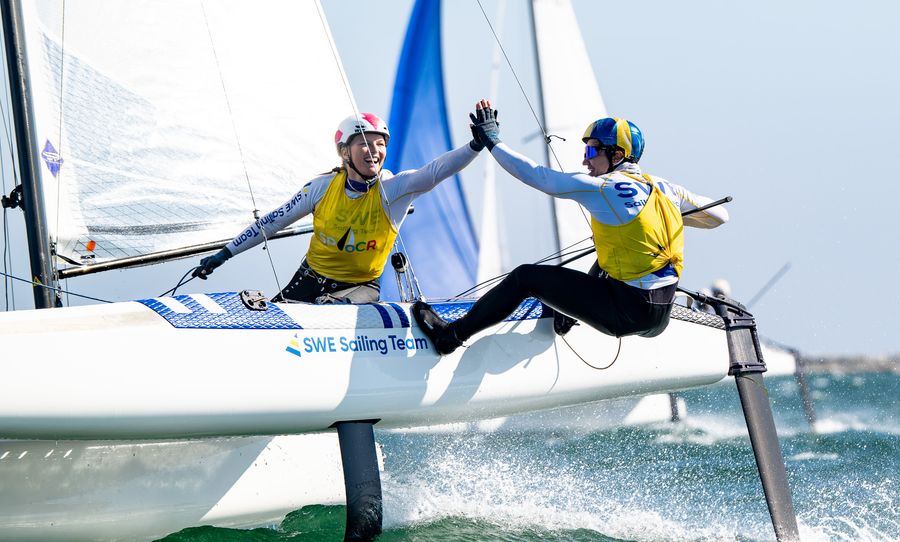
The Nacra 17 title went to Sweden's Emil Järudd and Hanna Jonsson after a patient climb up the standings. Third after day one, second by day three, they moved into the outright lead on day four and carried a one-point advantage over Great Britain's Gimson and Burnet into Sunday's medal races.
Gimson and Burnet had a week to forget, then remember fondly. A UFD on day two and a DSQ on day three left them fifth. "I feel like we've been collecting every letter in the alphabet," Gimson said on Wednesday. Eight consecutive top-three finishes from Thursday onward hauled them back to second. They couldn't close the gap on the Swedes, though, who held their nerve through two tense races to clinch it.
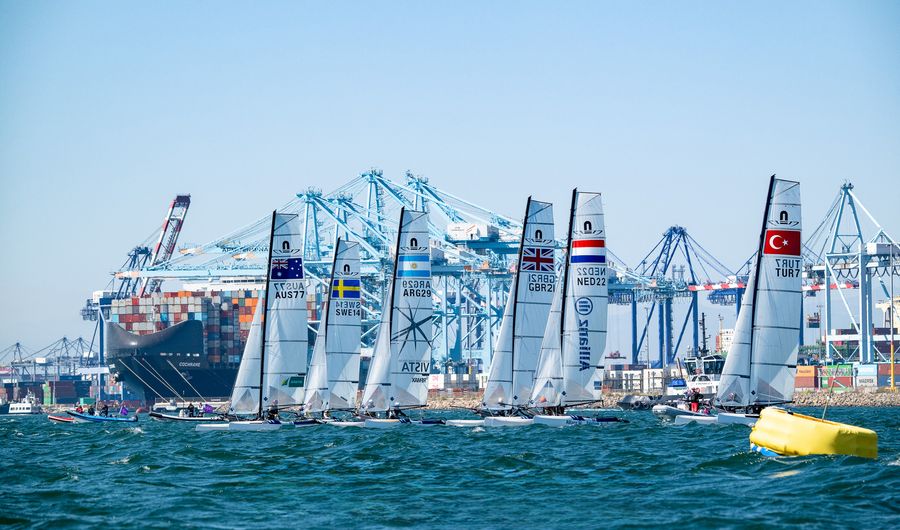
"You really had to keep your head out of the boat," said Jonsson. "Just try to fly high and go as fast as you can." Järudd added: "It's the most intense teamwork you can imagine, which makes it really fun."
The Netherlands' Willemijn Offerman and Scipio Houtman finished third in the Nacra fleet. They spent much of the week experimenting and learning the venue, the breeze off the breakwater doing things neither had quite seen before. "Every day is just a little bit different, and recognising what works and what doesn't is an important lesson here," said Houtman. "The devil is in the detail," Offerman added.
The second week drew 140 competitors from 20 nations, among them 27 Olympians and seven Olympic medallists. For most, the results are only part of what they take home. What they've learned about the conditions, start-line dynamics, and tactical patterns on this stretch of water will feed two years of preparation ahead of the 2028 Games.