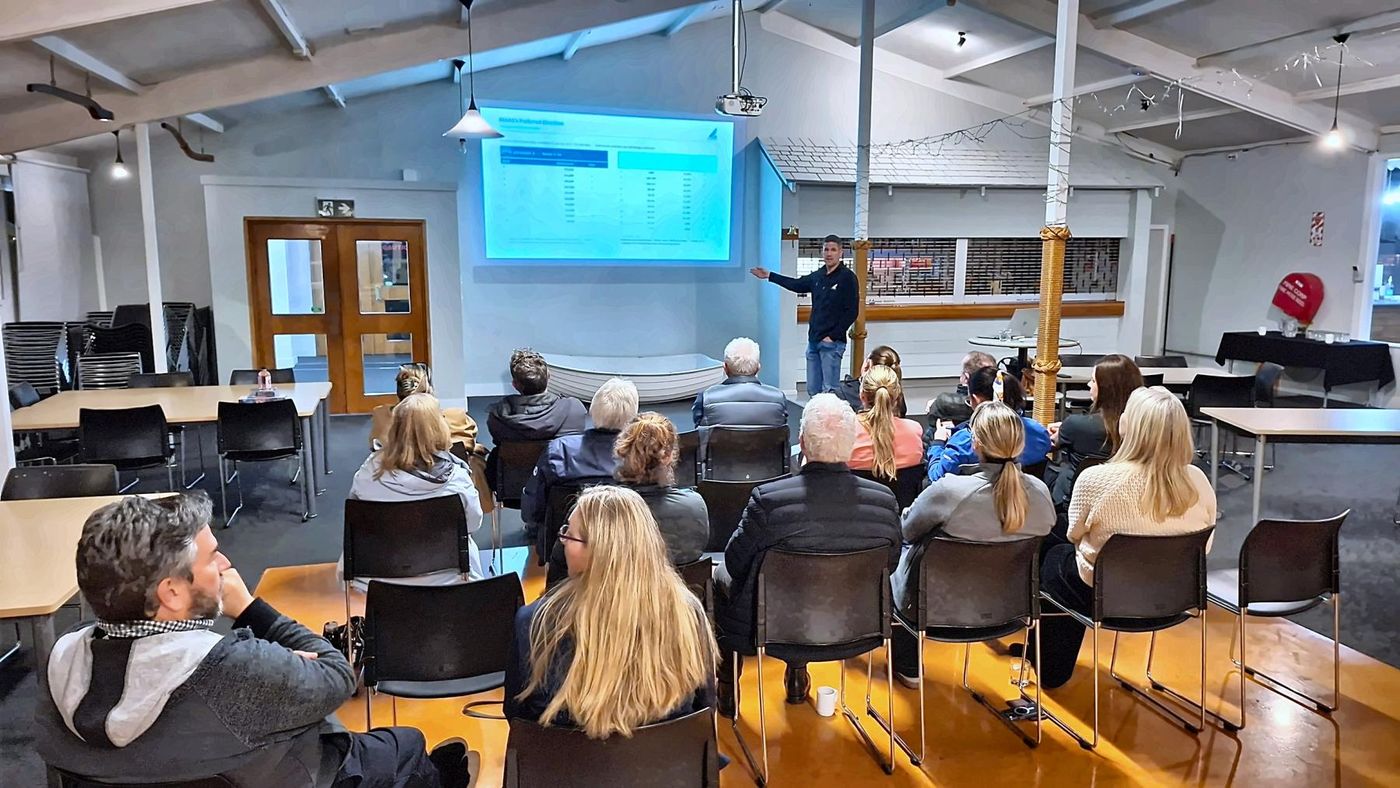
Yachting New Zealand chief executive Steve Armitage has written to clubs addressing the questions raised during last week's Club Roadshow, where value, cost and participation dominated discussions in halls and clubrooms around the country.
Clubs, boaties, sailors and parents are asking whether the sport is delivering value for what it costs, and whether the current model still stacks up, Armitage says. Those, he adds, are the right questions to be asking.
The pressure isn't unique to sailing. The most recent National Sport Club Survey, covering 747 clubs across more than 78 sports, found the number of clubs reporting financial deficits has doubled since before Covid. Facilities, insurance and running costs are all climbing, families are feeling the pinch of participation, and volunteers are carrying more of the load.
The Institute of Directors' latest report on sport governance reaches a similar conclusion: expectations on sport have grown faster than the funding and support available to meet them, often through models built for a different era. Armitage says that doesn't shrink the challenge, but it does mean sports are more likely to find answers by working together.
On the money itself, Armitage is direct. Yachting New Zealand's core income comes from affiliation fees and investment from Sport NZ, alongside grants and commercial partnerships. Sport NZ participation funding is tied to specific outcomes, while affiliation fees fund the services clubs and their members rely on. The principle applied is that every affiliation dollar is invested in resources that support clubs, though Armitage concedes there will always be debate about how best to allocate that funding given the varying needs across the club system. That, he says, is healthy.
Affiliation connects 106 clubs into one national sport. It gives members the right to race under the Racing Rules of Sailing, from club level to national and international events. It also enables advocacy with local and central government, provides safety regulations and training, officials, race management and coach training, and supports clubs' access to community and gaming trust funding. Every club gets a vote on the direction of the sport.
Much of that work happens quietly in the background, and Armitage wants clubs and their members to see more of it. Clubs can expect to hear more about what's being done on their behalf.
Alongside these core services, the focus is on reducing the costs clubs carry and bringing wider benefits to members. A club management tool is under development, designed to lift the administrative load off club volunteers and cut the cost of the separate systems many clubs currently pay for. New partnerships and more targeted member benefits are also in the works, so the cost of running the sport doesn't keep falling on clubs and their members.
Members challenged Yachting New Zealand to look again at how affiliation works at last year's AGM. A proposed new model will now go to members at the upcoming AGM. Armitage thanked Andrew Robertson and the members of the Membership Affiliation Advisory Group (MAAG) for their time and support in progressing towards that proposal, and was clear that whatever the outcome, the focus on delivering the work outlined won't change.
The MAAG process and the Club Roadshow pointed to the same thing: the people closest to the sport know what's working and what isn't. That feedback is already shaping the work, from the affiliation proposal to the tools and benefits being built for clubs.
Sailing and boating, like every sport, has to keep evolving to stay relevant to how people want to take part today. Yachting New Zealand says it is committed to evolving with it, and to keeping clubs informed as the work progresses.