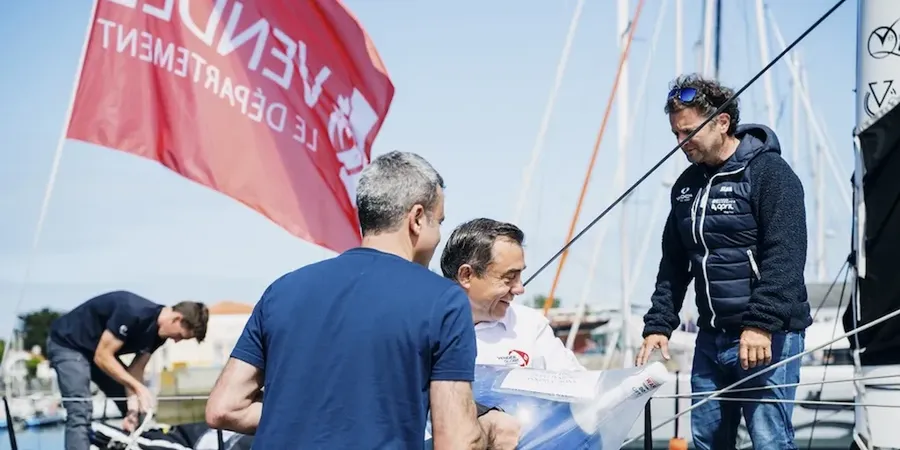
Three competitors in the Vendée Arctique took on an unusual piece of cargo this week, hoisting 28-kilogram weather buoys aboard their IMOCA yachts to gather ocean data and sharpen forecasting models across the northern hemisphere.
Francesca Clapcich aboard 11th Hour Racing, Arnaud Boissières on April Marine, and Manu Cousin sailing Coup de Pouce each accepted a buoy on Friday morning. Getting those buoys aboard was no small task, and Boissières marked the occasion with a joke about the effort: "A heavy weight for the IMOCA, a giant leap for mankind."
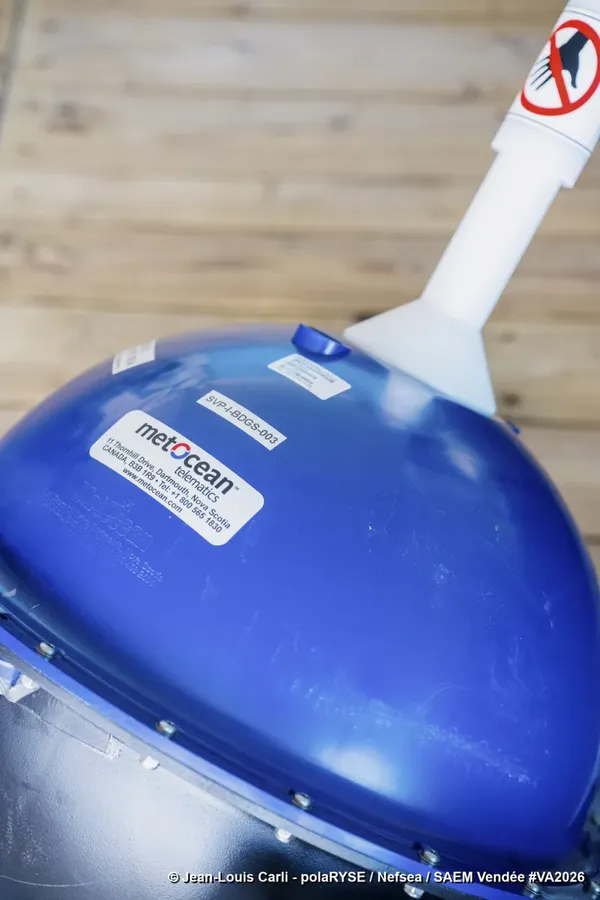
The instruments are built to record atmospheric pressure, sea temperature, and surface currents. Sébastien Peré from Météo France explained what the buoys will contribute. "They let us take the pulse of the planet, understand ocean health with precision, track current changes and monitor climate shifts," he said. In a race where weather routing so often determines the outcome, there is something fitting about competitors themselves becoming floating weather stations.

Data gathered by the buoys flows back to forecasters in real time. Three instruments positioned across Arctic waters will close gaps in the measurement network covering the broader ocean. Meteorologists piece together information from satellites and deployed buoys to build the models that offshore racers depend on for routing decisions. In a race of this length, a current prediction out by a tenth of a knot, or a pressure system displaced by 50 kilometres, can translate directly into hours lost or gained on the water.
For the three skippers, those buoys represent ballast with a purpose well beyond their own race results. All three are pushing hard through some of the most demanding conditions the planet offers, managing boat speed and competitive position at the same time. An extra 28 kilos is not trivial, yet all three agreed to carry it, converting their yachts into mobile research platforms. The arrangement works both ways: the race fleet gains access to sharper forecasts, while the forecasters receive data gathered from the remote ocean areas where their measurement networks need it most.