The countdown to Tour Voile 2026 has entered its final weeks. Within a month, France's flagship offshore racing event will depart Normandy and spend a fortnight threading competition, public spectacle, and maritime drama along the national coastline.
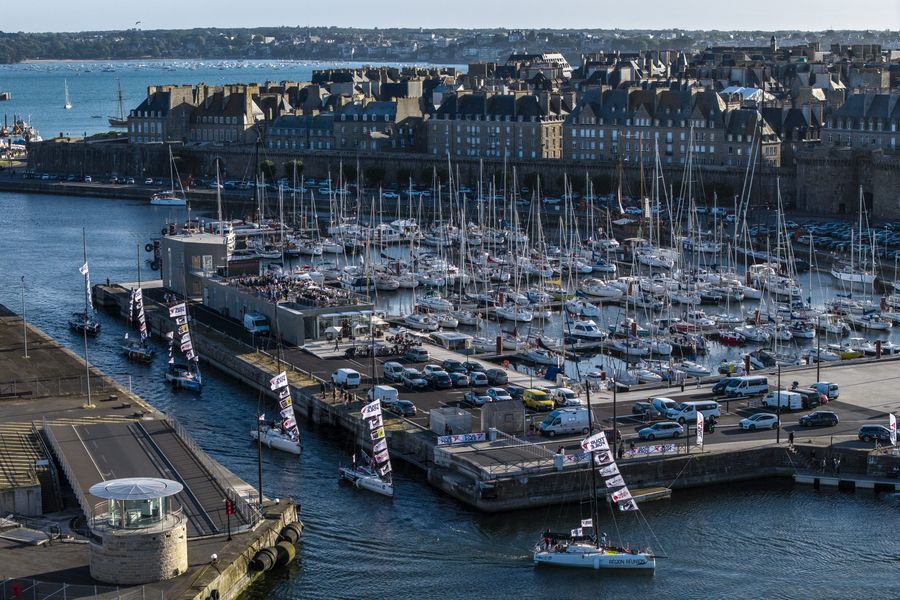
Calling Tour Voile simply a yacht race does the event a disservice. It travels more like a mobile festival, arriving in each port and turning the waterfront into the temporary heart of French sporting life. Sailors step ashore and find themselves metres away from spectators, sponsors, and curious locals, all drawn to the immediacy of high-performance racing. For the length of each stopover, the sea reasserts itself as the defining feature of whatever community the fleet has chosen to visit.
A Crucible for Young Talent
Few events in French sailing carry a reputation quite like Tour Voile's when it comes to developing the next generation of competitors. Over decades it has established itself as a genuine proving ground, one that tests crews not only on technical ability but on the mental and physical resilience that offshore racing ultimately demands. Many of the names now regarded as leading figures in French and international ocean racing first discovered the outer limits of their potential here, in conditions that reward neither complacency nor timidity. It is an environment where ambition either hardens into something durable or is exposed as insufficient.
Much of that character comes from the sheer variety the event presents. Each leg arrives with its own wind patterns, tidal quirks, and tactical puzzles, shaped by the particular nature of the waters being raced. Norman anchorages behave differently from Mediterranean harbours, and no two stopovers hand competitors the same set of problems to solve. Across a single campaign the fleet traces a broad arc of French maritime culture, each venue adding its own identity to the larger story the race is telling.
A Catalyst for Coastal Communities
Some sporting events pass through a place without leaving the faintest impression. Tour Voile sits at precisely the opposite end of that scale. Every starting line becomes a genuine arena, capable of drawing collective attention in a way that few other occasions can match. Every finish carries a narrative with it, one that resonates well beyond the sailing community. On the quaysides between departures and arrivals, sailors, partners, enthusiasts, and local residents share the same space and the same energy, which is exactly what host communities are seeking when they invite the race to their waters.
The competitive format sharpens all of this further. Buoy roundings become moments of concentrated human effort, and stretches of everyday coastal water are briefly converted into stages for sporting theatre that can hold its own against any backdrop. Crowds gather for each departure, and each arrival delivers another fresh account of decisions made and difficulties endured out on the water.
With May 2026 now almost upon them, organisers, sailors, host ports, and broadcasters are deep into final preparations. Spinnakers will be climbing masts again within weeks. The first mark roundings of the new edition will come soon after, and another chapter in a long and storied history will begin to take shape, written by whatever combination of emerging talent and seasoned experience the entry list assembles against the French coastline.
For sailors still building their names, for ports celebrating a maritime heritage they are proud of, and for French sailing fans who want genuine competition rather than spectacle alone, Tour Voile 2026 carries both the reassurance of continuity and the anticipation of something new. The formula is what it has always been: a race capable of surfacing talent, bringing life to the places it visits, and expressing, port by port, how deeply France's identity remains bound up with the sea.