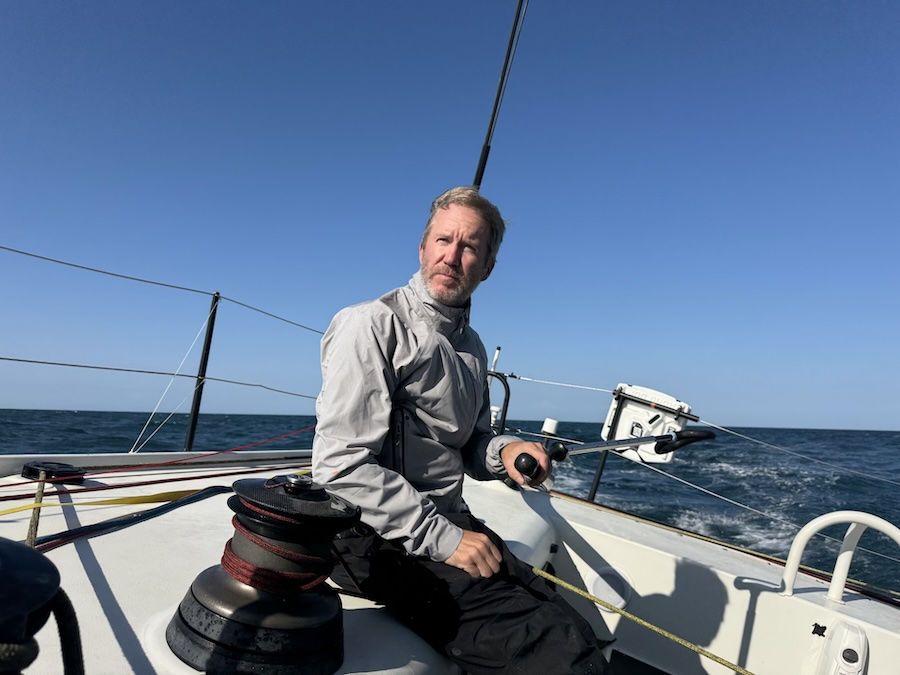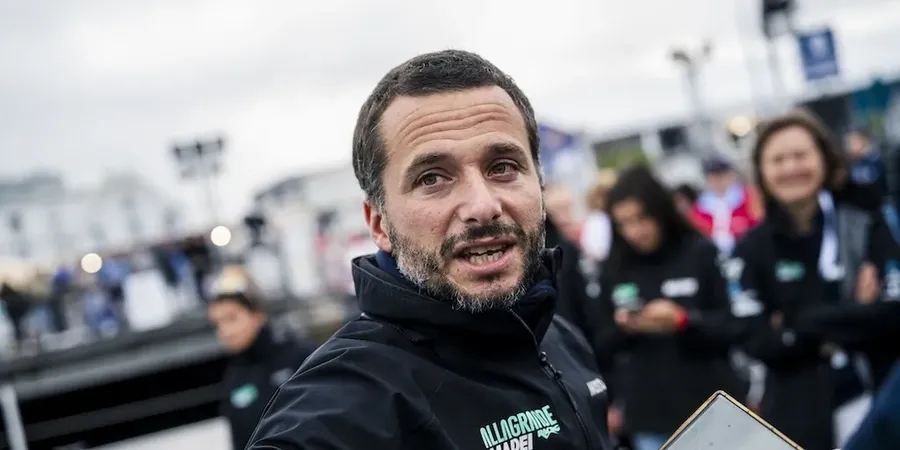
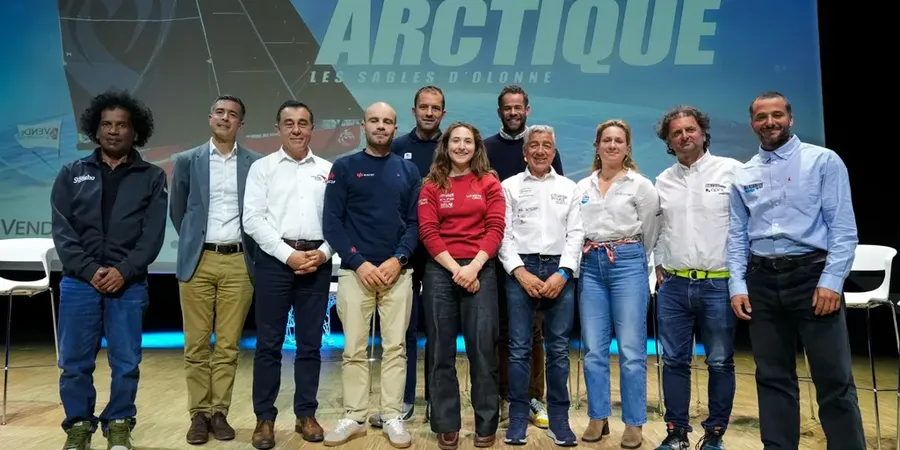
Nine IMOCA skippers will depart Les Sables d'Olonne on 7 June for one of the most unconventional races offshore sailing has ever staged. The Vendée Arctique 2026 sends its fleet toward the Arctic Circle with no prescribed course, no virtual gates, and no enforced corridor. Each competitor must cross 66 degrees North and then find their own way home, making every strategic call entirely alone on the open North Atlantic.
Organisers expect the racing to last somewhere between eight and ten days, with the frontrunners anticipated back in Les Sables d'Olonne between 15 and 17 June (NZST). Whoever crosses the finish line first will have built a passage around polar conditions and storm systems using nothing but their own judgment.
The starting fleet of nine is a varied one. Three women are among the skippers, four nationalities are represented, and a number of sailors are entering this kind of competition for the first time. Five of the nine are French: Arnaud Boissières, Élodie Bonafous, Manuel Cousin, Nico d'Estais, and Violette Dorange. Ambrogio Beccaria will race under the Italian flag, while Francesca Clapcich competes under both Italian and American colours. Sam Goodchild lines up under the Franco-British banner, with Corentin Horeau completing the nine.
Each skipper arrives at the start with their own sense of what this race means. Goodchild has talked about the pull of the polar day, of crossing the Arctic Circle at midnight beneath a sun that simply will not go down. For Beccaria, the race carries symbolic weight, representing an opportunity to expand the boundaries of IMOCA competition and push innovation within the class. Boissières is drawn by the white nights and extreme landscapes, the sort of conditions that make a race feel genuinely worth doing. Cousin carries an additional layer of meaning, departing from his home port of Les Sables d'Olonne at the start of something unprecedented. D'Estais has suggested that no two skippers are likely to settle on the same route north, a prediction that seems as plausible as any at this stage.
The Vendée Arctique carries Grade 2 status, and the decisions made during these nine days will extend well beyond the finish line. The race awards 200 points toward the 2028 Vendée Globe and formally opens the qualifying cycle for that campaign, meaning the choices each skipper makes in Arctic waters carry consequences stretching years into the future. Yannick Bestaven, winner of the 2020-21 Vendée Globe, has been appointed safety consultant for the event.
Race president Alain Leboeuf has been direct about how the event should be understood. The Vendée Arctique is not a warm-up act or a stepping stone to something larger. It stands alone as a test of bold decision-making in conditions where there is little margin for error. The Southern Ocean has long been the arena in which these sailors are measured, but the Northern Lights will now provide the backdrop as boats and skippers reveal what they are genuinely made of.
From 30 May through to the 7 June start, Les Sables d'Olonne will host a free public village on the Vendée Globe esplanade. Visitors will be able to meet the skippers, watch drone displays, and see the boats push through high-speed runs in the bay before the fleet turns north and heads into the unknown.