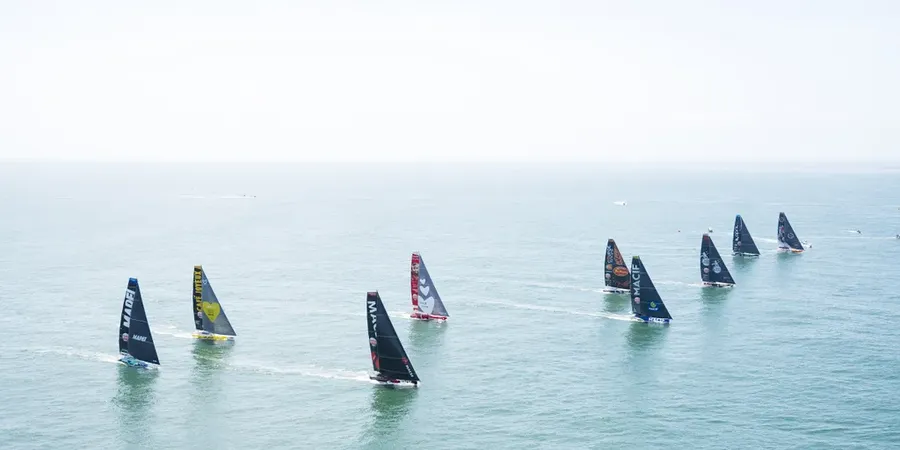
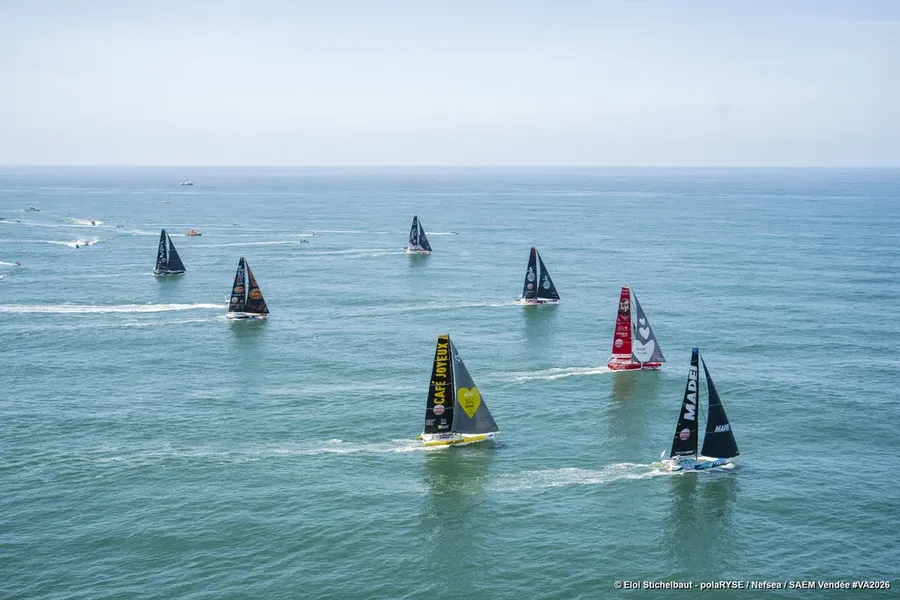
Nine IMOCA yachts eased away from Les Sables d'Olonne at 15:02 NZST on Sunday, 3 June, departing in south winds of just 4 to 7 knots. The pace was unhurried, yet no one aboard carried any illusions about what was coming. Tactical decisions would sharpen at the bay mouth within hours, overnight passages would demand relentless attention, and a front forecast to arrive by Monday morning would push the fleet hard toward Irish waters. The Vendée Arctique offers no settling-in period.
By midweek the forecast threatens to splinter into conflicting options, none of them offering any certainty of reward. That uncertainty runs through the race's entire premise, sending nine crews into latitudes that most IMOCA skippers have rarely, if ever, visited. The Arctic circle is waiting.

Featherweight conditions rarely reward good instincts cleanly. Instead, they allow small errors to accumulate quietly across the miles until they become very difficult to undo. Corentin Horeau from MACSF had already mapped two distinct routing options before the start: one carrying the fleet offshore, the other keeping it close to the coast. "It's knitting work at the beginning," he said, a phrase that captures the meticulous, patient concentration that negligible breeze demands. Handling unpredictable airflows while the sea state builds underneath requires sustained focus rather than bold gestures. Viewed from a distance, the departing fleet looked less like a purposeful racing pack and more like a group of walkers standing at an unsigned crossroads, each reading the same situation and reaching a different conclusion.
Élodie Bonafous, sailing Association Petits Princes, brought a more pragmatic outlook to the opening miles. The day before departure had offered usable patches of wind to exploit; by the start those patches had thinned considerably. "On the water, you deal with what's there. You push the boat forward and hunt the wind when it shifts." That philosophy may well carry through the entire opening act of this race, accepting the conditions that actually exist rather than chasing a plan built around conditions that do not.
The calm was always going to be short-lived. A front was expected to redraw fleet positions by Monday morning, after which building pressure would send the nine boats driving toward Celtic waters. For now, they had simply begun.