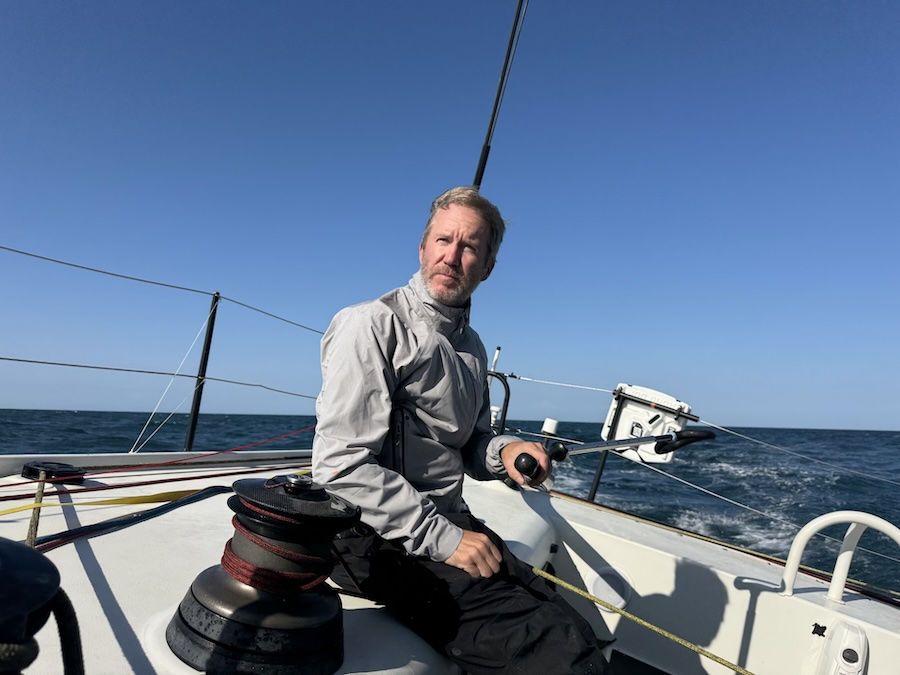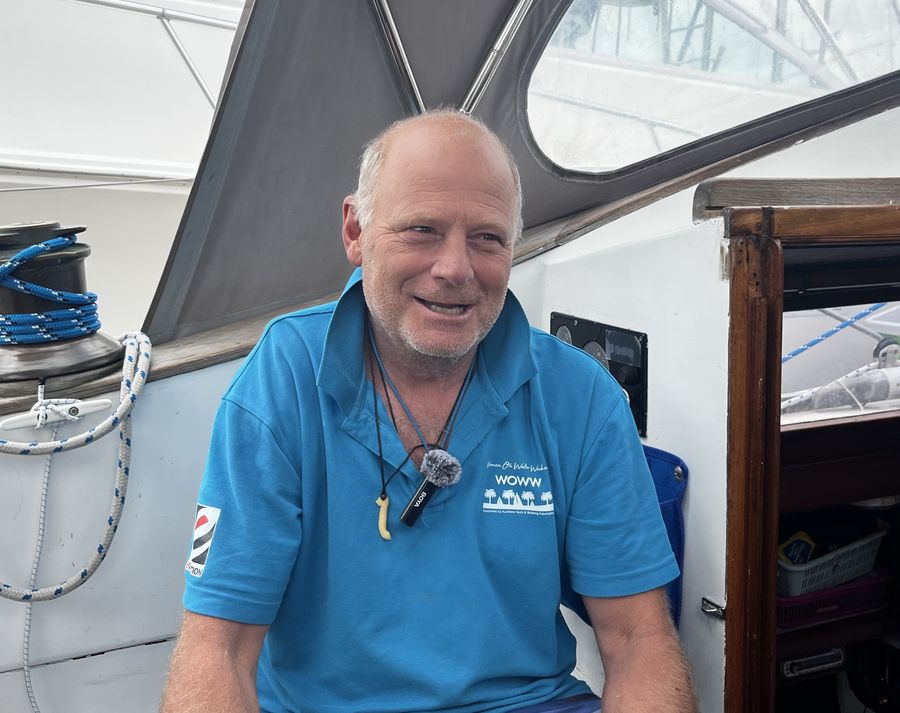
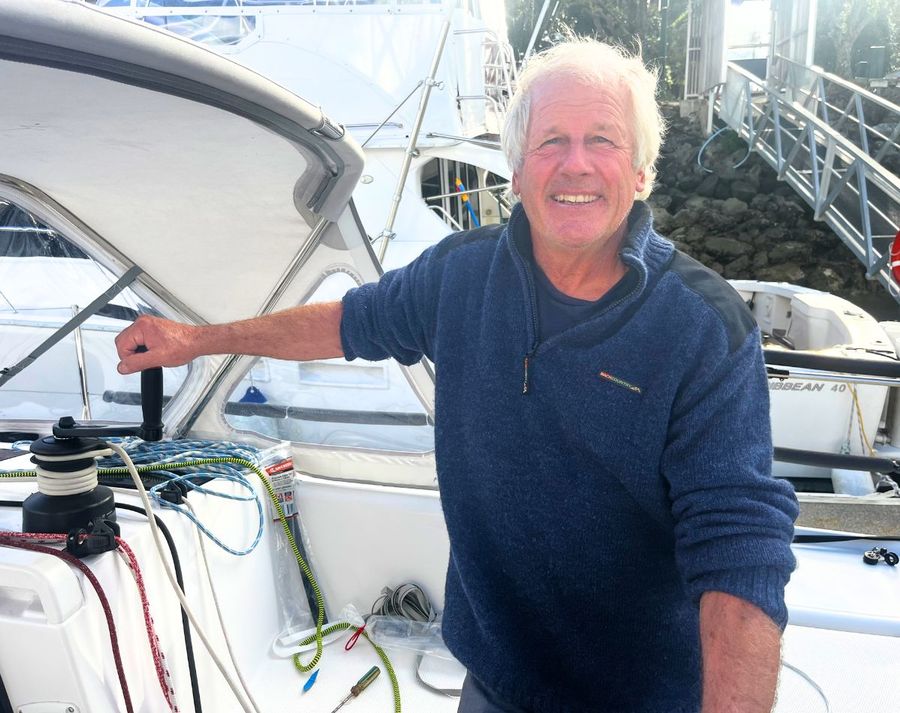
Terry Dunn spent the better part of three months getting Marara, his Sparkman and Stephens 34, ready for the 2026 Solo Trans-Tasman Yacht Challenge. The mast came down, the rigging was redone, and the systems were gone through one by one. She was nearly ready.
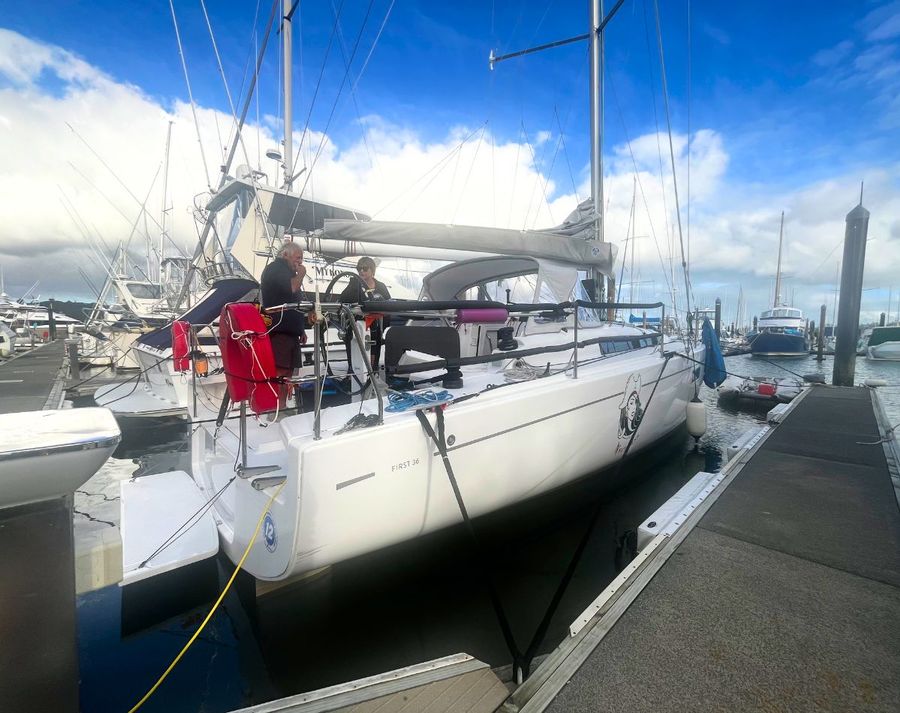
Then a conversation with an Australian racing friend took an unexpected turn. The two of them started talking about tackling the Hamilton Island and Airlie Beach regatta circuit together, and the boat they settled on was not Marara but his friend's Beneteau First 36, Nautilass. The same boat Dunn is now crossing the Tasman in. Solo. Sensible enough in theory. In practice, it meant starting over with very little time left.
Nautilass wasted no time creating problems. A mast crane inspection revealed wear serious enough to pull the rig entirely. An engine service then turned up water in the sail drive, and the boat went back on the hard. While other competitors were organised and relaxed, Dunn was still deep in the scramble.
"I feel a bit bad, everyone else is all organised and just hanging around having a nice time. I was still in this panic of getting everything right," he says.
The First 36 is, at least, a capable platform for the passage. A November 2023 review of the model by Sarah Elle in Boating New Zealand described a boat with genuine race-boat character: highly responsive through twin rudders, with a cockpit purpose-built for short-handed sailing. Sheets can be cross-sheeted to windward, and the helm is positioned so the skipper can reach the main winch without leaving the wheel. The 3.8-metre beam, carried well aft, produces a generous working space, and the quarter berths double as sail stowage when racing.
That same beam comes with a known cost upwind, and Dunn is under no illusions about it. The flat underwater sections responsible for Nautilass's downwind pace are the same ones that cause her to slam in a chop. The PredictWind forecast presented at yesterday's Weather and Safety briefing painted a picture of Tasman conditions that, over the coming week or so, will have no shortage of that.
"Off the wind, she'll go good. Into the wind, she'll bang around a lot," Dunn says, adding without a trace of resentment: "You go fast downwind, but into the wind you bang like crazy. That's the price you pay."
He does at least know the boat. His qualifying passage took him down to East Cape and back in Nautilass, around 500 nautical miles solo, and it turned out to be more instructive than he had expected. Running downwind in fresh conditions, he slowed deliberately to wait for a forecast wind shift. By the time he was 12 miles offshore, the Starlink dropped out. He was suddenly 200 miles behind the Barrier with no forecast, no wind, and no way to call one up.
"Those anomalies coming up, that's why you do it. You suddenly realise the holes in your system," he says.
Dunn has around 40,000 nautical miles of offshore racing and cruising behind him, but this will be his first solo passage of any real length. He came into the event partly to support the Opua Cruising Club, which stepped in to run the race after Taranaki stood back, and partly because the challenge had already got its hooks in him before he had fully committed.
"It's not like I've got this underlying desire to sail by myself," he says, "but I think it's quite a cool challenge."
He is also clear-eyed about what the race actually is, separating the competitive dimension from the personal one with characteristic frankness.
"It's not a race. [If you look at the other competitors], Peter Bourke is not in the same league as Vixen. But they're both going to be doing the biggest challenge of their lives, probably."
Marara, the boat Dunn set aside for this crossing, carries a history worth telling. She raced the Sydney to Hobart from 1974 to 1979, picking up a Division C win along the way. After sustaining damage near the Iron Pot on a return from Hobart, she was repaired and continued racing under long-time owner Bill through the 1980s and into the 1990s, collecting results that included first on IMS in Division D, third overall IMS in 1993, and a string of other podium finishes.
In 1996, under new ownership, Marara was sailed double-handed to New Zealand. Close to the finish, she was rolled in a cyclone, dismasted, and badly damaged. She drifted for three weeks before going to tender. Dunn, who had long admired that style of boat, bought her, fitted a temporary rig, and sailed her home to Opua with his sister Maureen. He had wanted the Trans-Tasman to close the loop on that story.
After the finish of this year's race, the plan is to campaign Nautilass through the Queensland regatta circuit before flying home in September for the ski season. Marara, her loop still unclosed, will be waiting.