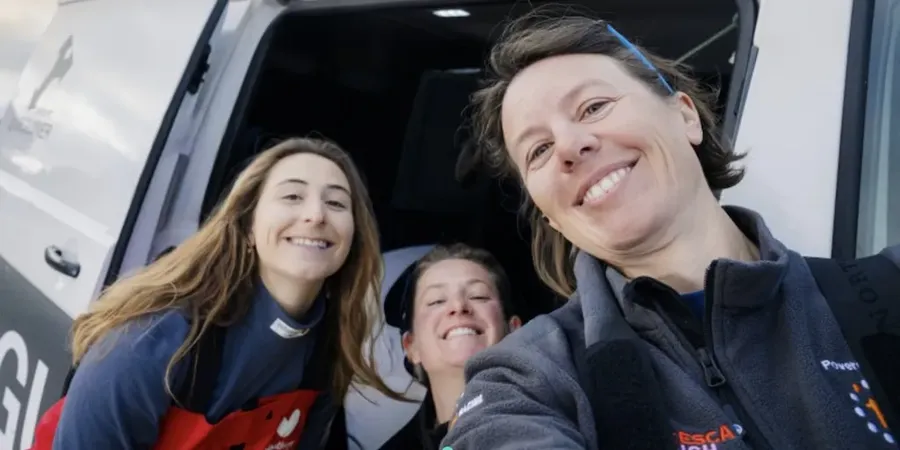
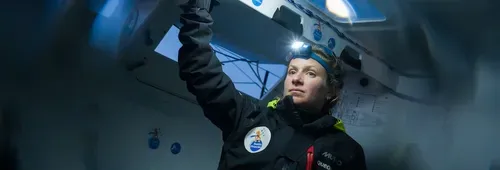
The Vendée Arctique is four days from its start, with women accounting for a full third of the nine-boat fleet. Élodie Bonafous, Francesca Clapcich and Violette Dorange are not there as symbolic entries. Their presence, and the seriousness of their campaigns, reflects how profoundly professional offshore racing has been reshaped over the past three decades.
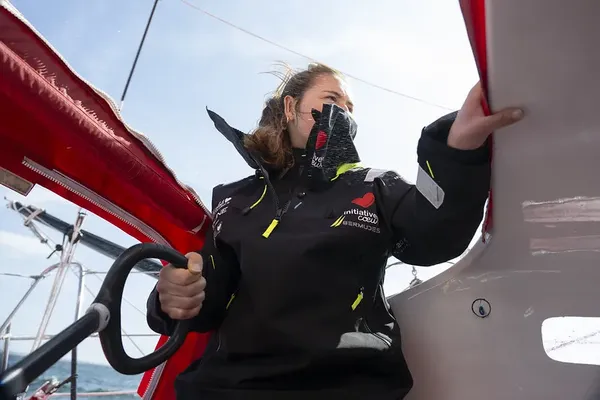
Bonafous carries Association Petits Princes – Quéguiner colours, Clapcich races under the 11th Hour Racing banner, and Dorange competes for Initiatives-Cœur. All three start on 7 June with genuine competitive intent.
The distance the sport has travelled becomes clearer when you consider what Florence Arthaud endured winning the Route du Rhum in 1990. The victory was striking. The conditions surrounding it were not. Racing as the only woman in the field, she faced competitors who dismissed her outright, and the attacks she withstood were relentless. The offshore world she competed in bears almost no resemblance to the one that exists today.
Change came slowly and through sustained effort. Tracy Edwards assembled the first all-female crew to contest the Volvo Ocean Race. In 1996-1997, Catherine Chabaud and Isabelle Autissier entered the Vendée Globe, becoming the first women to contest what remains the most demanding solo race in the world. Ellen MacArthur pushed further than any woman before or since, finishing second in the 2000-2001 edition and standing as the only woman ever to reach the podium there. By the last two editions, six women were on the start line each time.
The calibre of those campaigns has risen alongside the numbers. Clarisse Crémer set the women's solo circumnavigation record at 87 days and two hours in 2020, only for Justine Mettraux to erase it just two years later with a time of 76 days and one hour. Samantha Davies had earlier claimed third place in The Transat CIC. Mettraux captured the shift concisely: "What changes is that we now have competitive projects." Not symbolic starts, not gestures toward inclusion. Campaigns built around winning.
Bonafous, Dorange and Clapcich step into that lineage when the Vendée Arctique gets under way on 7 June. They are not racing to represent anything beyond themselves and their programmes. The only question on the water is whether they can drive their boats fast enough to finish first. The race itself will settle that.