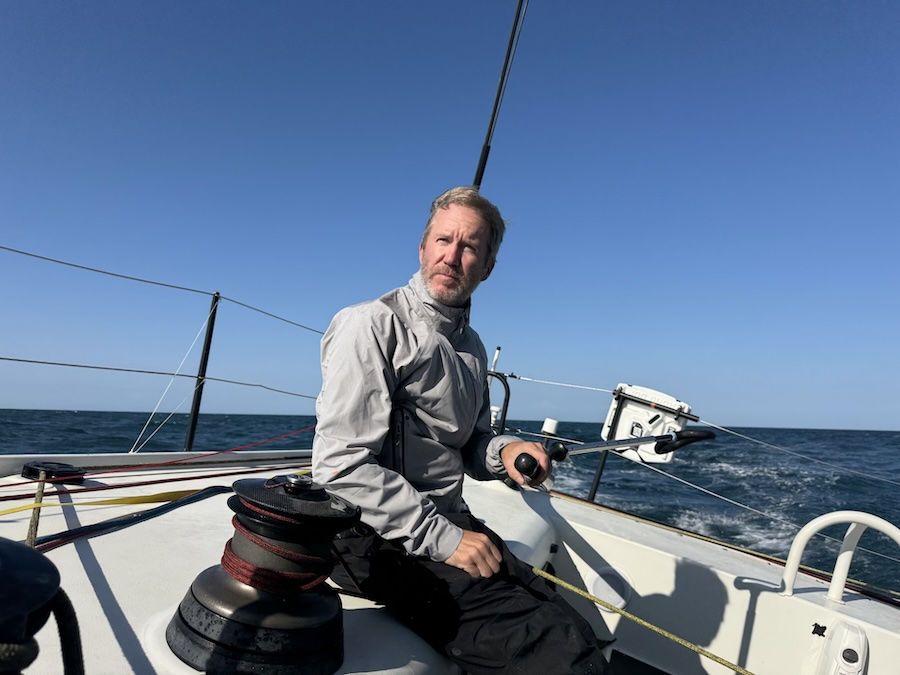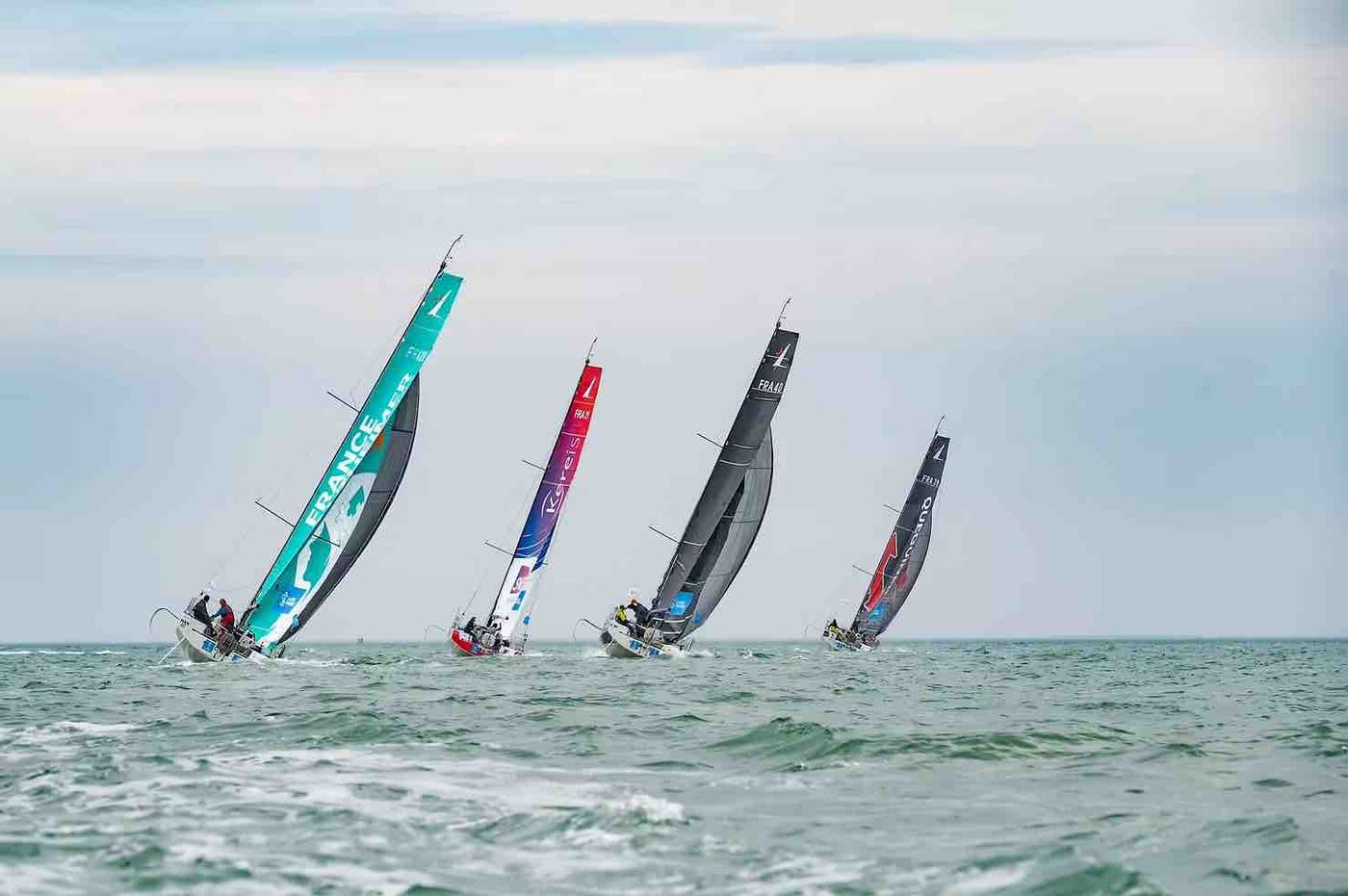
Six double-handed pairs will depart Perros-Guirec on Sunday, 17 May, slotting into the wake of 36 solo Figaro competitors just 15 minutes after the main fleet clears the startline. The destination is Vigo in northern Spain, 610 nautical miles away. Before that departure, four full days are spent embedded in the race village alongside the solo skippers, an arrangement that is very much by design. The Défi Paprec is structured so that its double-handed crews absorb the pressure, the atmosphere, and the operational rhythms of top-level offshore racing from the inside.
That philosophy of immersion reflects the race's founding purpose: to serve as a genuine pathway into elite offshore competition, giving short-handed crews meaningful exposure to the real thing without the unforgiving isolation of solo sailing. The evidence suggests the model is working. Pierrick Le Touzé contested the inaugural 2024 edition alongside Lola Billy and has since graduated to the main La Solitaire fleet. "I had never sailed a Figaro before," he said. "Two years later I'm finally lining up for La Solitaire, and I already have a good understanding of what it's like, at least over a typical leg. I already have some experience of how things work offshore, with radio check-ins, fleet management and sleep management, even though we were racing double-handed. There are far fewer unknowns for me now." Billy traced a similar arc, completing her first La Solitaire in 2025 and finishing 26th.
The youngest sailor in this year's fleet, 20-year-old Tiphaine Rideau, came to offshore racing through the Olympic dinghy pathway before a Trans Atlantic crossing redirected her entirely. "I discovered offshore racing quite early, considering I'm only 20 years old," she said. "Once I discovered offshore sailing, I realised that it was what I wanted to do." The Figaro's one-design format holds particular appeal for Rideau, who was already comfortable racing on a level playing field from her dinghy days, though she is candid about what the step up demands. "The competition is extremely intense. We're all very close to one another and the overall standard is incredibly high. I still have a lot of room for improvement." She will race alongside Elouan Barnaud aboard Habitat et Humanisme, with La Solitaire in 2027 set as the longer-term goal.
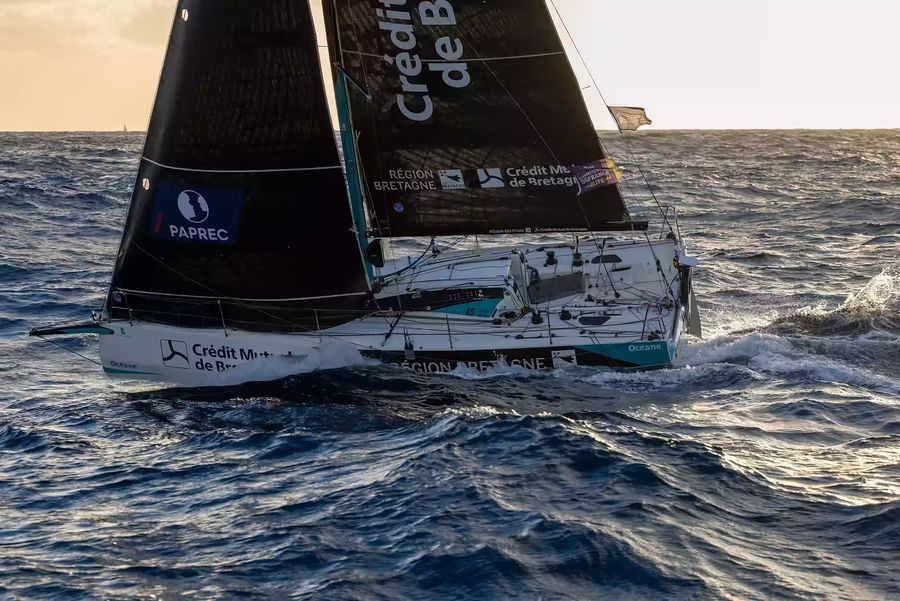
Eliott Coville has positioned the Défi as the centrepiece of his competitive year, racing with Thomas Dinas aboard Auray Quiberon by Orlabay. "This is really our main double-handed Figaro objective this season," he said. "It's simply incredible to be able to start just behind the solo sailors, knowing that in the coming years we would like to race this event ourselves." Coville described the relentless density of Figaro racing as its defining quality. "Two weeks ago at the BPGO Trophy, we completed more than 70 tacks less than 15 metres from the rocks, with 35 boats on the water. And then there's the sheer intensity: everyone pushes flat out. We're still discovering the rhythm required."
The entry list signals how thoroughly the race has spread beyond its French origins. Croatian Ivica Kostelić, a four-time Olympic silver medallist in Alpine skiing and world slalom champion in 2003, joins the fleet aboard Amelicor alongside Turkish sailor Deniz Bagci. Kostelić's offshore experience stretches back to the 2011 Transat Jacques Vabre, where he raced in the Class40 category and finished 17th alongside Antoine Calliste. He is treating the Défi as a building block toward the Transat Paprec the following year. "The Figaro class is the only true one-design offshore class," he said. "It is extremely competitive and you can learn an enormous amount. Our goal is to achieve a podium finish."
[embed]
New Zealander Oakley Marsh and his German co-skipper Jens Meier bring further international weight to the startline, racing Chipmunk as part of a longer campaign aimed at an eventual solo tilt at La Solitaire. Their presence underlines how a circuit that was once firmly a French institution has begun drawing serious talent from well beyond its traditional heartland.
The race village in Perros-Guirec opened on Wednesday. Come Sunday, the double-handed fleet will follow the soloists out of port, 15 minutes adrift, and the passage to Vigo will do what long offshore legs always do: sort the field by seamanship, tactical judgement, and the capacity to sustain performance over days at sea. For most of those aboard, finishing in Vigo will feel less like a conclusion than a first step.