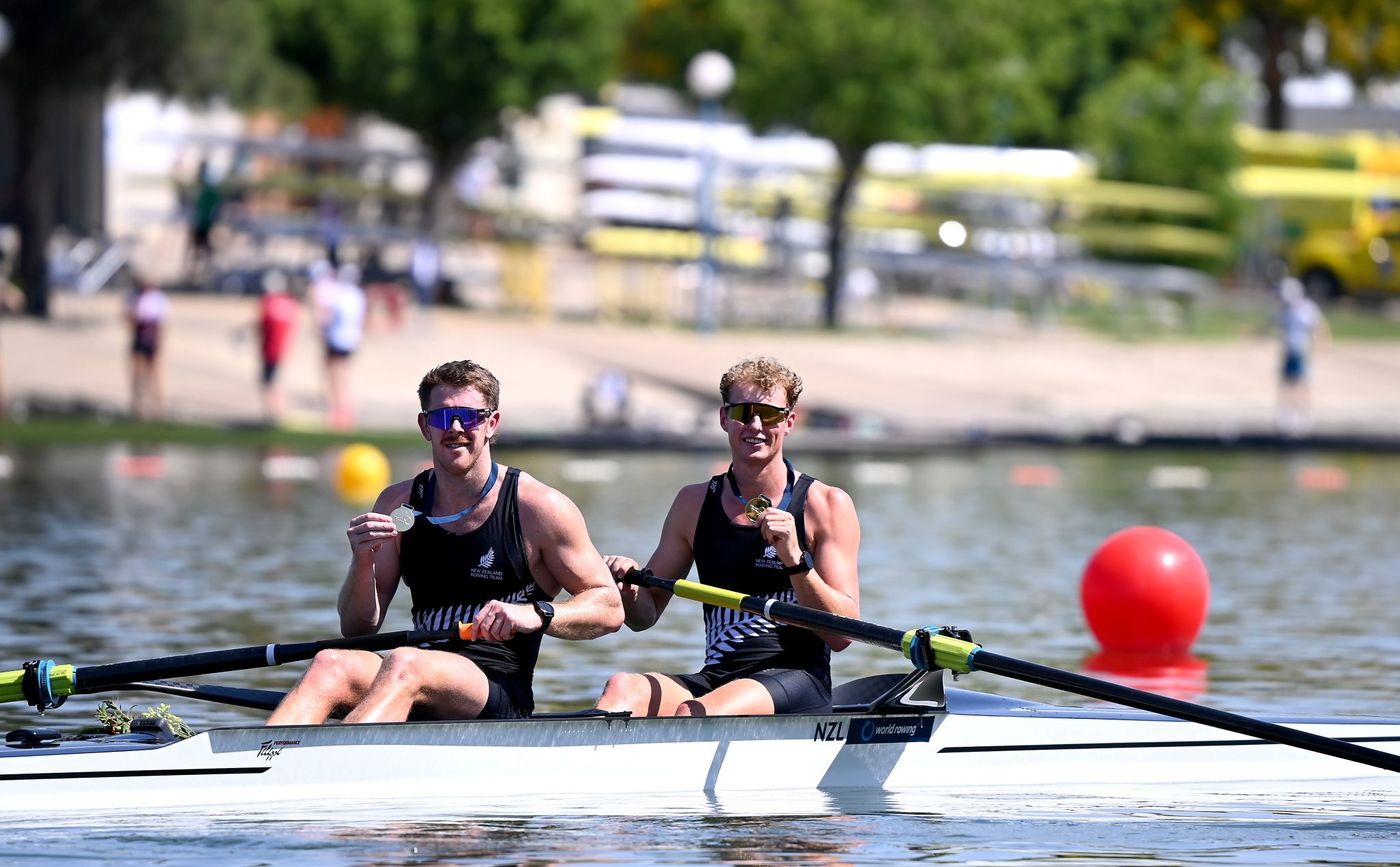
There are times in competitive rowing when the breakthrough comes not from pushing harder but from letting go. For Ben Taylor and Oli Welch, that insight arrived the night before the final at the World Cup regatta in Seville, Spain, and it carried them to gold in the Men's Pair.
Throughout the build-up to the final, the two had found it difficult to replicate the rhythm that had come naturally to them back in New Zealand. The numbers from their training suggested things were in order and the boat was moving well enough, but the connection they were after kept slipping away. Rather than continue chasing something that refused to appear, they made a conscious decision the evening before race day to stop searching and simply rely on what they already had.
"We just kind of said let's stop trying to search for that feeling and just back ourselves," Taylor explains. "I think just trying to simplify our rowing a bit and simplify the mindset brought us together."
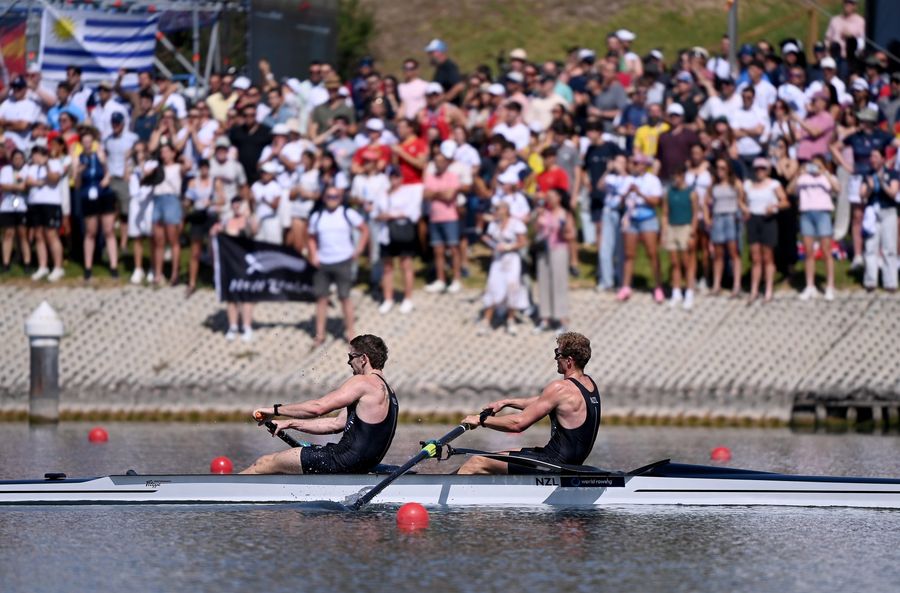
The effect was immediate once they were on the water. By the 1000-metre mark, Taylor and Welch had opened a 1.63-second gap over Romania, and as the race approached 1500m that margin had stretched to nearly three seconds. Romania lifted their stroke rate to 45 strokes per minute in the final 200 metres and began eating into the lead, but the New Zealand boat held firm through to the line, finishing in 6:26.86. Romania crossed in 6:29.46 to take silver. The victory confirmed Taylor and Welch as the world's number one Men's Pair.
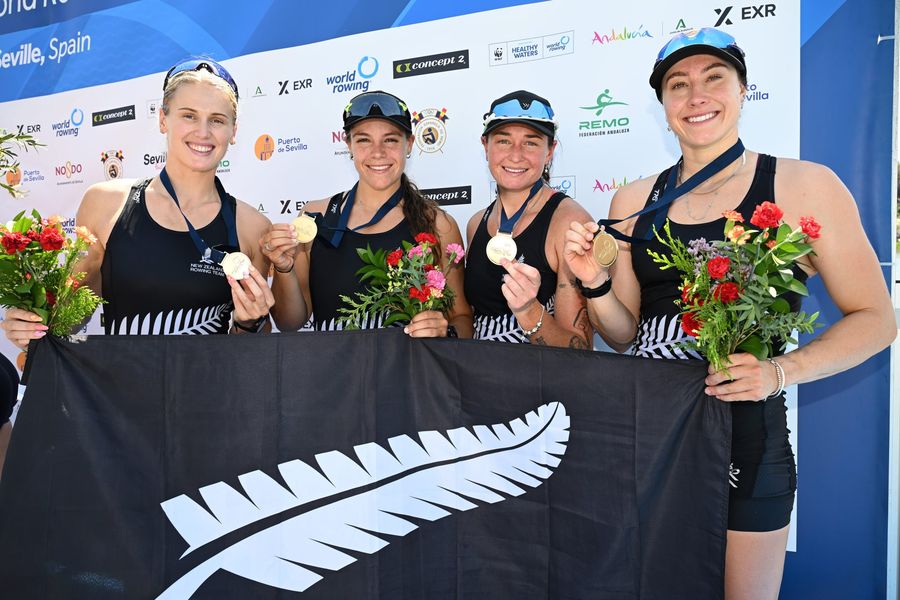
New Zealand's success in Seville extended beyond the men's event. The women's four of Kate Haines, Ella Cossill, Isla Blake and Alana Sherman claimed bronze, finishing in 6:43.24 behind gold medallists the Netherlands, who crossed in 6:34.92, and silver medallists Australia.
For Haines and Cossill, the podium moment carried a significance that stretched far beyond a single race. Haines had spent close to seven years pursuing a medal at this level, and the emotion surfaced straight away. "The first thing Ella and I said to each other after the race was, 'Oh my God, we finally got a medal!'" Haines says.
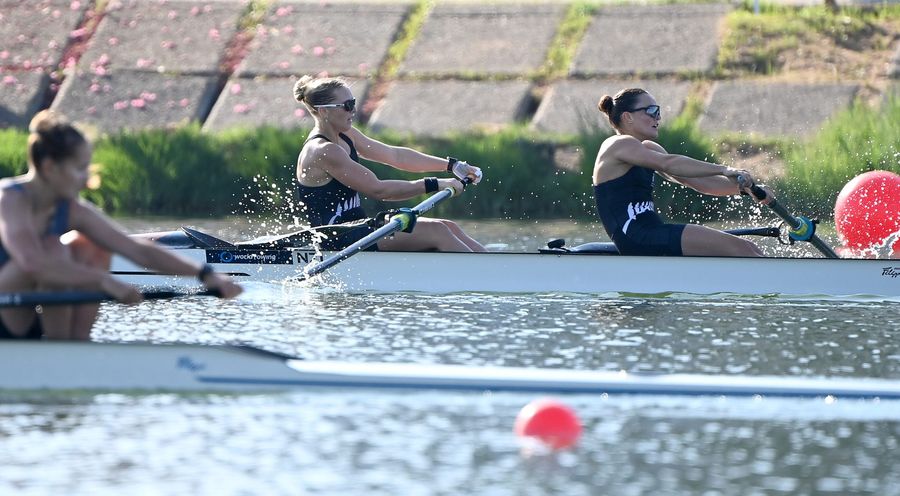
Haines's path back to that podium had been anything but smooth. After the Paris Olympics she withdrew substantially from training, spending around two months doing very little before pulling back even further. Burnout had set in and the motivation had gone. A season of club rowing at Molesey in England turned things around. "I just found the love for the sport again through being somewhere else, not training as hard, doing it for fun," she says. "It was huge. I found my purpose again."
Taken together, these results suggest a New Zealand rowing programme that finds its best form when it eases its grip rather than tightens it. The squad now heads to a training camp in Varese, Italy, before the second World Cup of the season in Plovdiv, Bulgaria, a fortnight away.