Solo offshore racing has never been for the faint-hearted, but five minutes before the start of the Route du Rhum, every skipper crosses into a different kind of alone. Hand on the sheets, eyes on the water, ready to react in a split second. The ocean makes no distinction between boat types, but monohulls and multihulls do not take the same risks. That is why, on the Route du Rhum - Destination Guadeloupe, skippers in the ULTIM and Ocean Fifty classes get backup from shore in the form of onshore co-pilots known as "routeurs", or routers.
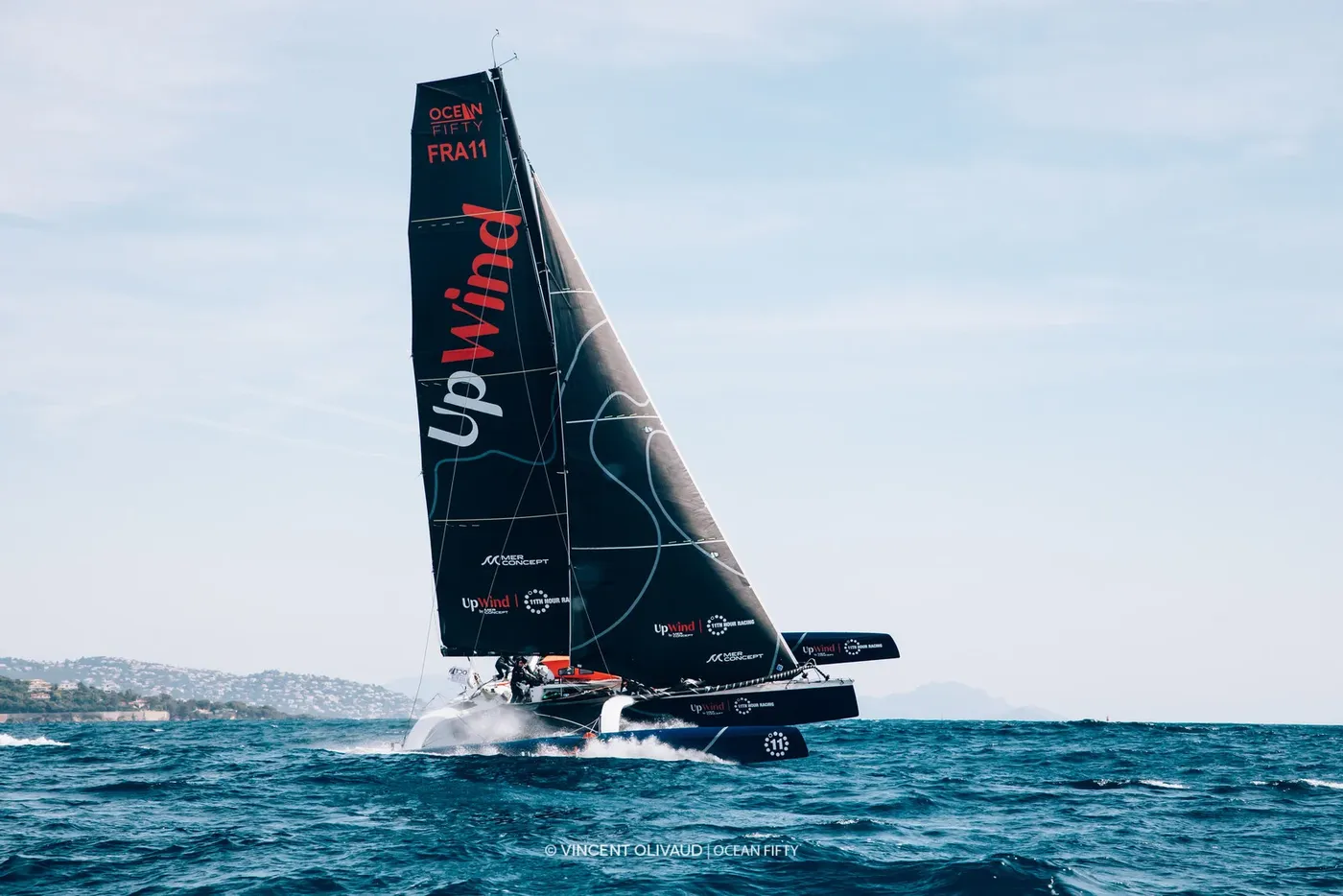
When the 115 skippers launch into their ocean sprint on Sunday 1 November, there will be no rest. No time to eat, no time to sleep, just enough to hold a course and dodge the first traps of the English Channel. Onshore, eyes locked on weather files and charts, the router feeds the optimal route through to the multihull sailors. "If you compare it to Formula 1, we're a bit like the engineers in the paddock adjusting strategy, managing refuelling, getting the timing right for a tyre change," explains Yann Eliès, who will be routing for Anne-Claire Le Berre (Up Wind by Merconcept, Ocean Fifty). "The skippers are head down in the boat, focused purely on making it go fast and stay upright."
In the monohull fleet, the commitment is just as total, but the danger is different in kind. Corentin Horeau, lining up on his IMOCA MACSF, puts it simply: "In a monohull, you can't capsize unless the keel breaks. From a safety point of view, you've got time to check the computer, manage the weather. Whereas on the ULTIMs or Ocean Fiftys, with no keel and far more sensitive boats, the moment you sleep there's a risk of flipping. You have to stay far more focused to avoid capsize." Safety, more than anything, is why routing is permitted on these boats at all.
The Route du Rhum is also the toughest test these trimarans face. "I wouldn't go as far as calling them warriors," Eliès continues, "but they push the dial right to the limit." Why is it riskier on an Atlantic crossing than elsewhere? "On a round-the-world race like the Arkéa Ultim Challenge, it's a marathon, we could almost do the routing ourselves," says Anthony Marchand (ACTUAL ULTIM 4). "But on a sprint like the Route du Rhum, it's essential. You literally don't have a spare minute to sit at the computer."
The opening days aren't the only thing that counts, either; the full 3,542 nautical miles, roughly 6,559 kilometres, all matter just as much. "When you run a routing session," Marchand adds, "you're at least two hours on the computer trying to make sense of it all. Two hours at 40 knots is 80 miles. That's nearly 150 kilometres covered without ever putting your head outside." Having a co-pilot ashore does not make things easier, though. It is, above all, a matter of trust.
"Being routed isn't as simple as it sounds," admits Anne-Claire Le Berre, trying the system for the first time over such a long distance. "It's a balance between letting yourself be guided and keeping your own eyes on what's happening around you." That balance only works if there is real chemistry between skipper and router. "In our first conversation, Yann told me: I've never capsized a multihull, and I don't plan on it happening this year. That helps, believe me, and it sets the tone."

Eliès will be backed up by Justine Mettraux, another sharp offshore tactician. For both of them it is also a chance to sharpen their tools and dig deeper into weather and strategic analysis, a luxury no skipper has once at sea. Both routers know their sailor and her boat intimately. "That's the key," says Anne-Claire. "To be effective, they need to know the sailor really well, how tired they are, what they're capable of," agrees Erwan Le Draoulec (Lazare X Hellio). None of which means the skipper simply follows orders from shore. "If an option looks unworkable out on the water, we hold our course," Anne-Claire insists. "We're still the one making the final call on board."
Anticipation is the router's watchword. Christian Dumard has built a reputation for this over many years, and this edition he is working with Anthony Marchand, Alexia Barrier and Guirec Soudé, alongside his son Louis, who grew up around it. "It's part strategy," Louis explains, "digging through the different models, always hunting for solutions, and part deeply human: how is the skipper feeling, will they cope in these conditions."
Physical condition matters as much as miles made good. "When a skipper is tired," says Christian Dumard, "they struggle to think ahead in time and space. They can't picture being in a certain spot in eight hours' time, with a front coming through, needing to reduce sail. On a Class40 you can reduce sail ten minutes beforehand, no problem. On an ULTIM, manoeuvres need to be planned, sometimes hours in advance. Part of the job is protecting the skipper's wellbeing too."
Reading a sailor's state of mind from afar takes real skill. "You have to find the right words, sense through a message or a call whether your skipper is okay," says Eliès. "Does she need to go and lie down, has she eaten. And sometimes you just have to tell her: it doesn't matter, we're not winning the race right now, put the pilot on, eat, sleep, call me back in two hours."
Through the whole race, the router lives almost as immersed in it as the skipper, just from dry land. But for all the routing, all the watching over safety, the only person actually holding the helm is the skipper, alone at the wheel with La Désirade waiting at the end of it all.