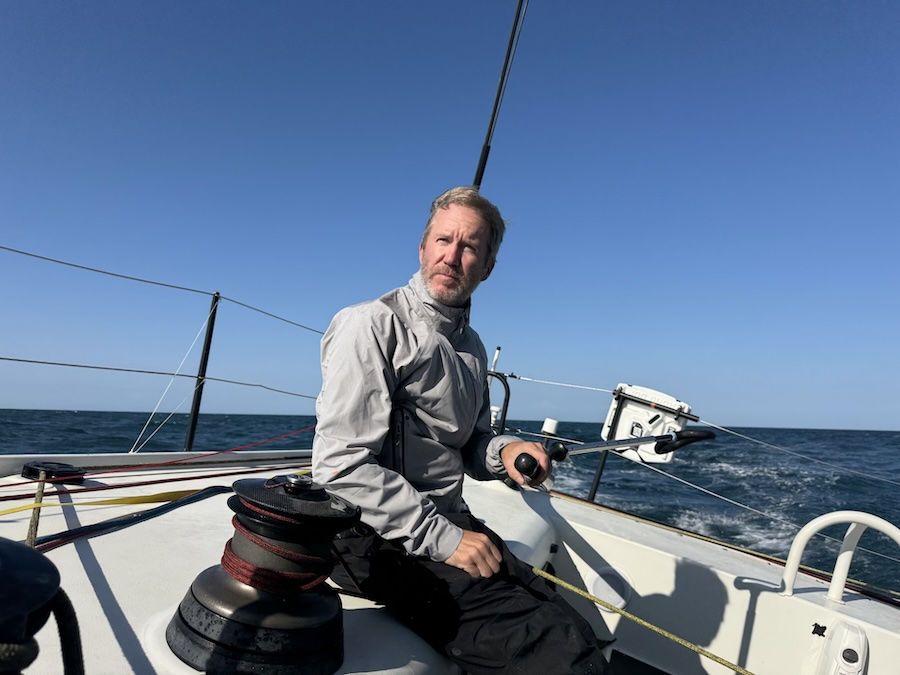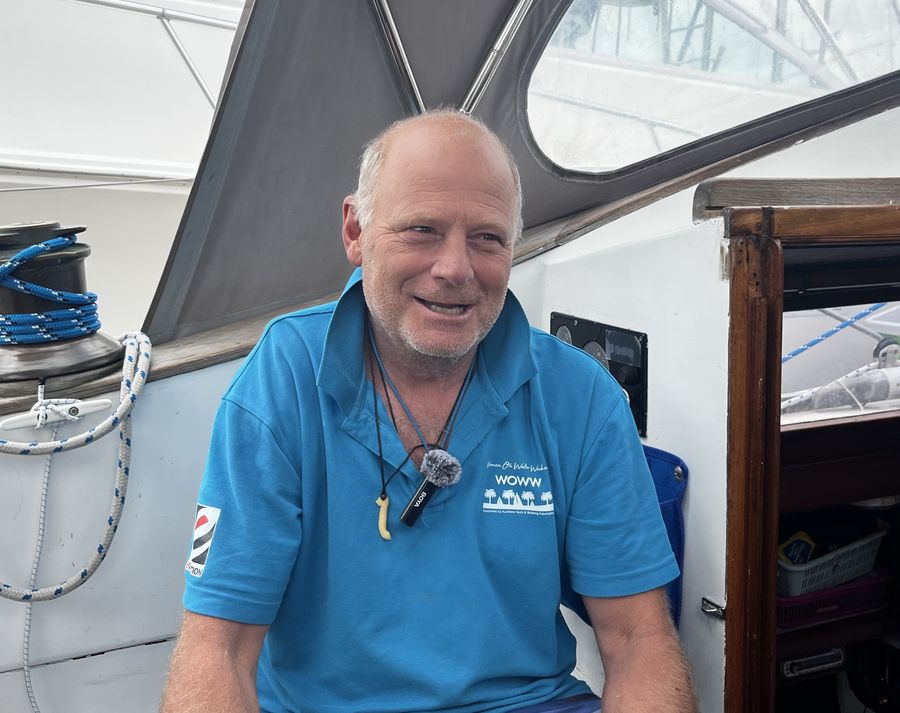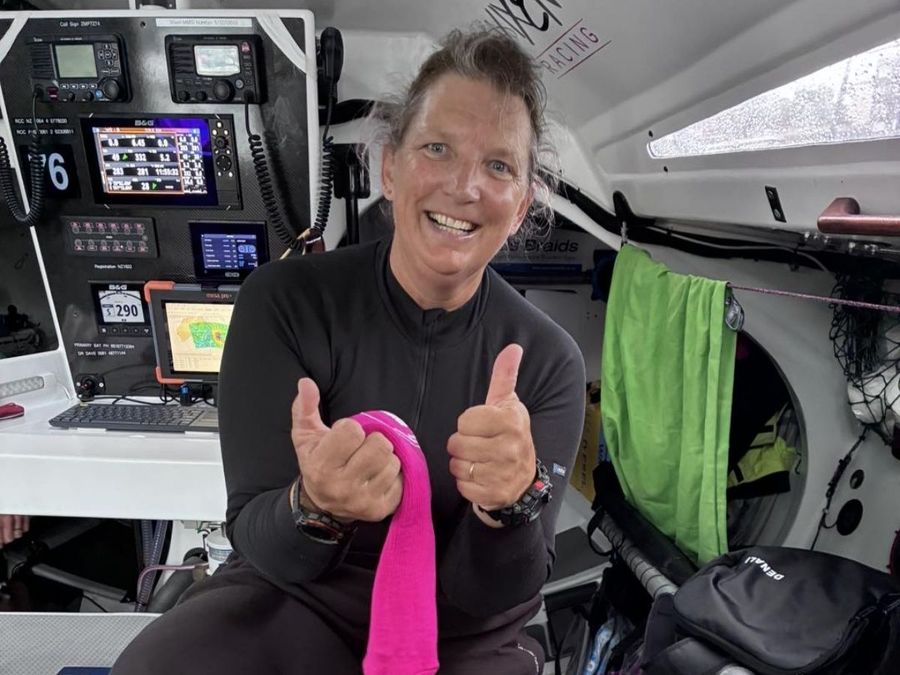
"There's two lows coming through in this race that are substantial," she says.
"They're boat-breaking, they're human-breaking, and they could end your race very, very quickly."
At the time this article was published, the PredictWind forecast for the coming days made for sobering viewing.
Reading the lows
PredictWind places the first system at the top of New Zealand, where the fleet will encounter it as it rounds into the Tasman. Thursday's briefing had gusts pegged at 35-40 knots. Sharon's own Friday morning forecast pushed that figure higher, with rain squalls potentially bringing gusts to 50 knots. How each competitor positions relative to the centre of each low, she says, will define their race.
"Monitoring to see what they're doing [as the weather changes] is going to be critical. If the wind's a little bit lower than forecast, you go, okay, maybe it won't be as bad. But if it's already higher, that is going to be significant."
She is weighing up heading further north, accepting extra distance in exchange for avoiding the worst of it. "Damaging yourself or the boat within the first 200 miles doesn't make sense. We've got 1,200 miles to sail."
Three weeks of easterlies had been building sea state across the Tasman before the wind dropped in the days prior. Had that sea state still been running when the low arrived, Sharon puts wave heights at six to seven metres. "That's potentially don't leave the dock."
On whether she would leave at all in those conditions, she was clear: "I always have a saying as a mother. If what I'm about to do has a potential to create motherless children, and if that's even entering my head, we need to have a serious look at the responsibility of what we're about to do. We're not there. We're not in that situation."
On a possible delay
Thursday's PredictWind briefing modelled departure windows across Saturday, Sunday and Tuesday. Sunday and Monday both shaped up worse than Saturday. Tuesday offered a meaningfully lighter outlook. Sharon said competitors would be watching updated data closely on Friday afternoon.
"If there's people starting to get cold feet, or looking at it and going, this is not a race anymore, this is survival, then you might see some action this afternoon."
"If there is 60 knots tomorrow, I won't be leaving the dock. The boat's too valuable. I'm a mum. I've got responsibilities. It's a yacht race."
One mile at a time
Sharon was the first woman in the world to win a ORYX Quest round-the-world yacht race, holds five world speed records, has competed at two Olympic Games, and has 124,000 offshore racing miles behind her. The Trans-Tasman result is not what she's focused on right now.
"The goal is to get there safely and competitively. The result will be what it will be."
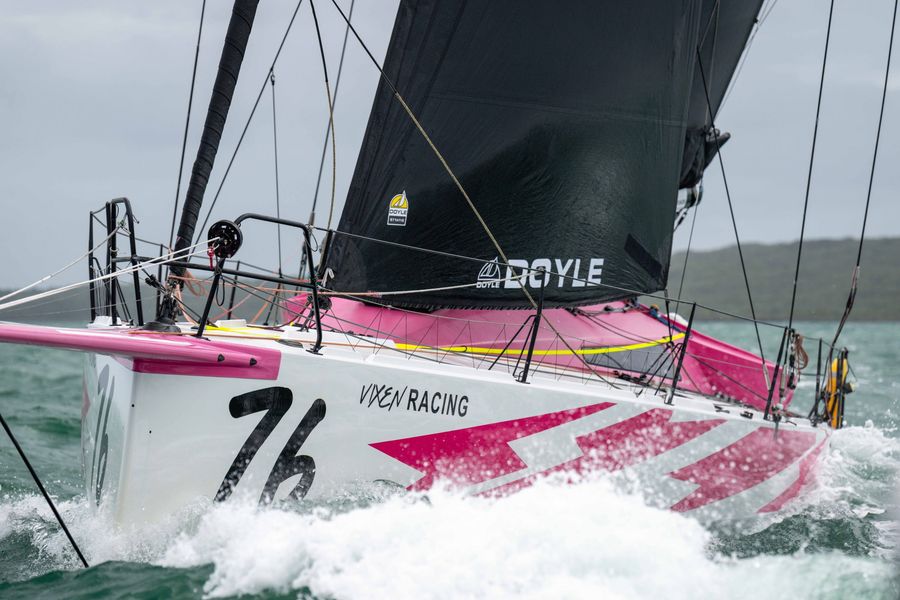
Vixen Racing carries a high handicap rating, and Sharon knows the boat will need to sail well to feature. But at noon on Saturday, she will be on the start line.