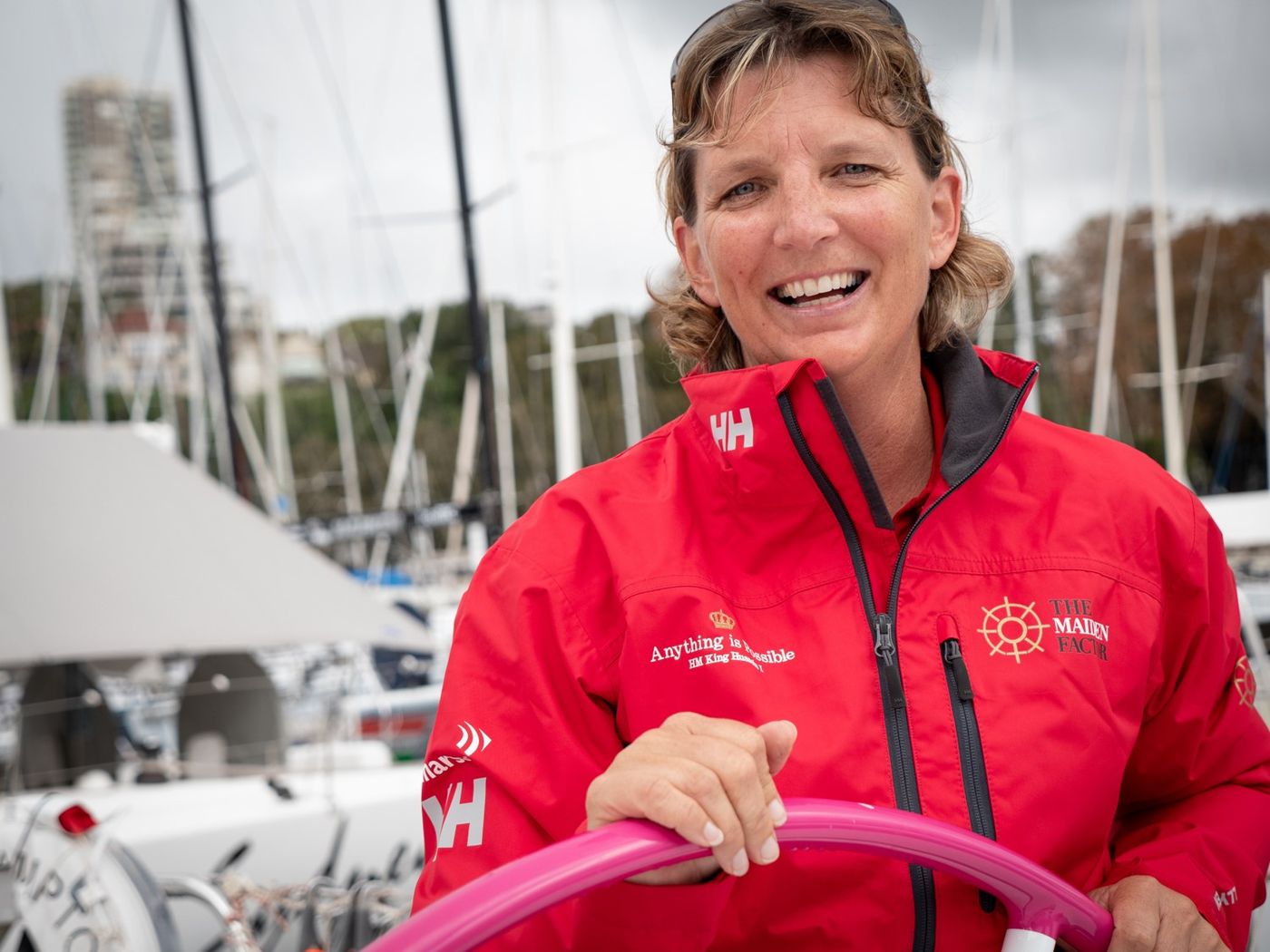
Sharon Ferris-Choat has logged more than 124,000 offshore miles across a career spanning two Olympic campaigns and a non-stop circumnavigation. When the fleet departs Opua at noon on 30 May 2026, she will become only the seventh woman ever to start the Solo Trans-Tasman Yacht Race in the event's 56-year history.
Jennifer Fitzgibbon holds the benchmark result for women in this race. Her third-place finish in 2010 remains the best any woman has achieved, and Ferris-Choat is under no illusions about the significance of joining that small group. She is equally clear that once the gun fires, she is racing everyone in the fleet.
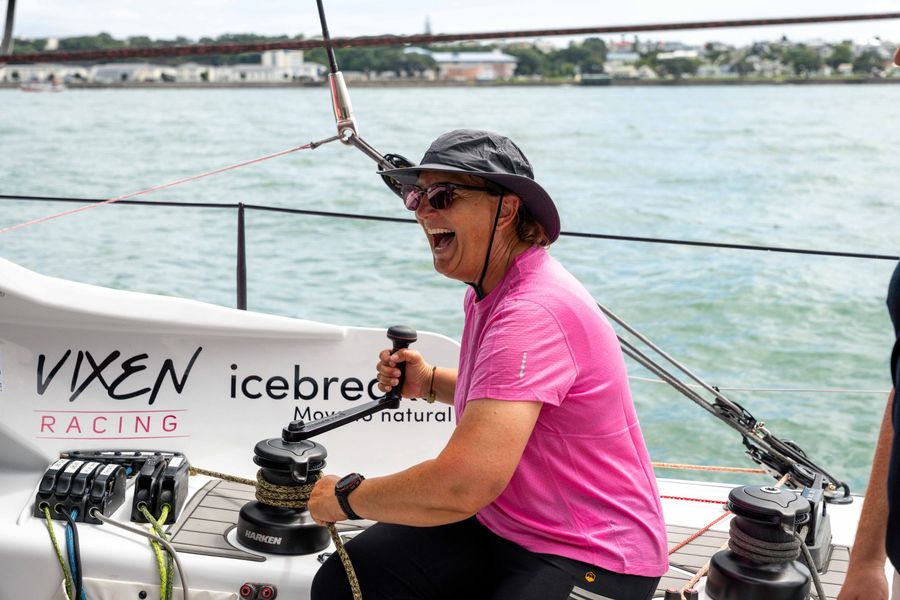
Ferris-Choat grew up in Northland and took up sailing during high school, committing to the sport with striking speed. Within two and a half years she was standing on the dock at an Olympic Games. At the 1996 Atlanta Olympics she finished fifth in the Europe dinghy, a result that set the trajectory for everything that followed.
Her move into offshore racing brought a berth aboard the maxi catamaran Royal & Sun Alliance for the Jules Verne Challenge, a campaign that came to an abrupt end when the boat dismasted in the Southern Ocean while running ahead of record pace. She returned to Olympic competition in 2004, this time as skipper of a three-woman Yngling crew, finishing seventh at Athens. The following year produced the achievement that has come to define her offshore career: the ORYX Quest, 62 days non-stop around the world, in which Ferris-Choat and her crew, including Karine Fauconnier, became the first women to win a round-the-world race outright.
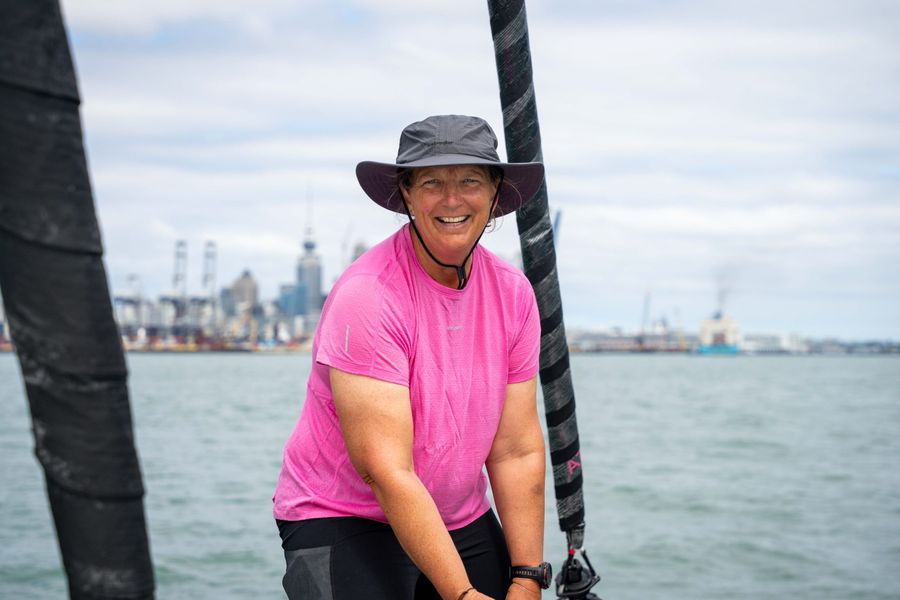
Yachting New Zealand described her in 2022 as "an extraordinary sailor who is largely unheralded in this country." The New Zealand sailing community has had little choice but to take notice since. Recent seasons have delivered a first division win at Hamilton Island Race Week, a fourteenth place on line honours in the 2024 Rolex Sydney to Hobart aboard an IMOCA, and a start in the 2026 Doyle Sails Two-Handed Yacht Race alongside co-skipper Taylor Edwards. Between campaigns she lives near Kerikeri, managing both family life and the Vixen Racing programme.
The race itself presents a formidable set of challenges. Sixteen solo sailors will leave Opua Cruising Club in the Bay of Islands, marking the first time in the event's history that Opua has served as the start venue. From there the course stretches 1,170 nautical miles across the Tasman Sea to the finish at Southport Yacht Club on Queensland's Gold Coast. At this time of year the preferred passage pushes competitors north to pick up the Easterlies before sweeping in a long westward arc toward Queensland. The finish at Southport brings a final layer of difficulty: a man-made seaway threading through Surfers Paradise Beach, with a sandbar across the mouth of the Coomera River waiting after the better part of a week at sea.
Ferris-Choat will race Vixen Racing, a Verdier 40 that ranks as the second equal largest boat in the fleet, behind only a 55-footer. Her targets are monohull line honours and a place on the handicap podium, with a passage time of six to seven days in mind.
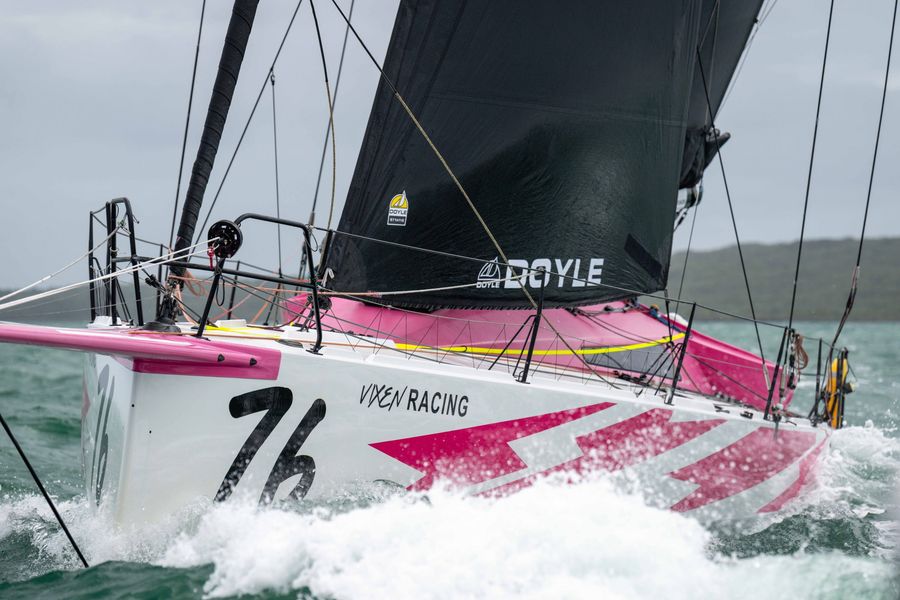
This crossing will be her sixth across the Tasman and her first completed entirely alone. She has built toward it with more than a thousand solo miles on Vixen Racing, among them a recent training run around Cape Brett in 35 knots with seas running five to six metres. Solo offshore racing concentrates every decision in one pair of hands. Fatigue management, weather reading, boat speed, sail changes and navigation all fall to the same person, and Ferris-Choat will manage sleep in short intervals throughout the passage with no one to share the load.
Vixen Racing carries a comprehensive safety and communications fit-out suited to solo offshore conditions. Ferris-Choat is measured about what matters most. "To have a chance of winning, we must first finish," she says. "Breaking the boat or me, that's not an option."
Underpinning the campaign is the Vixen Racing Academy, the pathway programme she runs for sailors looking to break into coastal and offshore racing without an obvious route in. The Academy puts people on the water with real miles and genuine responsibility, covering trimming, helming and decision-making under guidance and experience. Men and women train and race together as a matter of design.
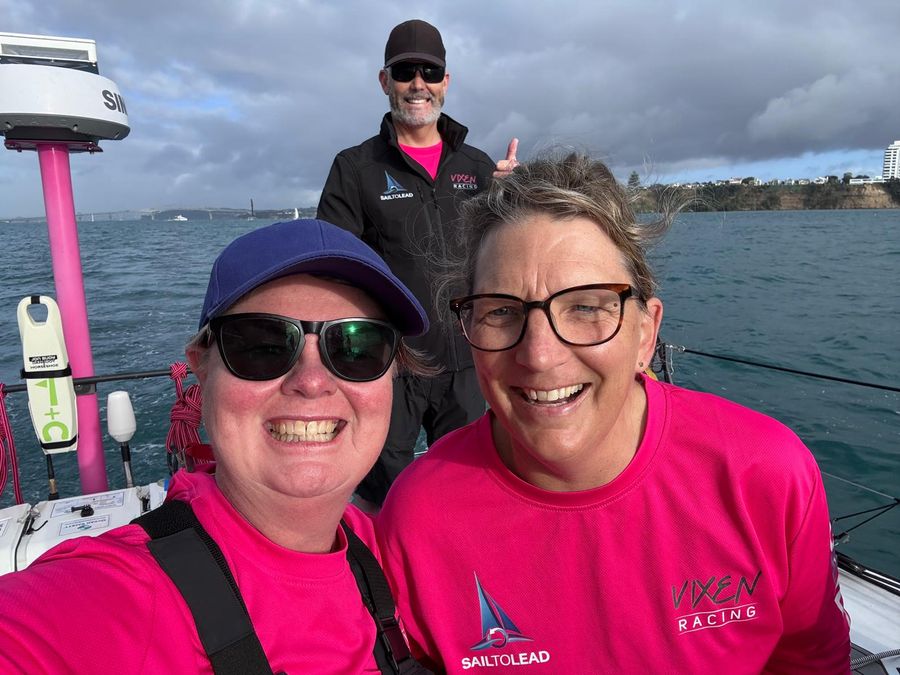
The Trans-Tasman is one stage in a longer programme. After Southport, the schedule continues through the Sydney to Gold Coast Race, the Gold Coast to Mackay Race, Airlie Beach and Hamilton Island Race Weeks, academy passages through the Whitsundays, and then a return south to prepare for a second Sydney to Hobart aboard Vixen Racing.
Five of the six women who have previously started the Solo Trans-Tasman went on to finish it. Ferris-Choat arrives at the startline as the seventh woman in race history, bringing more than 124,000 offshore racing miles and one of the strongest sailing résumés in the fleet.