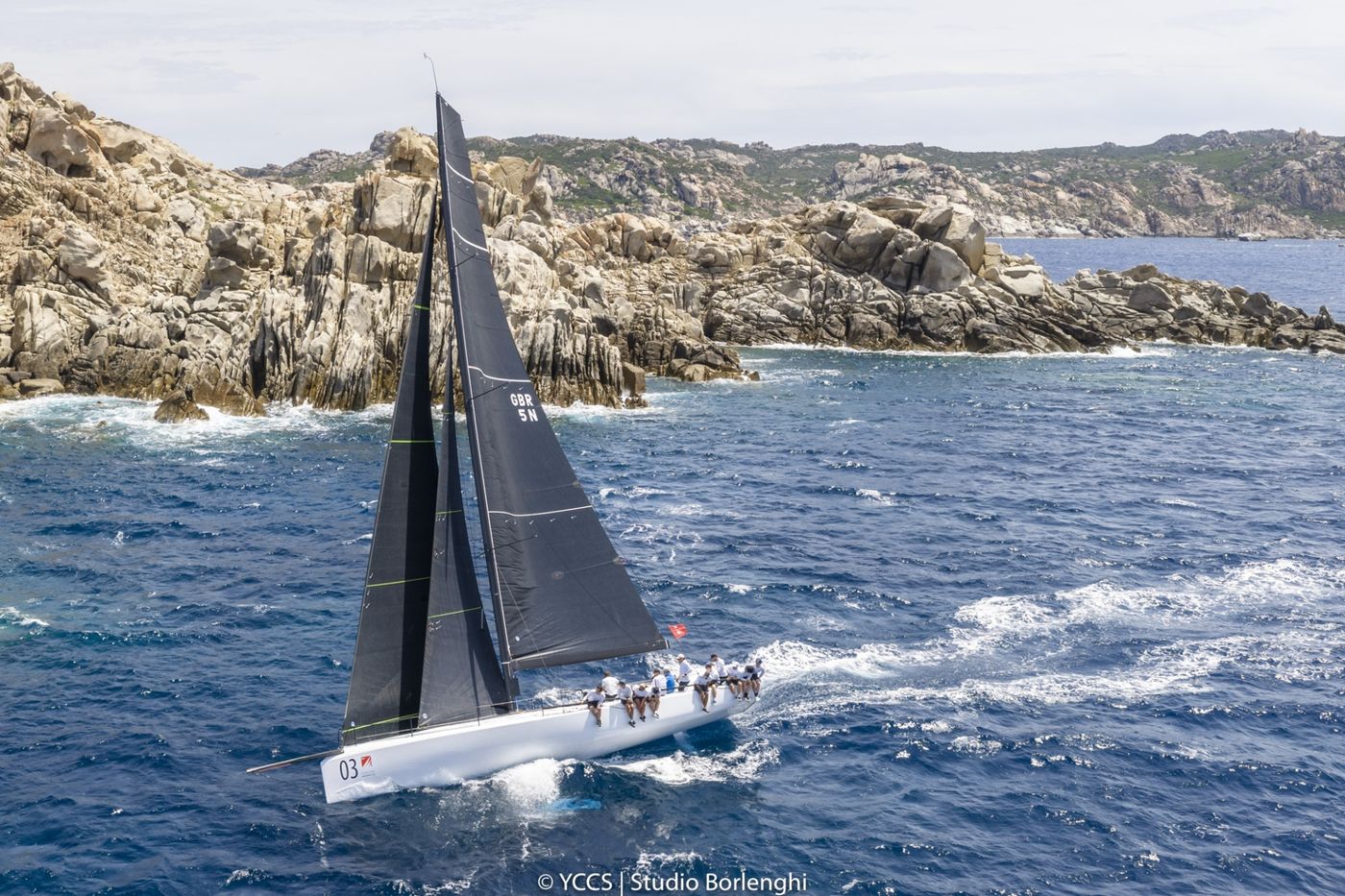
Porto Cervo's return to serious offshore racing carried weight that a single day's results couldn't fully convey. The Range Rover Sardinia Cup was back after fourteen years away, and the organisers had taken care to rebuild it around the kind of sailing that distinguishes real offshore sailors from short-course specialists. Coastal passages threaded through rocks and shoals, gusts nudging 16 knots near the island of Spargi, and a team format built to reward collective depth rather than a single brilliant boat: the comeback had teeth.
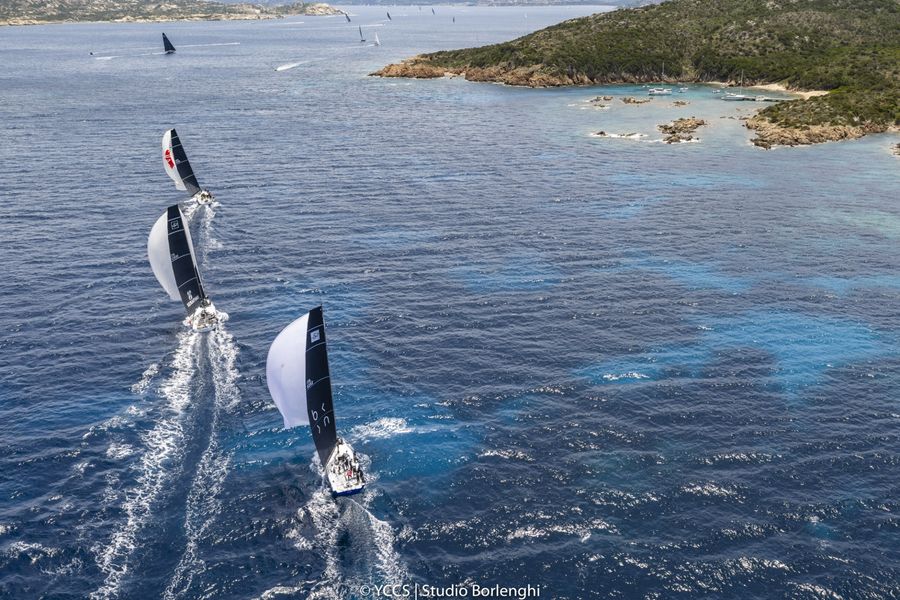
Twenty boats representing ten yacht clubs took the start at 11 a.m. on opening day. The competition structure, conceived by the Yacht Club Costa Smeralda, pairs two boats from each club into a team, combining their points to produce an overall club ranking. Individual brilliance counts for less than consistent performance across both entries, which makes the format genuinely interesting. By the close of day one, that structure had already produced a compelling result: RORC and YCCS finished level on points, sharing first place with nothing to separate them.
The Race Committee routed the fleet north through the La Maddalena channel, pushing boats towards Spargi along a course that demanded as much from navigators as it did from trimmers and helmsmen. Rocks and shoals kept everyone honest, while shifting pressure pockets through the channel had tacticians working hard for every gain. SC1 boats covered roughly 30 miles in total; SC2 crews raced a 22.5-mile version. Both divisions faced the same central strategic question: hug the coastline as the SC2 boats generally chose to do, or commit to left-side pressure and chase the building mistral, which was the preferred approach among the larger boats.
Line honours in SC1 went to James Neville's RORC-flagged TP 52 Ino Veritas, though Giovanni Lombardi Stronati kept the pressure on throughout aboard Django WR, ensuring nothing came easily. SC2 went the way of YCCS, with the Botin Fast 40+ Django JP finishing 51 seconds clear of the RORC Gold team's Ran.
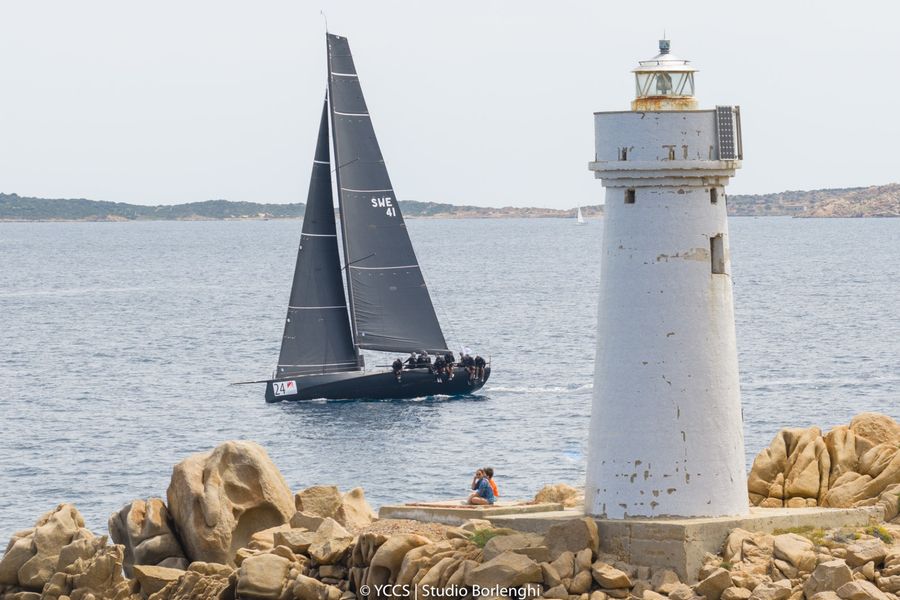
The conditions that shaped the racing were considerable. Winds of 10 to 12 knots greeted the fleet as boats beat northward at the start, building steadily through the day and eventually gusting past 14 knots, with peaks of 16 recorded near Spargi. Navigators had to stay sharp throughout, the kind of racing where a moment of inattention near a hazard can end a regatta before the second day begins. There were no easy reaches where a crew could set the sails and relax. Every watch earned its position on the water.
The real test arrives with the 130-mile offshore race set to start at 3 p.m., with a strong mistral already forecast for the fleet. The course leaves Porto Cervo and pushes south along Sardinia's eastern coast, taking in several waypoints before reaching a final mark positioned 36 miles offshore, then turning the fleet back towards Porto Cervo. SC2 yachts sail a slightly abbreviated version of the route, though no division escapes the conditions a strong mistral is expected to deliver.
Fourteen years is a long time for any regatta to sit off the calendar. The way the Sardinia Cup has been rebuilt suggests its organisers thought seriously about what offshore racing should demand, shaping the programme around genuine seamanship rather than the compressed geometry of inshore circuits. Whatever Ino Veritas and Neville secured on opening day represents a useful foundation, nothing more. The points that matter most will be settled when the fleet clears that final offshore mark and makes its way back to Porto Cervo.