A suspected rig failure briefly halted Guido Cantini's progress, a bruising low-pressure system is testing the chasing fleet, and simply continuing has become as compelling as the fight for position in the 2026 McIntyre Golden Globe Race.
This is a gruelling test of human endurance, sailed in traditional yachts through months alone at sea. For sailors who spent years dreaming of this solo circumnavigation, the reality now includes broken sleep, difficult sail changes, damaged equipment and decisions made alone in an unforgiving ocean. Through GGR Window Live, followers are watching those decisions unfold, sometimes with remarkable candour.
"Above everything else, the GGR is a gruelling mind game, and right now it's playing out for real day by day. None can say for certain that they will cross the finish line in Les Sables-d'Olonne," said race founder and chairman Don McIntyre.
**Currents scramble the battle for third**
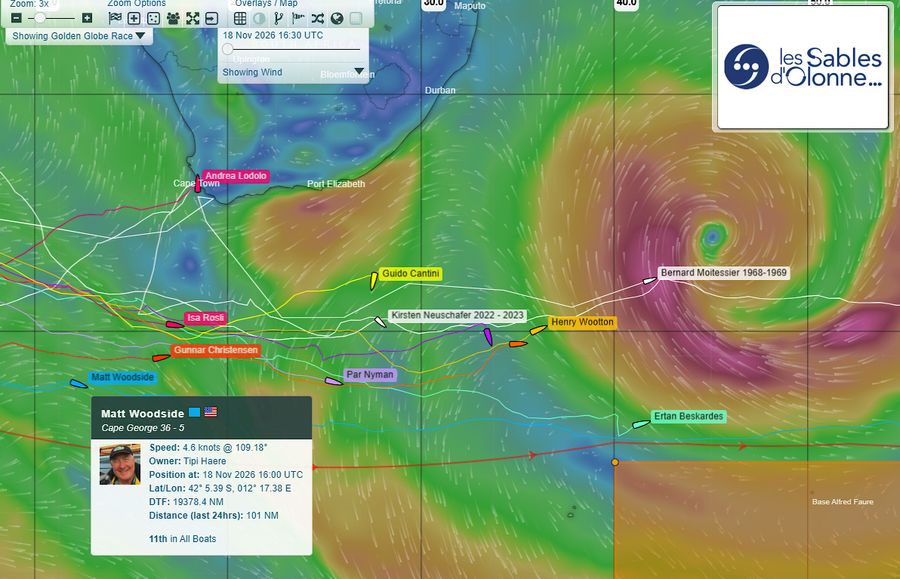
Britain's Henry Wootton aboard Privateer, Switzerland's Etienne Messikommer aboard Bernard and Israel's Daniel Pinsky aboard Exodus remain locked in a contest for third, with the Agulhas current system repeatedly rearranging their fortunes.
Messikommer initially led the trio until a head current stopped him, then Pinsky came from behind to take third. Pinsky subsequently lost ground, and Wootton sailed past both rivals to take over the position.
At one point, a following current carried Wootton more than 100 nautical miles ahead of his dead-reckoning position. Mystified by the discrepancy, he checked all three sextants, which appeared to be working correctly, then called race control fearing a problem with his navigation. Race control could see the current's influence, but offered only brief reassurance: "Your sextants are correct."
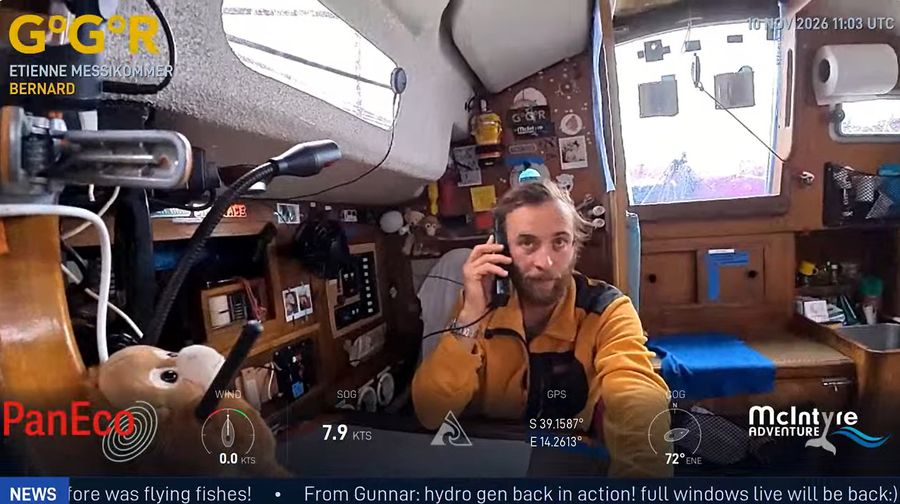
For Messikommer, the current brought a very different experience. Bernard encountered an opposing stream running at nearly 3 knots, slowing his progress while rivals passed around him. After two days, race control estimated the adverse current had cost him approximately 150 nautical miles, yet he remained unaware the stream was holding him back.
The emotional swings are captured in his daily messages. On 11 November, Messikommer celebrated reaching the longitude of the Cape of Good Hope, calling it a huge milestone. By 18 November, battling upwind in rough seas, the mood had changed: "Westerly winds in the 40s are a lie or a myth."
Wootton is now facing what he describes as the strongest headwinds and biggest seas of his race so far. He has been forced to heave to, making only a few knots over the ground as a vast low-pressure system blocks his route east. On 18 November, he reported: "V CHALLENGING X-SEAS AND STRONG HEADWINDS. HOVE TO OVERNIGHT DURING WORST SEAS TO PROTECT BOAT. EASING TODAY BUT E PRGSS LTD."
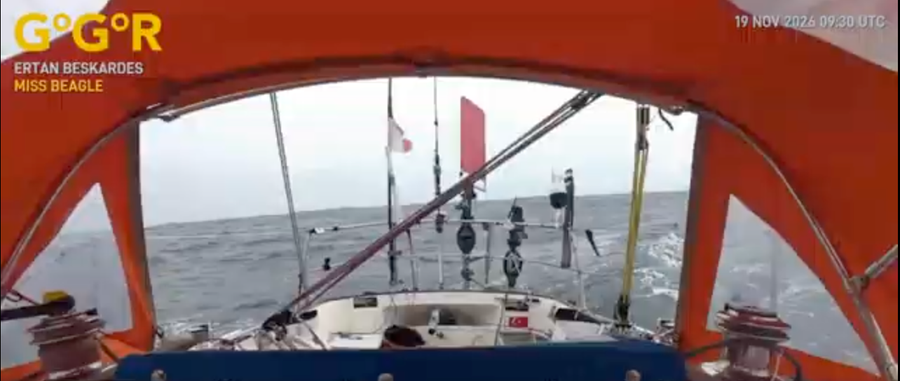
The system is affecting a wide stretch of the Indian Ocean. Daniel Pinsky sent a satellite-phone message to race control: "Where are the promised WESTERLIES!?" Farther south, second-placed Ertan Beskardes aboard Miss Beagle has headed due south to keep clear of the worst weather while waiting for the storm and headwinds to pass through.
**A masthead problem temporarily halted Cantini**
Italy's Guido Cantini contacted race control around midnight on 17 November after discovering a serious problem at the masthead of his Vancouver 34, Hannah of Cowes. A broken forestay is suspected, but the precise failure remains unconfirmed.
Cantini lowered sail and stopped overnight. Conditions were too rough to climb the mast, and an inspection with binoculars after daylight failed to establish exactly what had gone wrong.
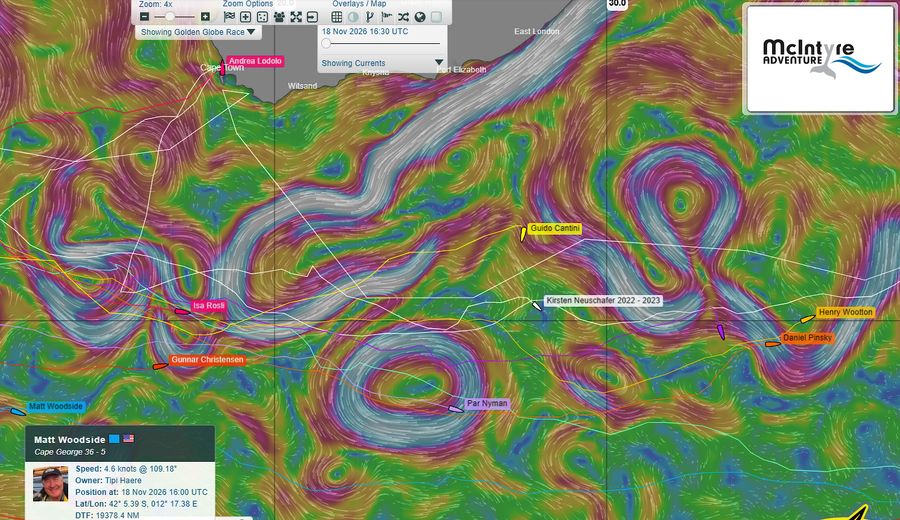
A diversion towards South Africa, potentially Port Elizabeth or Cape Town, was considered. If repairs could be completed and the relevant race requirements met, he could continue in Chichester Class, the category for sailors who make a stop.
Cantini later decided to accept a 72-hour penalty to consult his rigger, Franco. After checking what was possible in the sea conditions, he believes something has given way, though the precise fault remains unclear. "I've decided to carry on," he told Don McIntyre. He said he would hope for the best and see what happens. If the problem worsens, he plans to turn back and head for Cape Town. His dipole radio aerial is also damaged, affecting his ability to receive weather forecasts.
**Guillou rides the storm and pursues the record**
Out in front, France's Damien Guillou has recently endured a major storm aboard his Rustler 36, Solarem. GGR Window Live captured occasional seas of 7-8 metres and a reported burst of 18 knots as the yacht surfed down a large wave. Breaking water swept into the cockpit, bringing the force of the Southern Ocean directly to viewers ashore.
Guillou has become increasingly open on camera. Initially reserved, he now takes followers below to watch him cook, navigate and manage daily life. During the storm, he also showed the fear and concentration involved in keeping himself and Solarem safe.
His competitive ambition remains clear. Race control estimates he has reduced his deficit against the equivalent progress of 2018 winner Jean-Luc van den Heede to approximately 350 nautical miles. Winning the race and improving on that winning time remain his objectives.
Solarem is reported to be in excellent condition, and Guillou remains focused. His tentative arrival estimate for the Hobart film drop is around 17 December, subject to weather and progress. There is still a long way to sail before any record can be claimed.
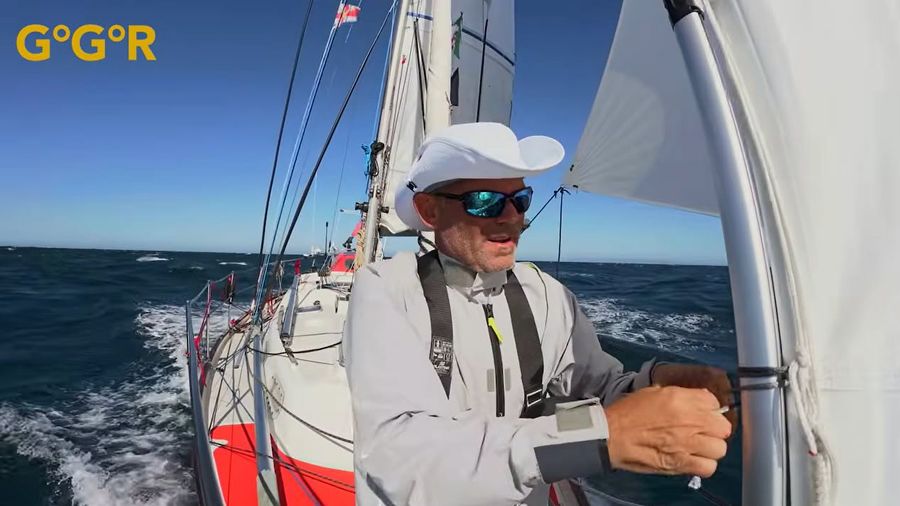
On 18 November, Guillou marked the next milestone in a brief message to race control: he was now closer to Cape Leeuwin than to the Cape of Good Hope, a small note that showed just how far he and Solarem have come.
**Beskardes recovers after a severe knockdown**
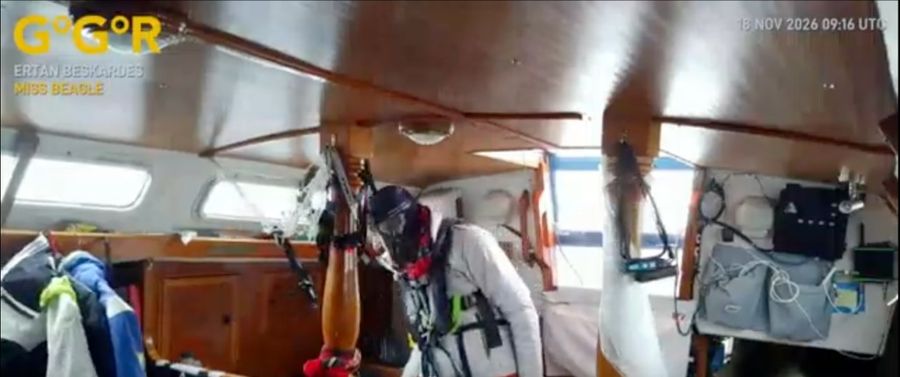
Beskardes, whose regular onboard accounts have earned Miss Beagle a strong Window Live following, has faced a shock of his own. A severe knockdown while transmitting live put the mast in the water, smashing the companionway stormboards and sending water below.
He described an experience that took time to recover from. The stormboards have since been repaired, the interior dried out and his voyage resumed. His subsequent move south to avoid the latest weather adds another demanding decision to an already testing passage.
**Christensen chooses to continue**
Aboard the Hans Christian 34 Pompoen, affectionately known as the Mighty Pumpkin, Gunnar Christensen has been speaking openly about the psychological pressure of the race. Even routine questions, such as when to reef, become more difficult when fatigue and uncomfortable conditions accumulate.
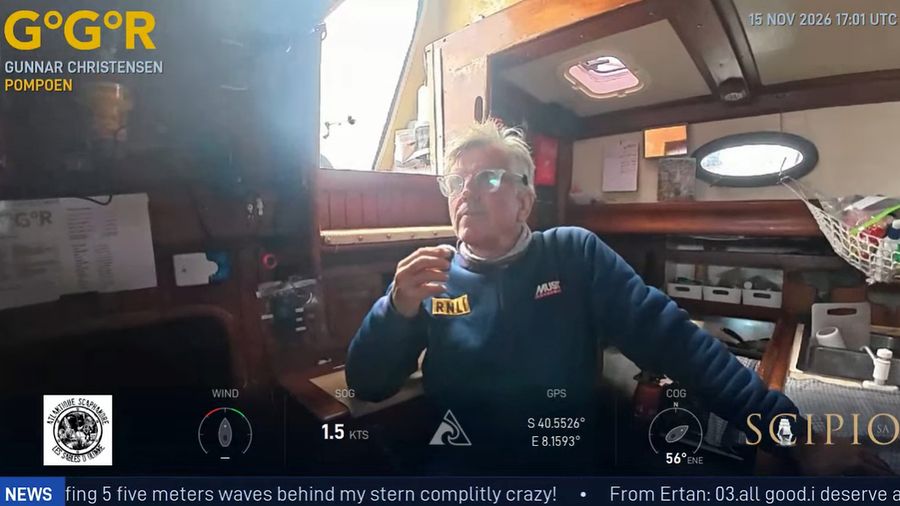
Over the past week, Window Live viewers watched him work through his reasons for considering retirement. At the back of the fleet, he described feeling lonely and exposed. He feared that by the time he left Hobart, most of the fleet would be thousands of miles ahead. Concerns about possible barnacles, smaller boat problems and his pace added to that uncertainty. His reflections were candid and difficult to watch, offering an unusually direct account of a sailor questioning whether to continue.
Christensen called McIntyre at race control. Before making a final decision, he was encouraged to consider an authorised satellite-phone call to his shore team, carrying a 24-hour time penalty. He made that call. Christensen decided to stay in the GGR and has since sailed on with renewed enthusiasm.
Sweden's Pär Nyman aboard Lazy Otter has also discussed his frustrations with the challenge. Nyman, who has spoken publicly about dyslexia and ADHD, said on Window Live that he wanted to speak to his daughter. Race control authorised a call if he wished, subject to the applicable time penalty. He has so far not taken that call.
**Lodolo brings BiBi safely to Cape Town**
Italy's Andrea Lodolo reached Cape Town safely aboard BiBi on 16 November, bringing his difficult passage with a fractured knee to a successful conclusion. Under Medical Support Offshore (MSOS) supervision, he managed severe pain, struggled to eat but remained hydrated, and kept in regular satellite-phone contact while encountering winds of up to 35 knots.
He sailed to within approximately 2 nautical miles of the breakwater before two sailors boarded to assist with the final approach. GGR thanks MSOS, the National Sea Rescue Institute, rescue coordination authorities, the Royal Cape Yacht Club and local supporters. Even 24 hours before arrival, Lodolo had been trying to tidy his beloved BiBi so she would look her best in port.
**Barnacles return to Olleanna**
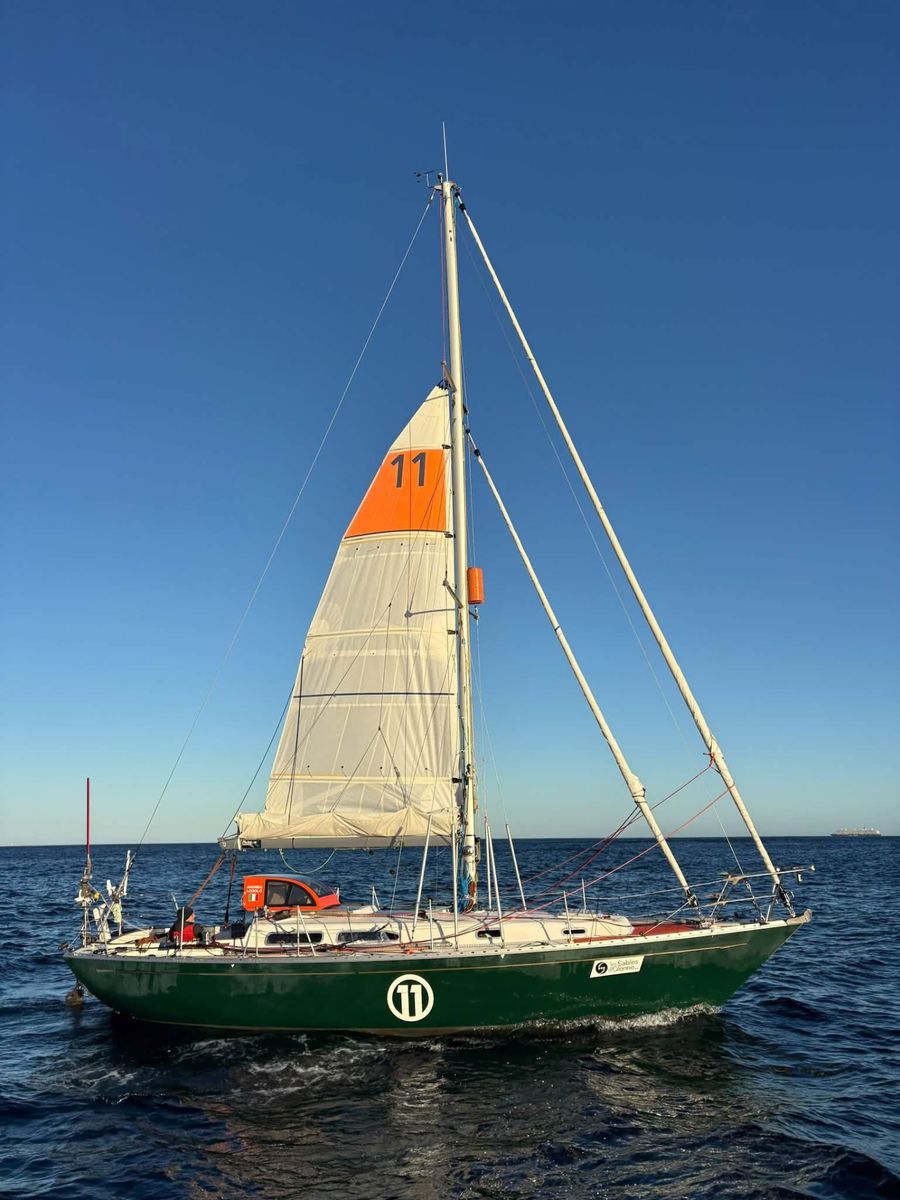
Canada's Isa Rosli has confirmed a second growth of barnacles beneath his OE 32, Olleanna, and is seriously concerned. He currently sees no prospect of being able to dive and clear the barnacles from his Coppercoat-treated hull.
The yacht's history makes the concern particularly sharp. During the 2022 edition, Jeremy Bagshaw was also slowed by barnacles aboard Olleanna and stopped at Hobart to scrape the hull before continuing in Chichester Class.
Farther back, Matt Woodside continues steadily aboard his Cape George 36, Tipi Haere. Amid the drama elsewhere in the fleet, he remains happy to be sailing, enjoying each day and looking forward to bringing his boat safely back to Les Sables-d'Olonne. For Woodside, just being out there is still a large part of the reward.
**34 places already allocated for 2030**
The demands being played out at sea have done little to diminish interest in the next edition. Organisers have announced that 34 places have been allocated on the initial GGR 2030 list, representing 18 nationalities, ahead of the September 2030 start. Ireland and the USA lead with five entries each.
Organisers also report social media figures running 300-400% above those of the 2022 edition. McIntyre sees the expanding international entry as further proof of the Golden Globe Race's success across the sailing world and its power to inspire ordinary people.
For the current fleet, the immediate task remains getting through the next weather system, keeping the boat working and finding the resolve to continue. They take the race a day at a time, knowing that everything still depends on reaching the finish.