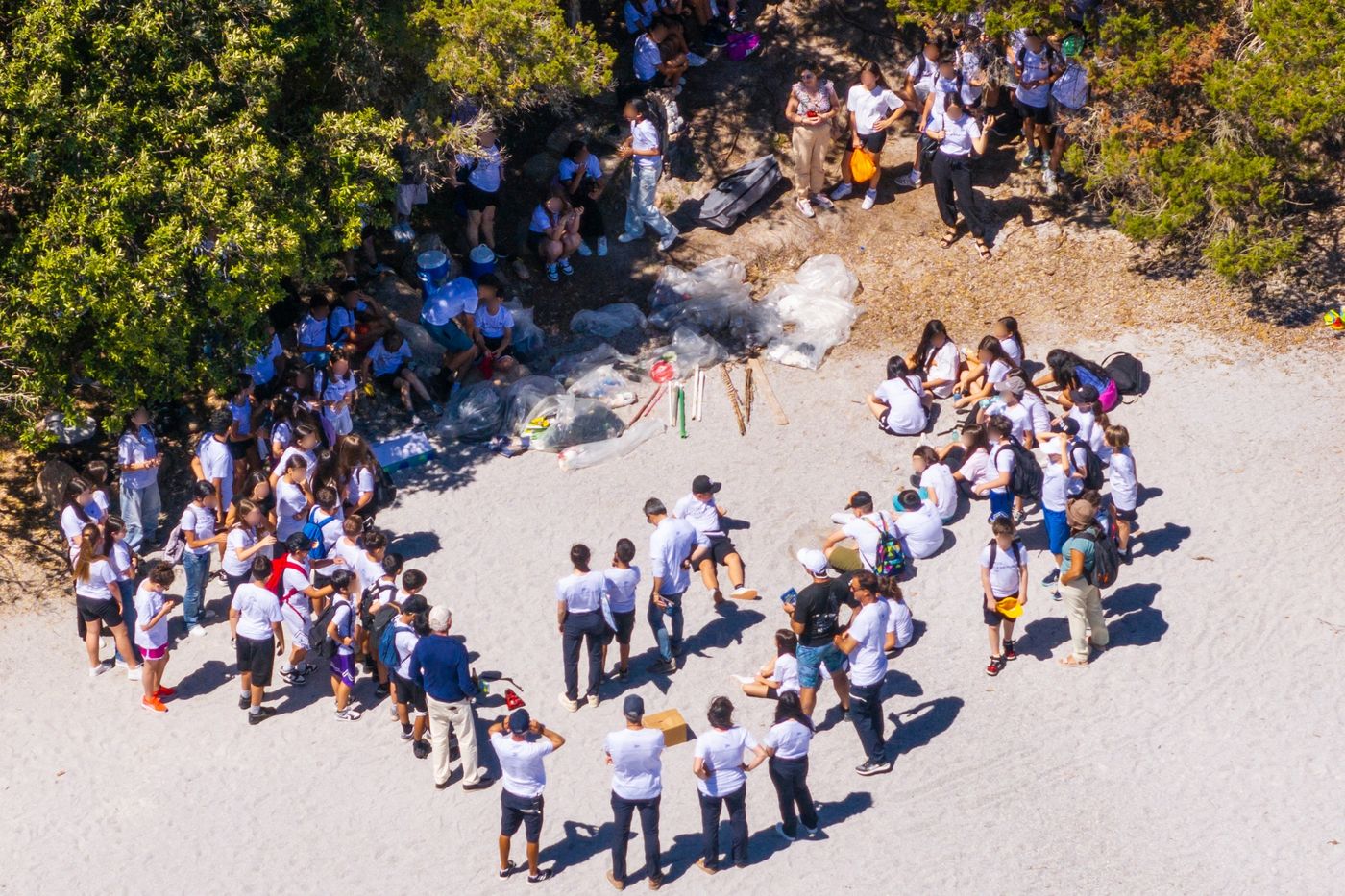
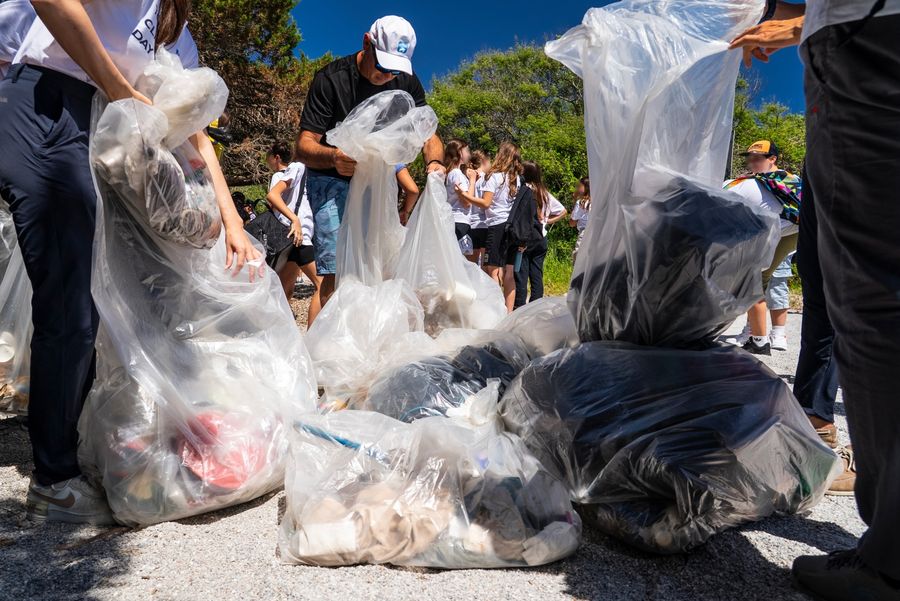
Nine years in, the Yacht Club Costa Smeralda's annual Clean Beach Day shows no sign of losing its momentum. The ninth edition brought a hundred secondary school students to Capriccioli Beach in Porto Cervo, where the morning's work yielded 150 kilograms of waste pulled from the sand and the shallows. The haul ranged from plastic bottles through to microplastics invisible to the naked eye.
What set the occasion apart from a straightforward litter pick was the company the students kept. Researchers from the National Research Centre in Oristano worked alongside the young participants throughout the cleanup, pausing to discuss marine pollution and biodiversity in ways that gave the day the character of a field lesson rather than a community obligation. Local officials attended as well, watching as students assembled posters on the theme of ocean protection. From that collective effort, a single message took shape: "Let's save the sea."
For a club so thoroughly defined by the waters surrounding it, this kind of work carries genuine meaning. YCCS Secretary General Giorgio Benussi put the reasoning plainly: "Protecting the oceans requires everyone to contribute, and educating the younger generation is one of the most effective ways to build a sustainable future." The club coordinated with the Municipality of Arzachena and the One Ocean Foundation to ensure the day amounted to something more substantial than tidying up a photogenic stretch of Sardinian coastline.
The students combed through sand and rock with a thoroughness that went well beyond what a casual visitor would manage, surfacing items that most passers-by would simply never notice. For many of them, it was probably their first real encounter with what marine pollution looks like when you are kneeling in it rather than reading about it. To help bridge that direct experience and broader scientific understanding, researchers drew on a comic strip titled "Carrie, a brave turtle in a changing world," using it to explain changing ocean conditions in terms a young audience could readily grasp.
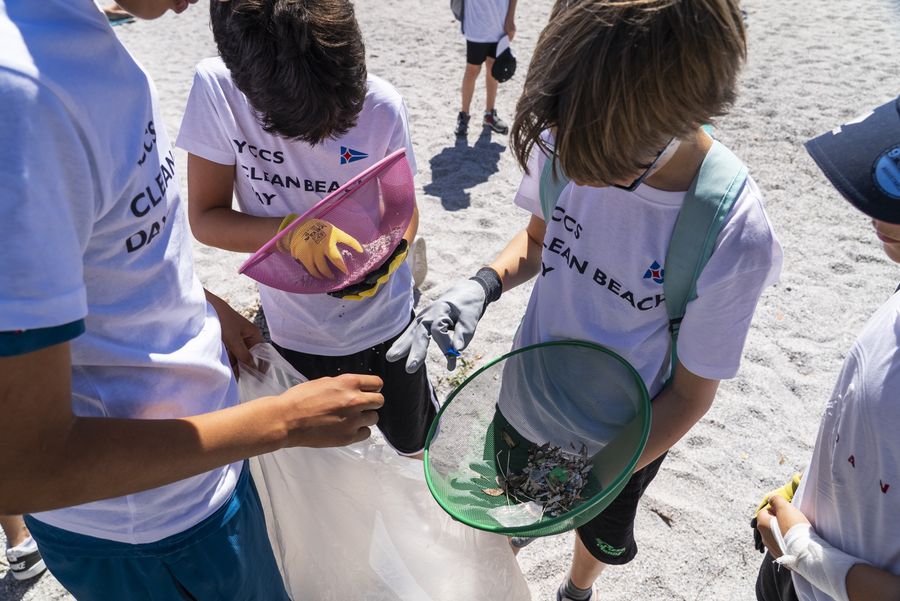
The club positions events like this within a broader commitment to sustainability and marine stewardship, grounded in a clear conviction: young people who have genuinely grappled with the ocean's problems, who have sorted microplastics from wet sand and listened to researchers describe what those particles do, are far more likely to become advocates for the sea than those who have only ever encountered the issue at a distance. That kind of understanding tends to shape how people approach their own choices, and it tends to carry forward.
Such a shift rarely makes headlines, yet it quietly reshapes communities across a generation. A hundred young people in Sardinia now hold a direct, physical memory of having restored, however modestly, a stretch of coastline they know and care about. They have turned microplastics over in their hands. They have heard, in concrete terms, why the health of the ocean is as much their concern as anybody else's. At a time when disconnection from natural systems is becoming more common among young people, that is no small achievement.