Old boats, it turns out, are where the marine industry's new money lies. Groupe Bénéteau has launched NEO, a dedicated programme to bring older sailing boats back to the yard and prepare them for decades more use.
The French group, the world's largest builder of series-built pleasure craft, used its opening keynote speech at Metstrade in Amsterdam on 17 November to explain why. CEO Bruno Thivoyon told the trade show that the refit arm is becoming increasingly important to the business, and is pulling in new customers.
"A refitted yacht, having all the electronics that boaters want to have today, having all the controls to 2020's standards, an interior with modern provisions in fresh styling, will cost roughly half the price as the same boat new," Thivoyon said. "We are attracting a new group of customers with the refit activities." He returned to the theme several times during the show, including on the main stage during the opening ceremony and later at the Young Professionals Club.
NEO CEO Arnaud de Vergnes says the model works for charter operators too. "With these refit activities, we offer the charter companies that are often our first customers, the chance to upcycle their fleet or to sell their yachts to the next users with upgraded value." He adds that the cost of the refit, with all the new equipment and labour that is put in, "is often less than the extra value a yacht has gained, following the refit." The Lagoon cabin catamaran brand sits alongside the Bénéteau and Jeanneau monohull cabin sailing yacht brands in the NEO programme.
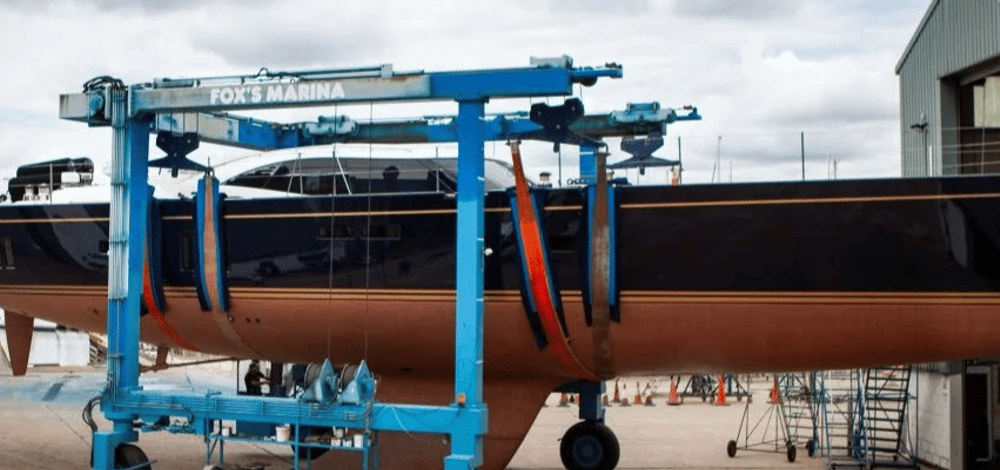
Oyster Yachts is running a similar strategy from a refit yard it has opened in Barcelona, where 45 Oyster yachts have come in to be refitted before the next Mediterranean sailing season starts. CEO Stefan Zimmerman Zschocke says some of the boats have been sailing for decades, yet the hulls and all the essentials are still quite good.
"I do believe that it is also our environmental obligation to refit our yachts," he says. "These yachts are made to easily be sailed for 40 to 60 years. It is much more sustainable to re-use the yacht with some upgrades than to build a new one." Because the Barcelona facility is run by Oyster as the original yard, refitted yachts come with yard warranty.
Oyster will also support refits done at other yards, as far away as the Maldives, supplying the original specifications of its installations if required. "We would rather perform the refit ourselves," Zimmerman Zschocke says. "But most of all, we want a happy customer. Even if we did not sell the yacht of our brand from our own brokerage. Even if we are not providing the refit ourselves. A happy customer is one that comes back."
Thivoyon also pointed to an electric future. He told delegates that tomorrow's customer wants a simple boat with more space, one that is simpler to handle and doesn't require constant maintenance or extended navigation knowledge. An industry standard with universal components could be developed for sailing yachts, he said, including renewable energy generation and integrated energy management across propulsion and hotel functions. The group's ambition is to convert 15 percent of all sailing yachts to electric propulsion within the next decade.
Zimmerman Zschocke says refits matter beyond changes of ownership, too. "The speed in which electronics and batteries evolve is astonishing," he says. "So we try to keep a close relationship with our clients. Maintenance and keeping the yacht up to date are areas of continuous attention. We have the goal to extend the lifetime of our yachts."
De Vergnes puts it plainly: "It is not only keeping track of your customer and your product. It is maintaining the value of these yachts by keeping them updated. And yes, we want to make a healthy business while doing so."