The yachting industry is being pushed to think beyond simply reducing harm, towards actually leaving the ocean better off than it found it. That was the theme running through a session at The Superyacht Forum, where a group of design students put the room on the spot.
Students from the Besign School of Design, based in Cagnes-sûr-Mer on the French Riviera, challenged delegates to come up with yacht concepts that create a genuine positive impact on marine environments, not just a less damaging one. The school, which offers Bachelor's and Master's study in sustainable design, was founded in 2013 by three designers: one from the Technical University, one from Renault, and one from VPLP design, the French office well known in the marine world for its racing yacht pedigree, Ocean Wings sail technology and a string of futuristic yacht concepts.
"We want to move towards a methodology of design that will help the planet," one Besign student told the forum.
Three regenerative initiatives were put forward as evidence the shift is already underway. The United Nations Ocean Conference, held in Nice in June 2025, established a High Seas Treaty protecting large tracts of ocean as natural reserves. The European Union's new Ocean Action Plan, meanwhile, includes regenerative aquaculture measures, with particular focus on preserving healthy starfish populations. Yacht owners, the forum heard, can contribute simply by collecting seawater data on their voyages at no cost, feeding raw material into ocean studies and the development of ocean-preserving action.
Bamboo featured too. Geoversity, a boatbuilding initiative exploring bamboo as a hull material, points to the crop's fast growth, fast regrowth after harvesting and continuous supply of strong, water-resistant fibre as a genuine alternative to conventional materials. A first bamboo canoe is currently under construction in the Netherlands, built by Roelof van der Werff and Henk Bergsma.
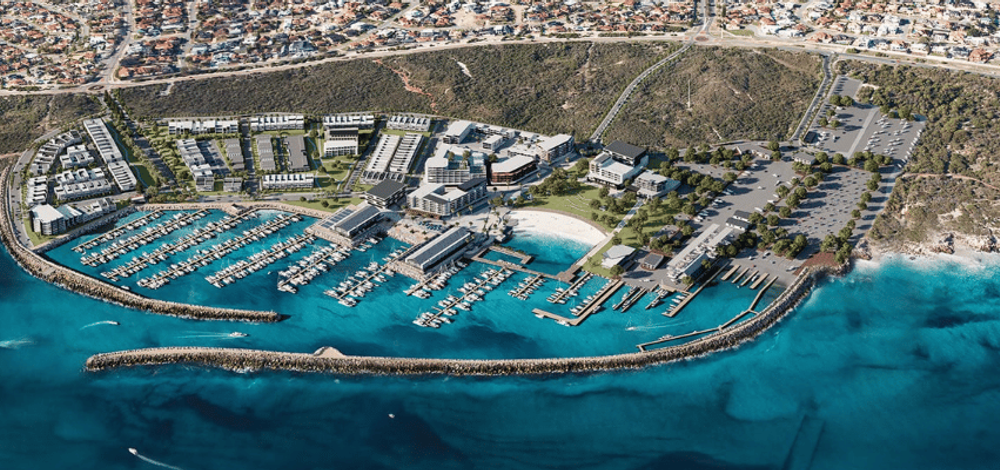
A third idea, Coralliance, involves underwater structures and coatings fitted to marina infrastructure that actively encourage the growth of aquatic life, helping revitalise the waters in and around the docks. The Ocean Reef Marina development in Joondalup, a suburb of Perth in Western Australia, is one project putting the concept into practice.
Delegates were then split into eight small groups and asked how their own vessels could deliver a positive impact on ocean life, with discussion covering marinas, refits, energy management, yacht equipment and more. Every group found ways to reduce pollution. None could land on a genuine method of turning luxury yacht use itself into a net positive.
One real example did surface, though, at a side event called Vrithink's Night Out, held in Amsterdam on the Monday evening during the week of The Superyacht Forum and Metstrade. Captain Glenn Dalby, master at large yachts operating mainly in the Caribbean, described taking the yacht he was then operating to Trinidad after a hurricane had struck the island, providing humanitarian help in the aftermath. Large Caribbean yachts, he explained, all carry desalinators and water purification systems capable of producing vast amounts of very high quality potable water, far more than crew and guests need.
A lorry with a tank pulls alongside, the water gets pumped across, and the system simply makes more for those on board. The owner, he noted, can remain anonymous or be heralded as a help. Either way, the water gets there.