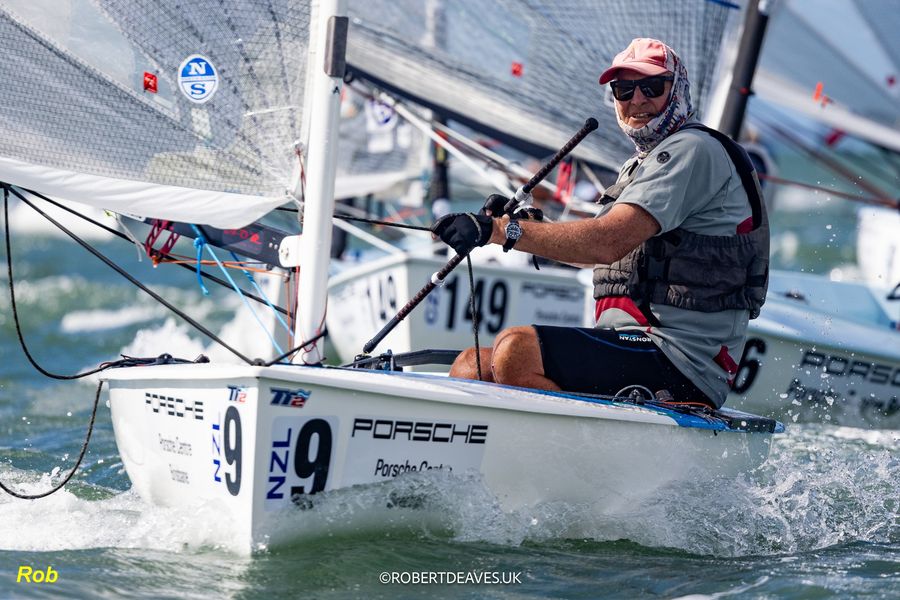
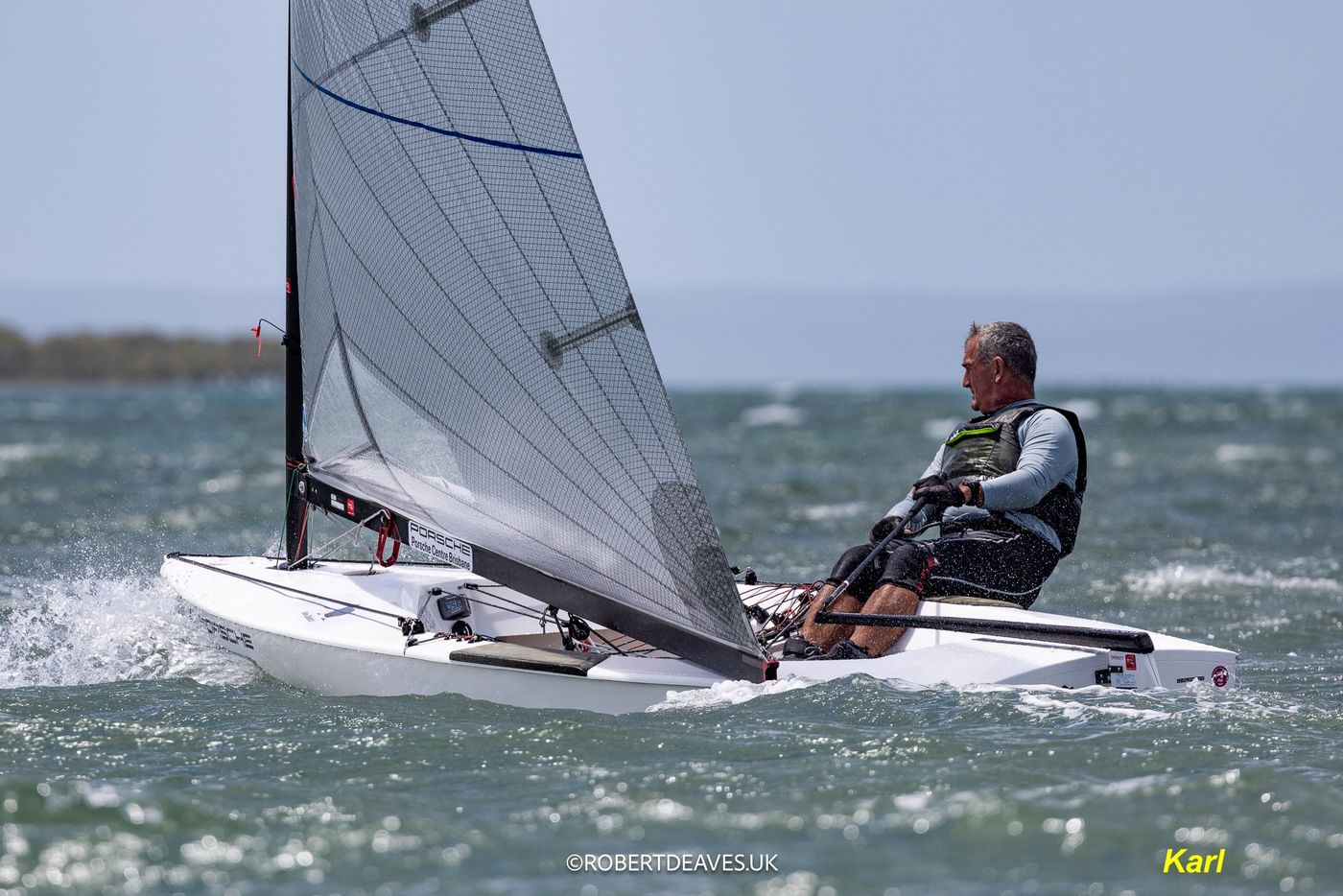
The boats were finally back, and the wait proved entirely worthwhile. The Porsche Finn World Masters (FWM), held from 20 to 27 February on Moreton Bay, drew 108 sailors from 17 countries to what stands as the most competitive masters Finn fleet ever assembled anywhere in the world. The entry list included past open and masters world champions, Olympians, Olympic medallists, Olympic coaches, and the sailor who held the world No.1 ranking at the time. Against that field, the New Zealand team produced its finest FWM performance to date.
Conditions across the regatta varied considerably. Early races were sailed in sunny breezes of 6 to 15 knots, while the closing days brought 16 to 22 knots with gusts reaching 28 knots as rain squalls swept through the course area. Racing inside Green Island meant the breeze was noticeably shiftier and more variable in pressure than what sailors had experienced the previous week during the Finn Gold Cup, which was sailed outside. Errors were punished without mercy. One prominent European competitor remarked that the standard of racing in the southern hemisphere was a step up from the northern hemisphere, with positions extremely difficult to claw back once lost at the first top mark. The results confirmed it: apart from Rafa Trujillo, a past FGC winner and Olympic silver medallist, not one competitor managed to place inside the top ten across all seven races.
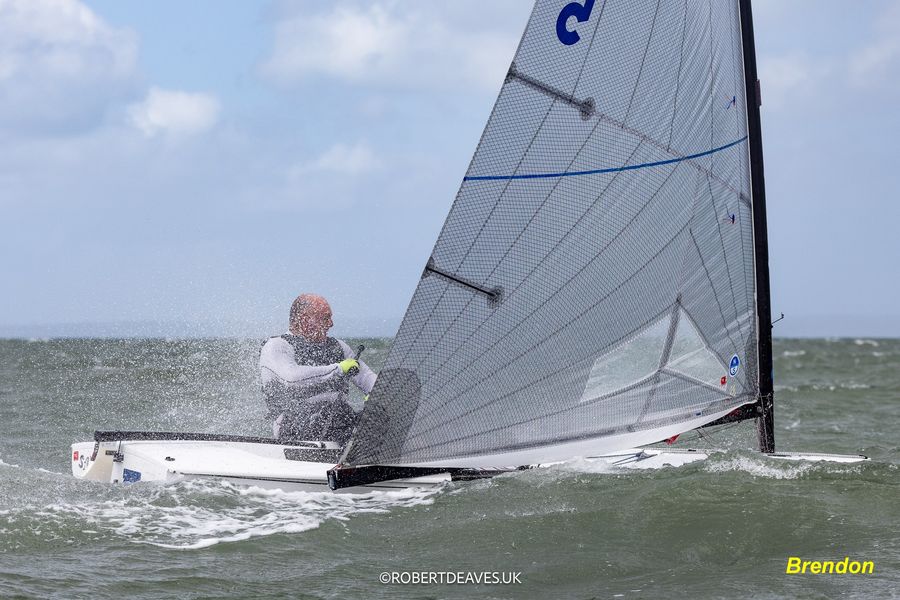
The deserved overall winner was Brendon Casey, Australian National Champion and 2012 Finn Olympian, who edged out Rafa by a single point. Karl Purdie of New Zealand finished a further eight points back in third. The final race played out as a genuine match race between the two leaders, with Rafa sailing Brendon well down the fleet before the last run to the finish, where Brendon clawed back enough places to take the result. The margin was so fine that neither sailor knew who had won as they crossed the line.
From a New Zealand perspective, the team's collective achievement across the age categories was exceptional. The highlights are set out below.
| Result | Detail |
|---|---|
| Nations Cup – 2nd | New Zealand second behind Australia, ahead of Great Britain, France, Germany, Italy and Spain |
| 🏍 Overall – 3rd | Karl Purdie (Wellington) – NZ's first ever overall FWM podium finish |
| 🏏 GGM World Champion | Karl Purdie – Great Grand Master age group world title (his 3rd world title, following OK Dinghy World titles in 2008 & 2010) |
| Legends – 2nd | Rob Coutts (Auckland) |
| 🏍 Legends – 3rd | Denis Mowbray (Christchurch) |
New Zealand and Australia were the only two nations to produce three podium finishers across the various age categories.
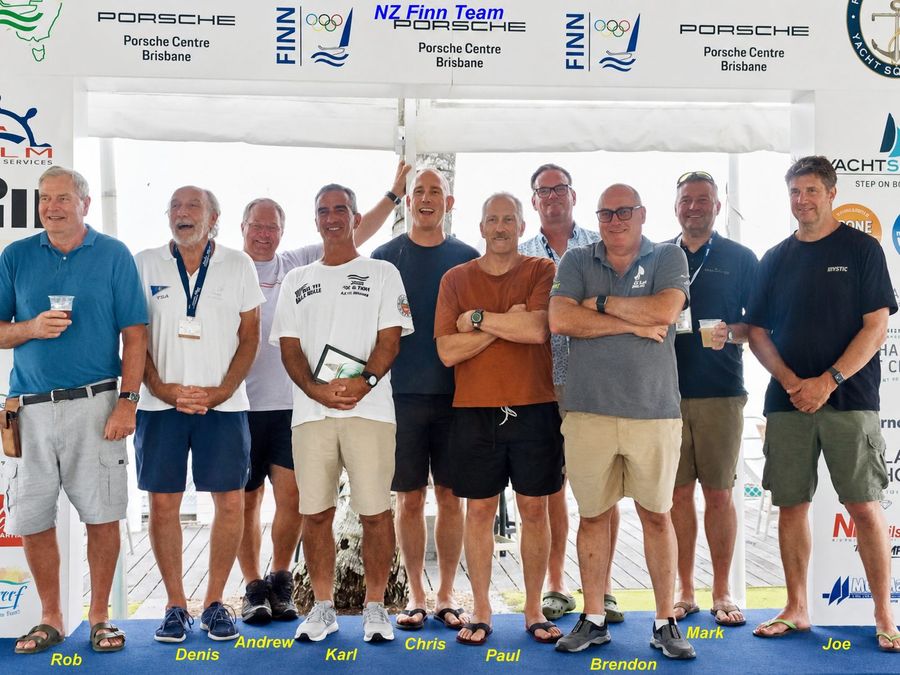
The NZ Finn Team competed under the banner of Finnuary 2026 at the Royal Queensland Yacht Squadron.
| City | Sailors |
|---|---|
| Dunedin | Andrew Duncan, Richard Hawkins |
| Christchurch | Brendon Hogg, Chris Wells, Denis Mowbray, Paul Bamford |
| Auckland | Tony Bierre, Joe Spooner, Mark Perrow, Rob Coutts |
| Wellington | Ray Hall, Karl Purdie |
Those results were not achieved in isolation. They reflect the competitive depth built through a demanding national regatta circuit comprising the Open and Masters Nationals, the South and North Island Championships, the Auckland Champs, and the Christchurch Champs. The bulk of the NZ team attends these events regularly, sharpening skills and sharing the latest tuning developments along the way.
February opened, before the FWM itself, with the Australian National Championship, an 83-entry event drawing sailors from 17 countries and widely regarded as a warm-up for both the Finn Gold Cup and the FWM. Also held inside Green Island, it featured a split fleet format with the two fleets redrawn daily according to results. Racing took place predominantly in light conditions of 6 to 10 knots and was won by Brendon Casey, with Rafa Trujillo a very close second. The top New Zealand finishers were Karl Purdie in fifth, Ray Hall in sixteenth, and Joe Spooner in seventeenth. The considerable unfairness the split fleet format can produce in its results was thankfully set aside for both the FGC and FWM, which were each run as a single fleet.
The Finn Gold Cup ran from 12 to 19 February. The opening four races were sailed in strong winds, predominantly 18 to 25 knots with gusts exceeding 30 knots on a regular basis. Anders Pedersen of Norway dominated the first half of the ten-race series, thriving in the heavy air, but as conditions eased across the final four races his lead slipped away. The eventual champion was Alessandro Marega of Italy, who secured the title with a race to spare despite never winning a single race individually and never placing outside the top eight throughout the series. It was a historic result, making him the first Italian to win this prestigious regatta. Brendon Casey finished third. Karl Purdie was the top New Zealand finisher in seventh place. Sadly, the FGC also ended Ray Hall's FWM campaign before it could begin. A capsize in race two resulted in all three tendons of his right shoulder joint being completely torn, ruling him out of what remained of the series and the Masters entirely.
Full results across all three regattas for every New Zealand team member are set out below.
NZ Finn Team Results Tables, Finnuary 2026, Royal Queensland Yacht Squadron, Brisbane, February 2026
| Sailor | Australian Nationals | Finn Gold Cup | Finn World Masters |
|---|---|---|---|
| Dunedin | |||
| Andrew Duncan | 38th | 37th | — |
| Richard Hawkins | DNC | 31st | 21st |
| Christchurch | |||
| Brendon Hogg | 24th | 39th | 38th |
| Chris Wells | 44th | 53rd | 42nd |
| Denis Mowbray | DNC | 60th | 57th 🏍 |
| Paul Bamford | 38th | 44th | 55th |
| Auckland | |||
| Tony Bierre | 48th | DNC | 86th |
| Joe Spooner | 17th | 15th | 14th |
| Mark Perrow | DNC | 25th | 13th |
| Rob Coutts | 27th | 43rd | 43rd |
| Wellington | |||
| Ray Hall | 16th | DNF | DNC |
| Karl Purdie | 5th | 7th | 3rd 🏍 |
DNC = Did Not Compete | DNF = Did Not Finish | 🏍 = Age group medal
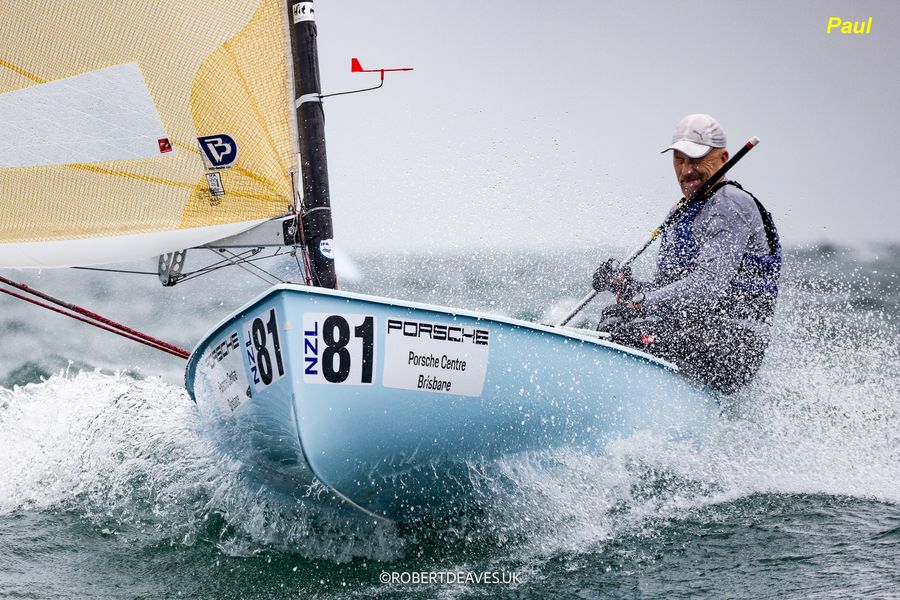
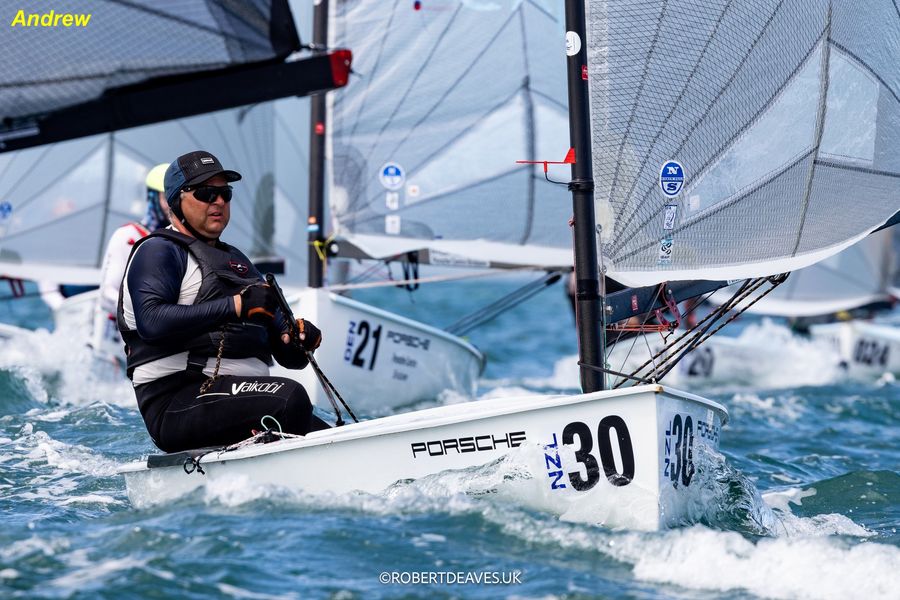
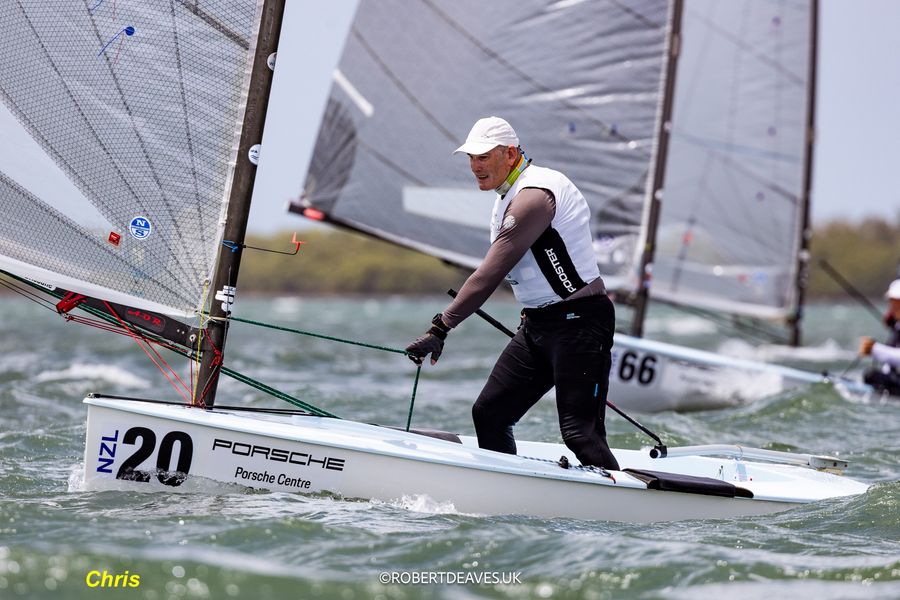
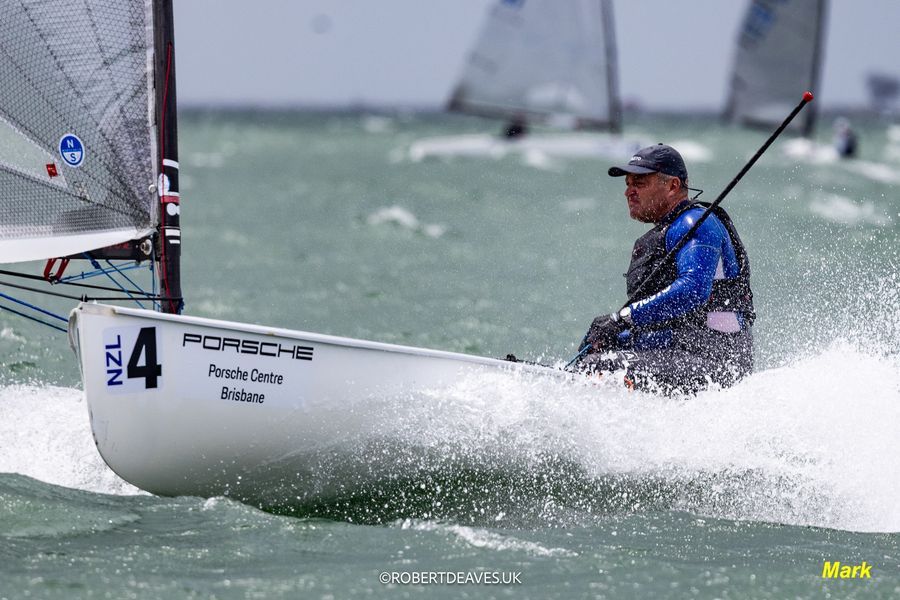
Scanning the individual results, the performances of Andrew and Richard from Otago merit particular attention. Both are relative newcomers to the Finn class, having sailed it for only two to three years, and neither had competed at a previous FWM. Despite that limited background, both consistently accounted for sailors with considerably more experience in sea-state conditions and large-fleet racing. The Christchurch sailors produced solid performances throughout and continue to lift with each FWM they attend. Much of that credit belongs to Brendon, whose work building and maintaining the local fleet has seen it grow into the largest and most competitive Finn fleet in New Zealand. Denis earning a bronze medal in the Legends division was thoroughly deserved and reflects the quality of racing he enjoys in Christchurch.
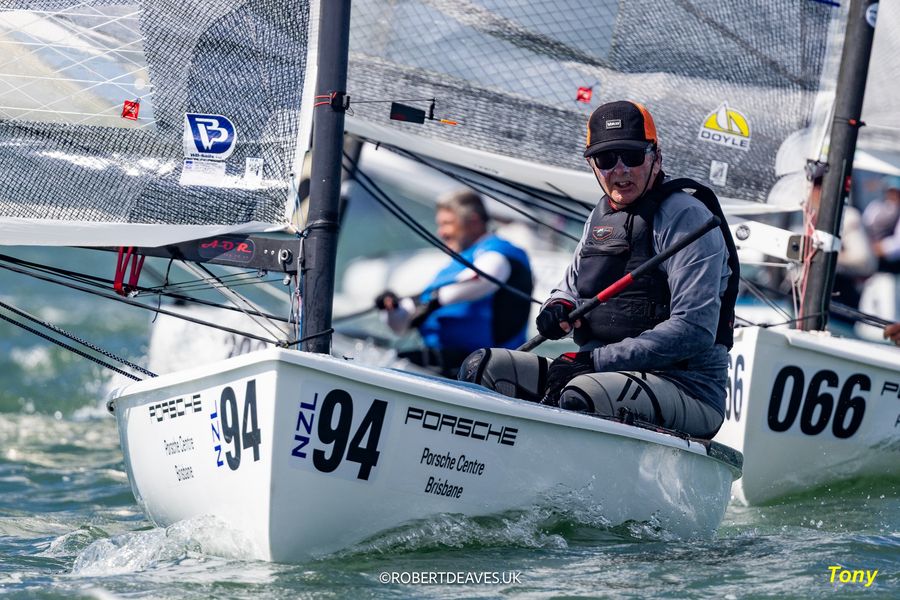
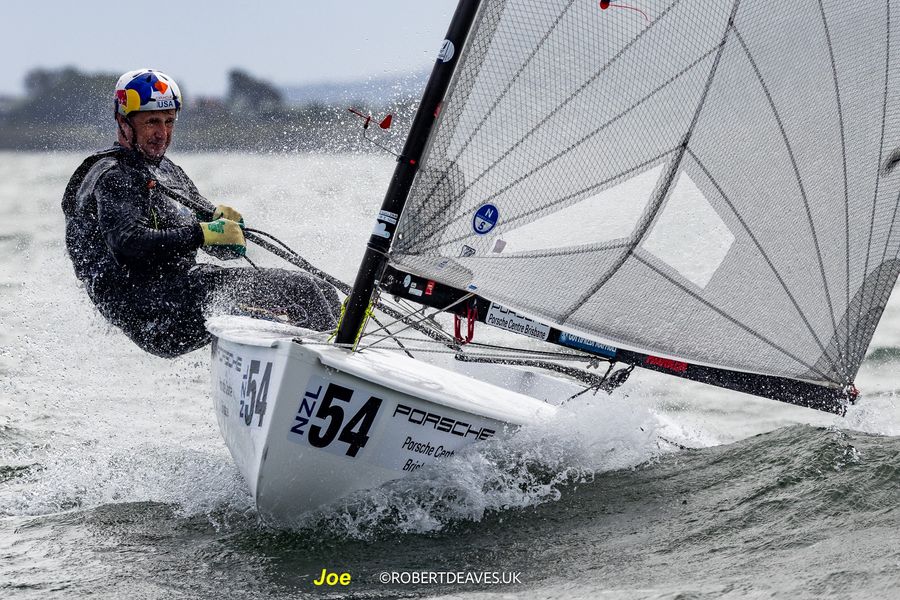
From the Auckland region, it was great to see Joe Spooner back in a Finn. During the mid to late 1990s he was a fixture on the Olympic circuit, frequently serving as Craig Monk's training partner. He put in some very solid results and showed devastating upwind pace, particularly in the stronger winds. More time in the boat developing his free pumping technique and he will be a very strong FWM and FGC competitor in the years ahead. Mark Perrow had flashes of genuine brilliance, showed superior heavy-air upwind speed, and finished with a great overall FWM result. He is capable of considerably higher placings as he progresses and is well worth following. Rod Coutts was again very solid and thoroughly deserved his Legends silver medal. Tony is capable of a higher result but simply had one of those regattas. With the exception of Tony, every New Zealander finished in the top half of the FWM fleet, a fantastic outcome. Ray Hall, the current New Zealand champion, had been expected to perform very well, but the shoulder injuries he sustained during the FGC made that impossible.
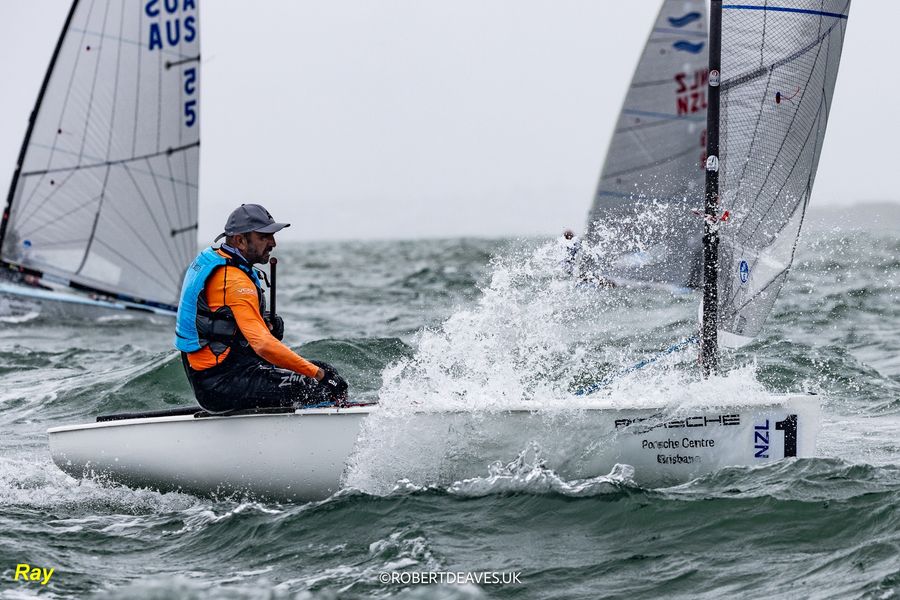
Karl's high-level performance across all three regattas was built on eighteen months of intensive on-water and fitness training. During that period he and Mark Perrow raced at the Queensland State Championships, two Sail Brisbane regattas, and the Australian Mid-Winter Nationals, all held at the Royal Queensland Yacht Squadron, specifically to build additional regatta and venue experience. Ray Hall had also competed at two of those events. On a lighter note, having finally ticked off his 531 OK Dinghy sail number, being able to do the same with his Finn sail number of 111 came as a considerable relief.
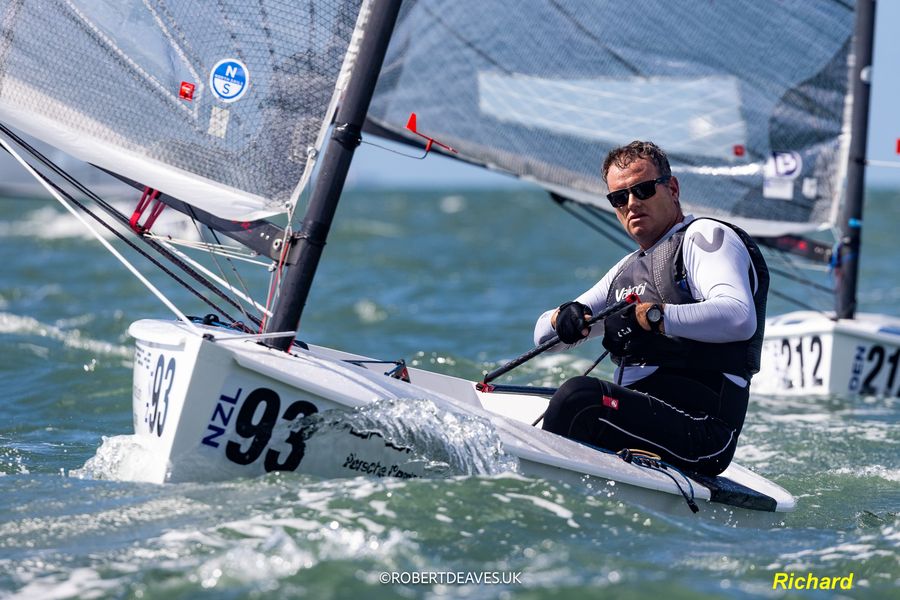
February 2026 set an unprecedented standard for quality Finn racing, and the Royal Queensland Yacht Squadron deserves considerable credit for establishing a benchmark that future international Finn regattas will find very hard to match. It marked the first time a national championship has been held at the same venue as the FGC and FWM over the same period, and every effort should be made to replicate that model going forward. Every sailor who attended received outstanding value in terms of both racing volume and social activities, including a rock concert held between the FGC and FWM events. The organisation throughout was faultless. Southern hemisphere sailors travel halfway around the world at considerable expense to compete at a world championship, and plentiful high-quality racing at the host venue immediately before the event begins is the very least a host club can provide. The Royal Queensland Yacht Squadron delivered that in every respect.