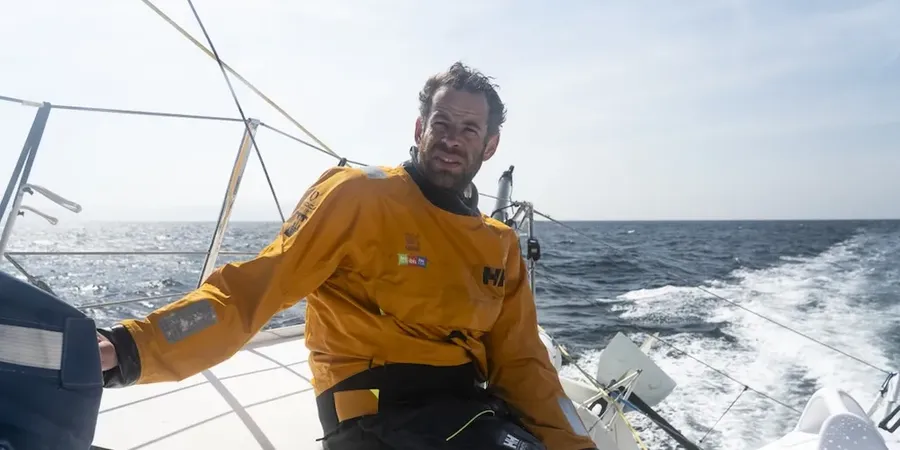
Nico d'Estais made his intentions plain well before the Vendée Arctique fleet cleared the dock. The French skipper aboard Café Joyeux has no interest in treating this race as a checkbox on the road to the Vendée Globe 2028. For him it represents raw, irreplaceable experience, the kind no budget line can buy and no simulator can replicate. A relative newcomer to the IMOCA class, having stepped up from Class40 racing, he arrives at this Arctic campaign with a clear sense of purpose and an open willingness to learn.
What draws him most powerfully is the race's unusual structure. There are no waypoints threading across a familiar ocean, no prescribed corridor through which every competitor must pass. The Vendée Arctique demands only that sailors cross the Arctic Circle and return, leaving everything in between entirely open. D'Estais expects the fleet to fracture in all directions as skippers chase their own readings of wind and current through polar waters, with no two boats likely to share the same line north. That freedom, he believes, is exactly what gives this event its singular character.
"It's a brilliant opportunity," he said simply. "We're heading somewhere most of us never sail. There aren't many races like that."
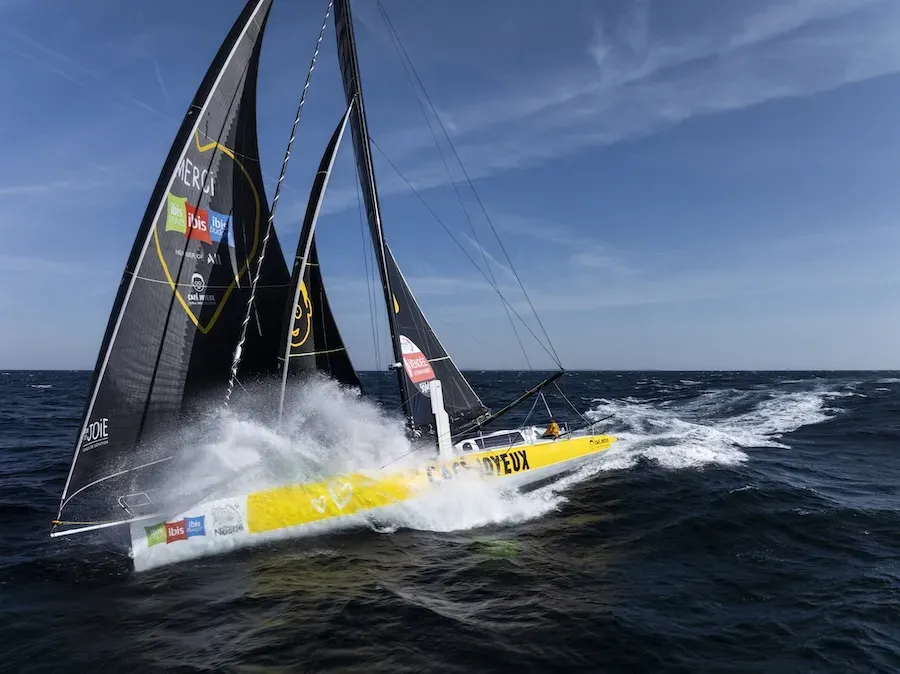
The format may energise him, but the competitive reality presents a harder question. Café Joyeux is the only non-foiling IMOCA in the fleet, a conventional hull without the hydrofoil technology that lifts rivals clear of the water and drives them through light air at speeds a traditional design cannot approach. Strong winds and heavy seas are forecast for the Arctic leg, conditions that tend to reward the foiling machines. D'Estais does not shy away from that reality, though he treats it as a problem worth working through rather than an outcome already settled.

He can point to the 1000 Race earlier in his campaign as evidence that the gap is not always unbridgeable. He finished with at least one boat behind him, a modest result by some measures, yet meaningful within a longer cycle aimed at 2028. His ambitions for the Vendée Arctique follow the same logic. If one or two rivals find themselves slower than Café Joyeux, he will regard that as genuine progress. The Arctic will test his boat's geometry and his own judgement in equal measure, but neither prospect appears to unsettle him.
What drives d'Estais above all is the sheer novelty of the undertaking. His team has spent only a short time with the IMOCA, and the learning curve remains steep for everyone involved. Polar waters offer a classroom stripped of assumptions, a place where the boat reveals its actual qualities without the overlay of established competitive wisdom. For a skipper patiently building a campaign toward the world's most demanding ocean race, that education carries considerably more weight than any single finishing position.