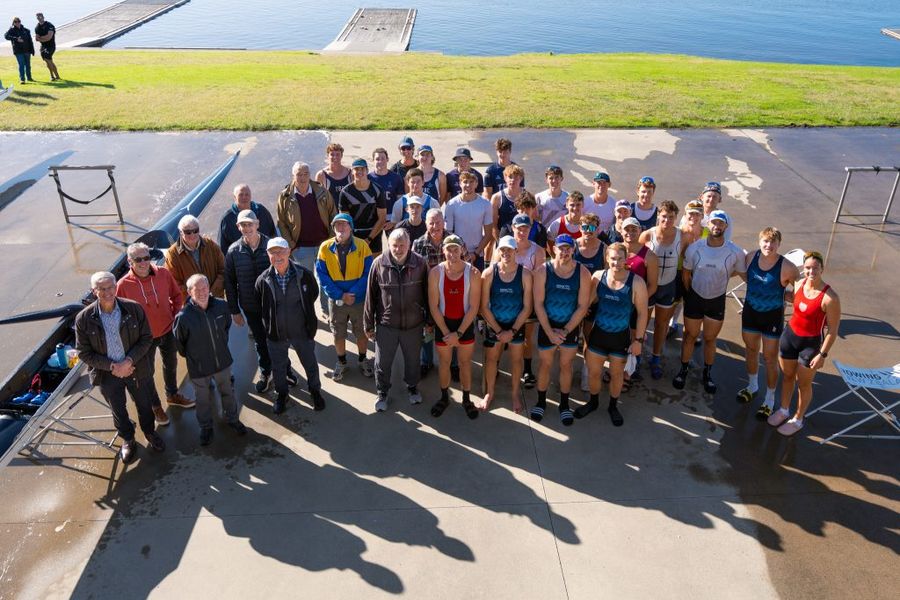
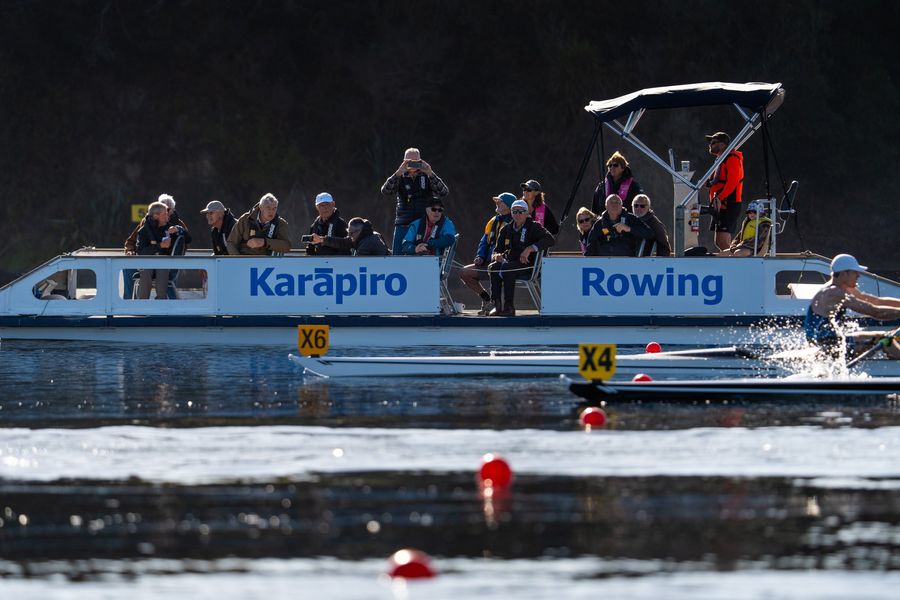
Lake Karapiro provided a fitting backdrop last weekend as 13 members of New Zealand's 1976 Montreal Olympic rowing squad gathered for their first reunion since competing in Canada half a century ago.
They came to watch the Winter Series for current Elite, U23 and other representative athletes, but the pull of Karapiro runs deeper than that. It was here, in March 1976, that many of them last truly went to war against each other, fighting for national titles and Olympic selection in one of the great eras of New Zealand club rowing.
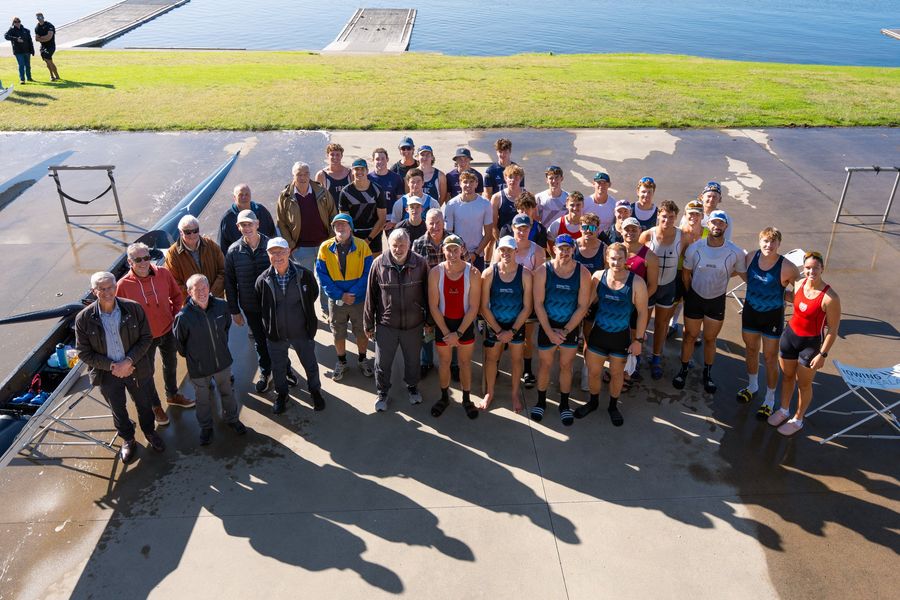
The rivalries surfaced quickly once the group boarded the barge to follow the Elite crews down the course.
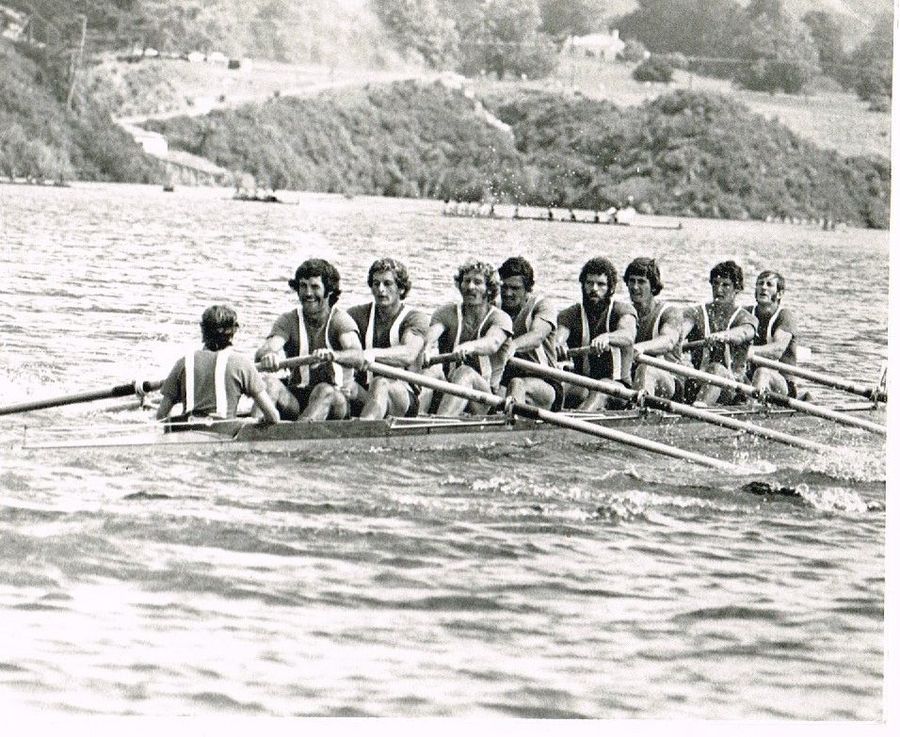
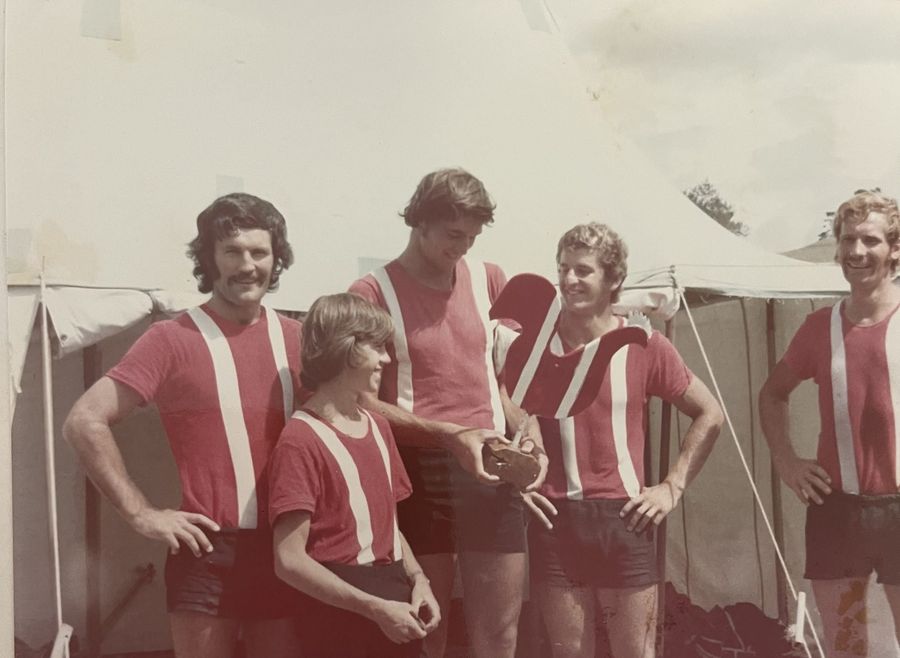
At the 1976 national championships, Avon, Petone and Waikato had produced three of the finest club eights seen in this country. Fred Strachan, wearing his Convenor of Selectors hat after coaching Avon, told the Christchurch Press that any one of them "with no changes could have qualified for an eight-oared final in a world championship or Olympic Games." The Avon boys have never tired of reminding their old rivals about the coxed four's three consecutive Boss Rooster titles between 1974 and 1976. Fifty years on, nothing has changed.
Avon made history at those championships, becoming the first South Island crew to win the Men's Championship Eight. Their victory came despite an extraordinary secret that only emerged after the race.
"What we didn't know until afterwards," says Athol Earl, "was that about 400 metres out from the start, Trevor realised one side of his body wasn't working. He had the nous to think, 'Well, they don't stop races for health issues,' so he just swinging to keep in time basically. And then about 500 metres from home, his body started working again."
It was not an isolated incident. At a training row in Syracuse before the Games, Coker passed out and fell into Ivan Sutherland's lap. "Leading up to Montreal, the doctors thought he was dehydrated, or just generally low, they didn't know what was wrong with him," Earl recalls. It wasn't until the 1979 national championships at Lake Waihola that Coker received a proper diagnosis. What had been thought a cyst proved to be an inoperable brain tumour. Trevor Coker died in 1981.
Those who rowed alongside him speak of him with unmistakable warmth. "He was an exceptionally good influence on the rest of us," says Earl. "He always thought of other people and put other people first. He made us row better. I don't know how else to put it, he was just the best bastard I've ever known in my life."
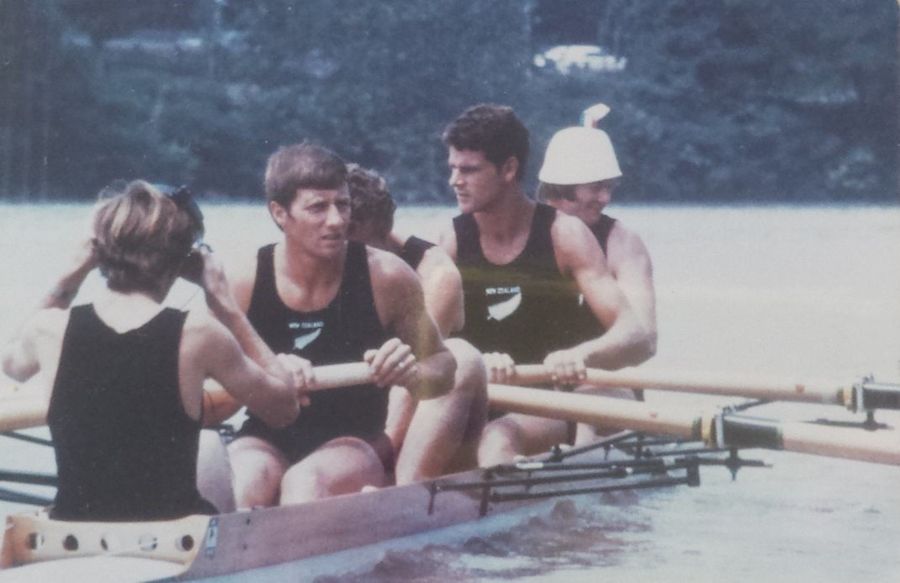
The Montreal campaign itself was a hard one. A budget of just $56,000 excluding airfares left the two fours racing in heavy second-hand boats. A batch of new carbon-fibre oars shipped from England arrived at JFK to be found in a Pan Am cargo shed, handles sheared off by a passing motorised stacker. Tensions within the eight added further strain.
The eight led at the 1250-metre mark and faded. The coxless four finished 0.71 seconds outside a bronze medal. Tony Hurt still has a poster of the crew at home. "Even now, I walk past it and think, 'Bugger, we should have won that race.'"
Earl has made his peace with it. "At the time I was pissed off...But on reflection I'm really proud of that bronze medal."
Five of the 18-strong squad could not make Karapiro. Lew Wilson is out duck shooting. Grant McAuley, who rowed in the coxless four, is gravely ill in Waitara, and his absence sits quietly over the reunion.
David Simmons coxed the New Zealand eight to bronze medals at the 1974 and 1975 World Championships before losing the Montreal seat to Simon Dickie. Last weekend he found himself back on the water for the first time in 50 years. "I had goosebumps out there," he says, "especially when the eight came along, I just loved the noise and the cohesion and the excitement."