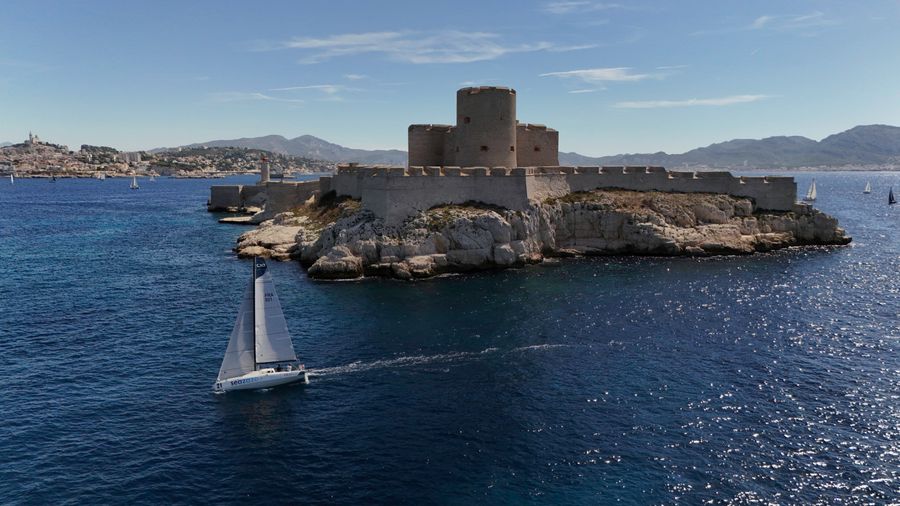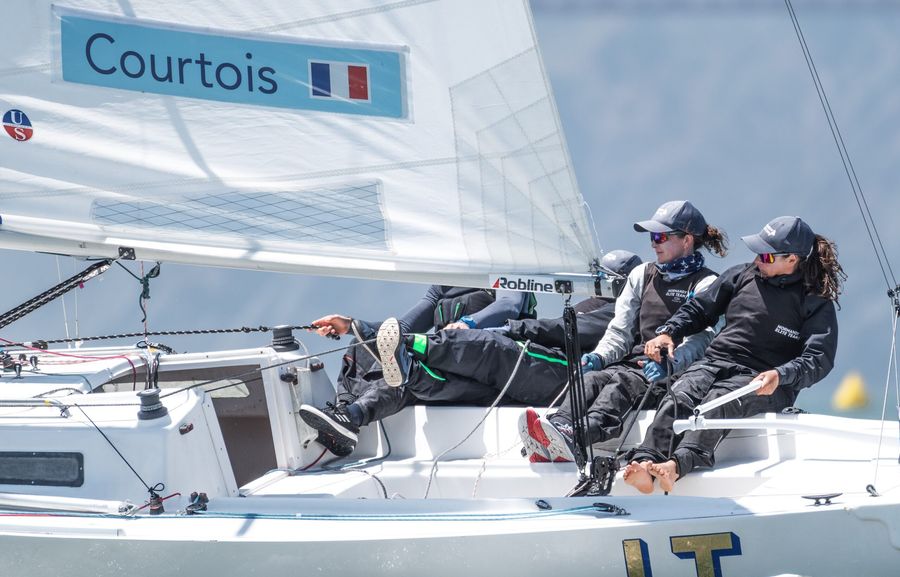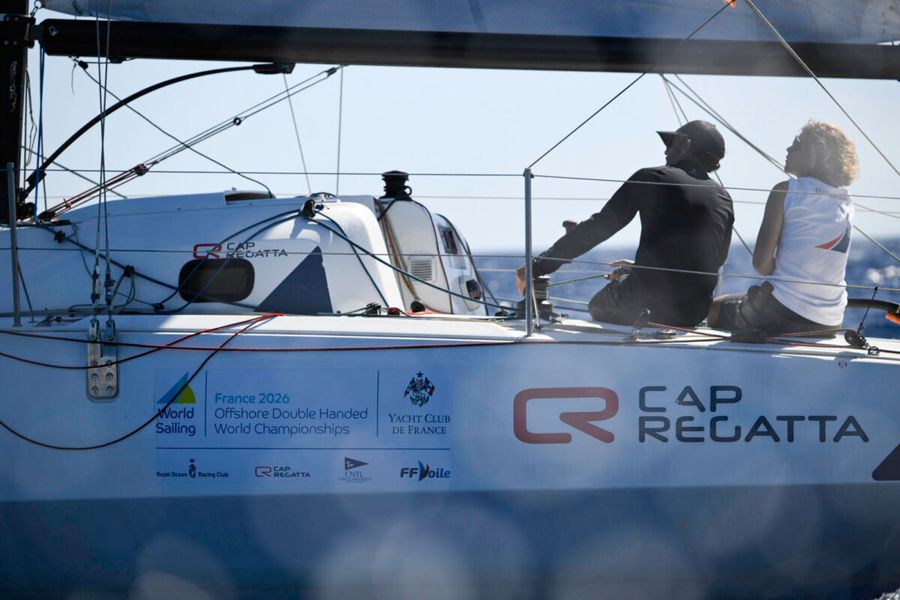
Marseille's waterfront comes alive this week as the 2026 Offshore Double Handed World Championship gets underway, with the first qualifying races starting at 11:00 CET on Thursday 24 September.
Two qualifying races and a repechage will whittle the fleet down to the 11 crews who contest a winner-takes-all final. That final is planned as a 48-hour race, weather permitting, concluding on 2 October.
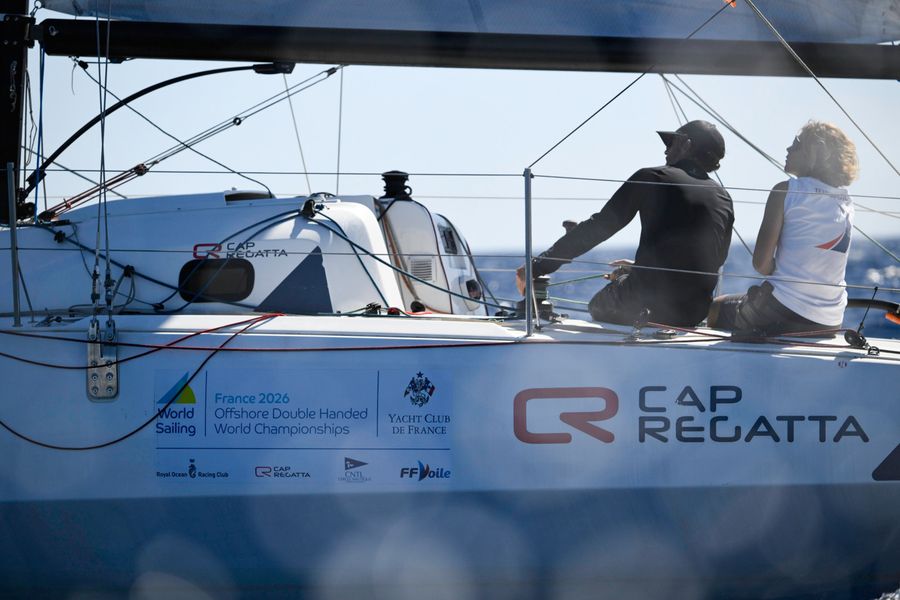
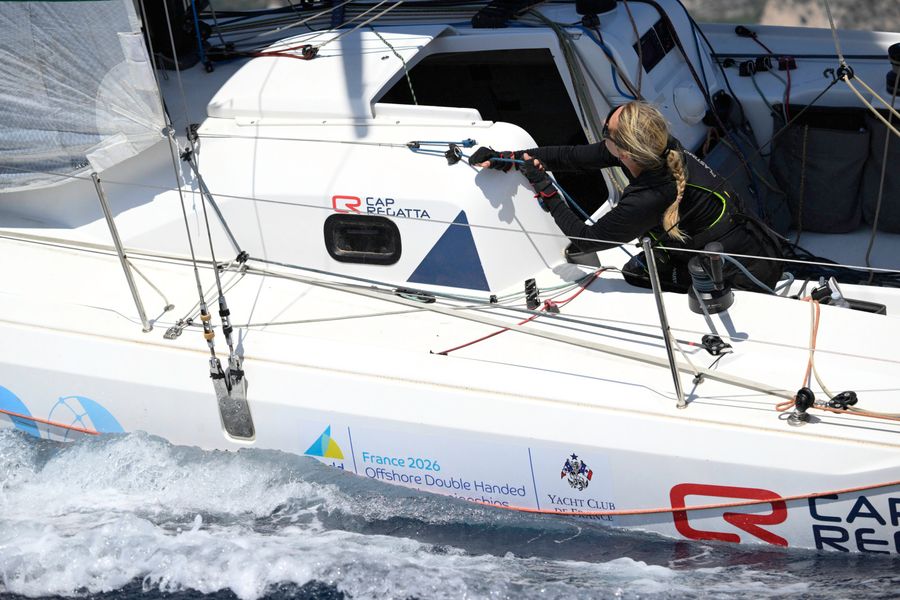
Every boat in the fleet is identical. Organisers have supplied a matched set of Sun Fast 30 One Design yachts, ensuring crew skill, rather than kit, decides the outcome. The event has drawn a deep field of talent from across the sport.
Among the competitors is Simeon Tienpont (NED01), a veteran of three Volvo Ocean Races, including one as skipper, and a two-time America's Cup winner. He lines up alongside Federico Waksman (URU01), winner of the 2023 Mini Transat, and Djemila Tassin (BEL01), who holds the Class40 24-hour distance record set during the 2025/26 Globe40 round-the-world race and recognised by the World Sailing Speed Record Council.
There is strong recent form from the offshore double-handed circuit too. Lina Rixgens (GER02) won her class in the Race to the Arctic aboard a Sun Fast 30OD, while Lena Having and Eivind Bøymo-Malm (SWE02) finished third in class in the same event.
Richard Bretherton and Inka Luhrs (IRE01) arrive as class winners of the RORC season points, Clara Witthinrich (GER01) won her class in the Baltic 500, and Thomas André (FRA01) returns as the reigning 2025 event winner.
Backgrounds across the fleet range widely, from Olympic dinghy racing to transatlantic IMOCA 60 campaigns. For some, the Sun Fast 30OD is a relatively small offshore platform; for others, it is among the largest boats they have raced competitively.
National recognition runs through the fleet as well. Jonas Gerckens (BEL01) is a four-time Belgian Sailor of the Year, while Spain's Hugo Ramón (ESP01) and the Netherlands' Tienpont have also been recognised at national level.
The mixed format gives female sailors a platform in a discipline where women remain underrepresented. Several competitors also draw on careers in science, technology, medicine and engineering.
Clara Witthinrich, now in the final year of her medical studies, says the rapid decision-making required in emergency medicine has helped develop skills that transfer directly to offshore racing. Catherine Kerians (CAN01) and Annie Stevenson (AUS01) bring experience from computer engineering, applying systematic thinking and data-led decision-making onboard. The fleet also includes astronomer Dr Gráinne Costigan (ESP01).
The top five teams from Qualifying Race 1 on Thursday 24 September secure places in the final. A further five places will be decided in Qualifying Race 2 on Saturday 26 September, also at 11:00 CET. The final place goes to the winner of Monday 28 September's repechage race.
The 11 qualifiers then contest the winner-takes-all final, an offshore race planned to run 48 hours, subject to weather conditions, before the championship concludes on Friday 2 October.
All boats are fitted with trackers, letting followers watch the racing unfold in real time, with onboard content also shared throughout the event via Instagram at @cap_regatta.
The 2026 Offshore Double Handed World Championship is organised by the Cercle Nautique & Touristique du Lacydon (CNTL), Yacht Club de France (YCF), Royal Ocean Racing Club (RORC) and Cap Regatta, with the support of the French Sailing Federation (FFV).