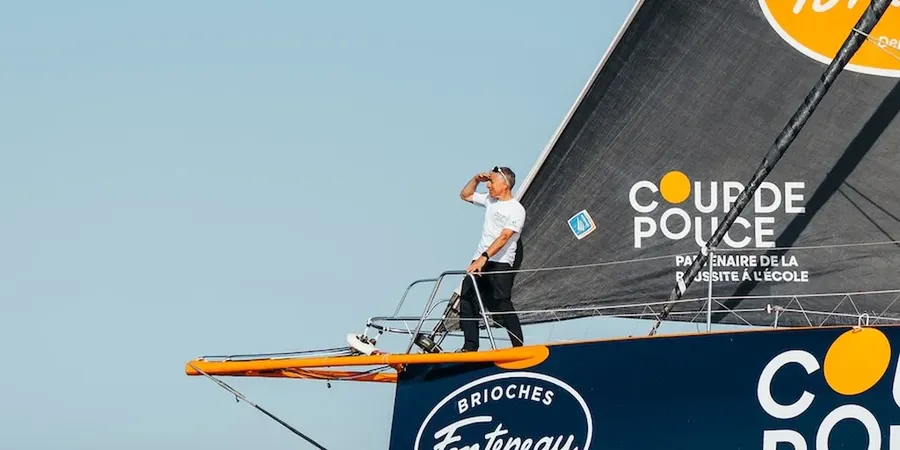
Manu Cousin arrives at the Vendée Arctique start line carrying something most of his rivals simply do not have: direct experience of what the race actually does to a person. Two previous editions have taken him far enough north to understand the particular character of Arctic racing, and that understanding sits at the heart of how he is preparing Coup de Pouce for what lies ahead.
"It's a very demanding race, and very tactical," Cousin said. The assessment is not a talking point. It comes from someone who reached the northernmost point in the first edition, then endured something considerably harder in the second, when conditions turned brutal enough to test the limits of what the boat and skipper could absorb. Two Vendée Globes add further depth to that frame of reference, yet neither of those campaigns prepared him for what the Arctic puts on the table.
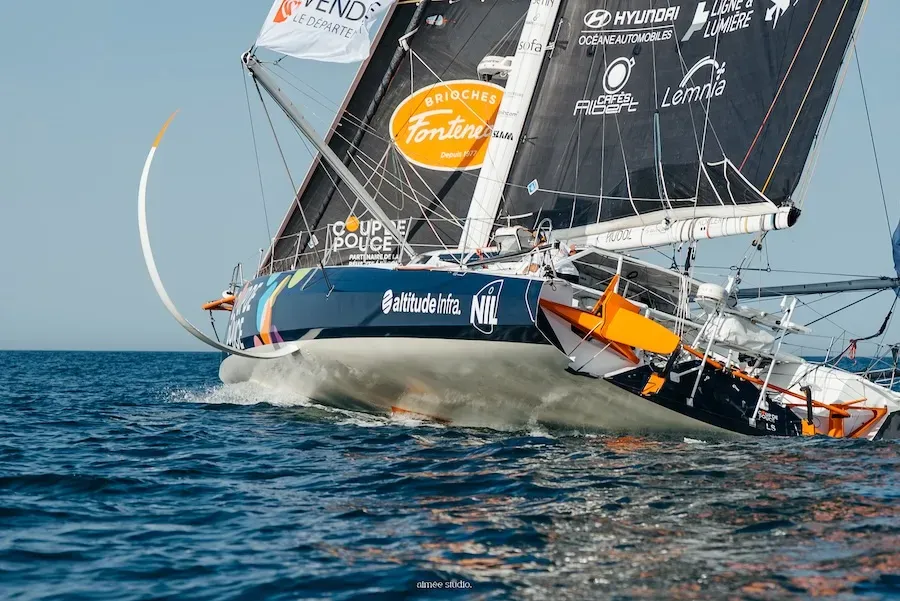
Part of what defines this race is the mismatch between the boats and the environment they are racing into. IMOCA class vessels are conceived for the Southern Ocean, where long following seas allow skippers to run downwind and the design characteristics of foiling racers can be exploited to maximum effect. Head north and the physics change entirely. Depressions are traversed east to west, which means taking them on the beam or head-on rather than running with them. Seas become short, steep, and unpredictable. The very features that make these boats fast in the south become, depending on the moment, either irrelevant or actively problematic.
"We'll be heading further north than we ever go south," Cousin explained. "That's what makes this so committed. There's no margin for error up there."
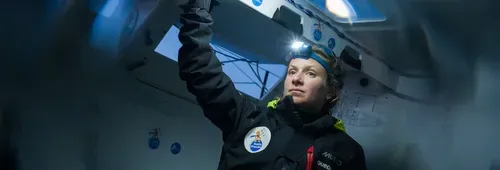
For a sailor built around endurance campaigns, that unforgiving quality holds its own appeal. The Vendée Globe is brutal in its own way, but across multiple editions it acquires a familiar rhythm: ice gates, weather routing, accumulated miles, the long arc back north. The Arctique strips away the comfort of that familiarity. The angles a Southern Ocean specialist learns to rely on simply do not transfer. What remains is boat handling under pressure, weather reading in genuinely unfamiliar conditions, and competition without a safety net.
Cousin is not expecting the conditions to repeat the punishment the second edition delivered, though he is approaching the start without any assumption of mercy. What he is chasing, after everything those previous campaigns have taught him, is the narrow window the race occasionally opens up between disorder and control. Finding that window, and driving Coup de Pouce through it at full speed, is the task he has set himself when the fleet heads north.