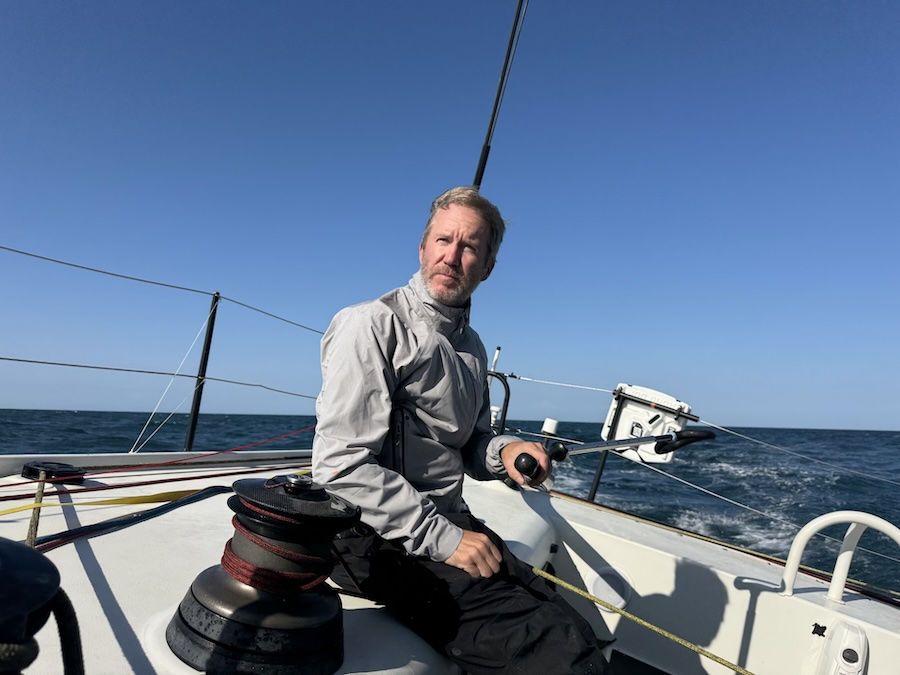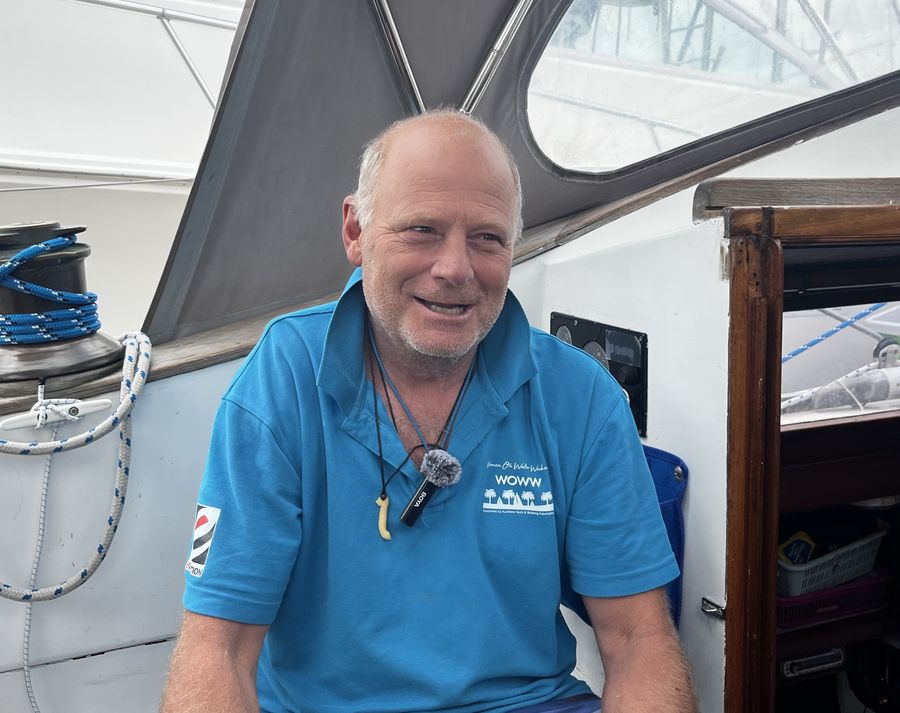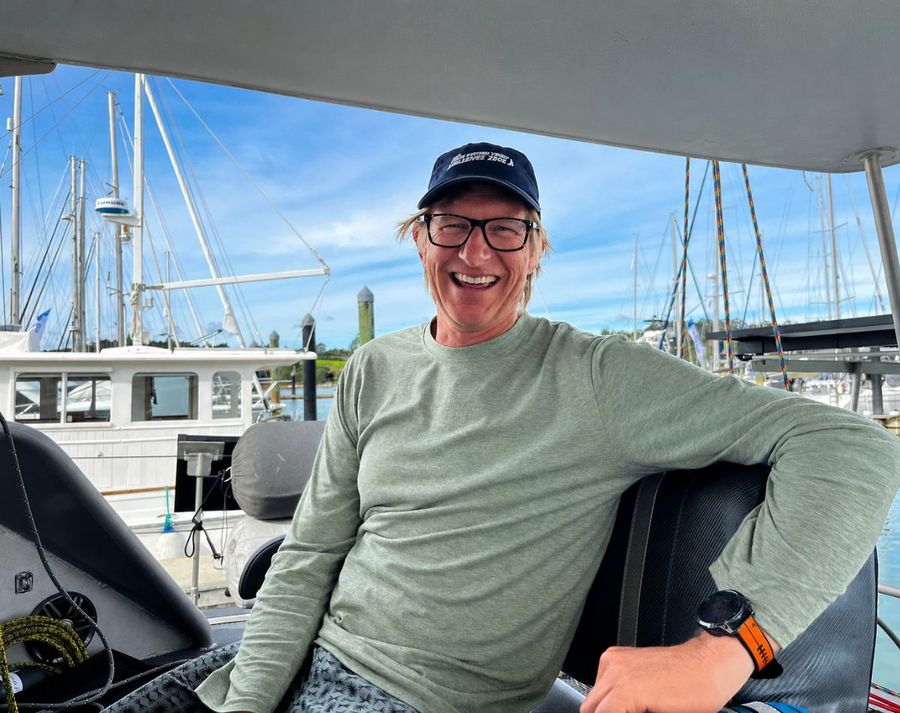
At 49 years old, James Foster is the youngest competitor in the 2026 Solo Trans-Tasman Yacht Challenge. He finds this mildly amusing.
"When 49 is the youngest competitor," he says, with a grin that suggests he has thought about this more than once, "we're in trouble."
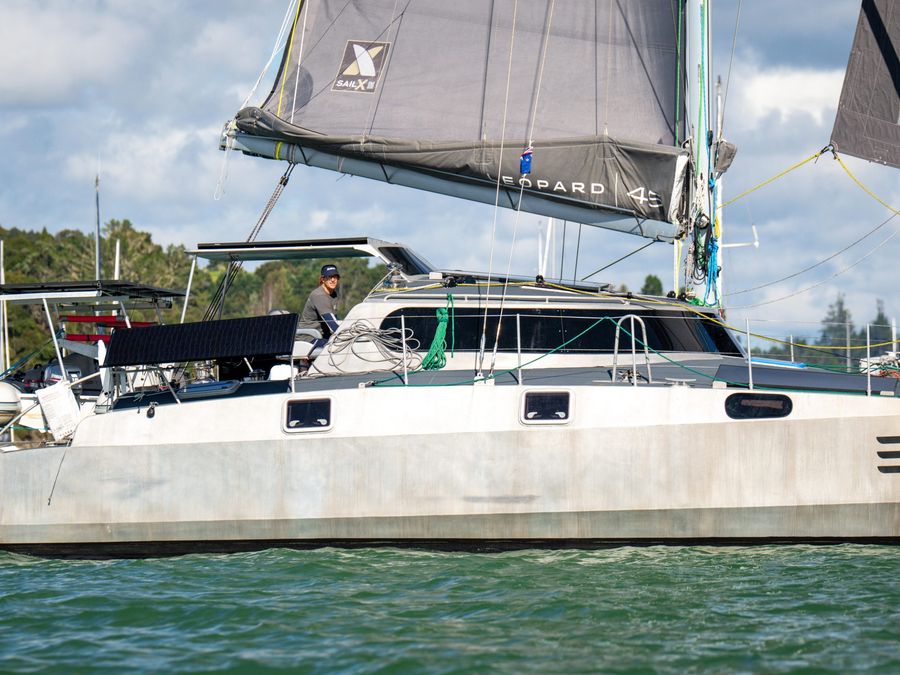
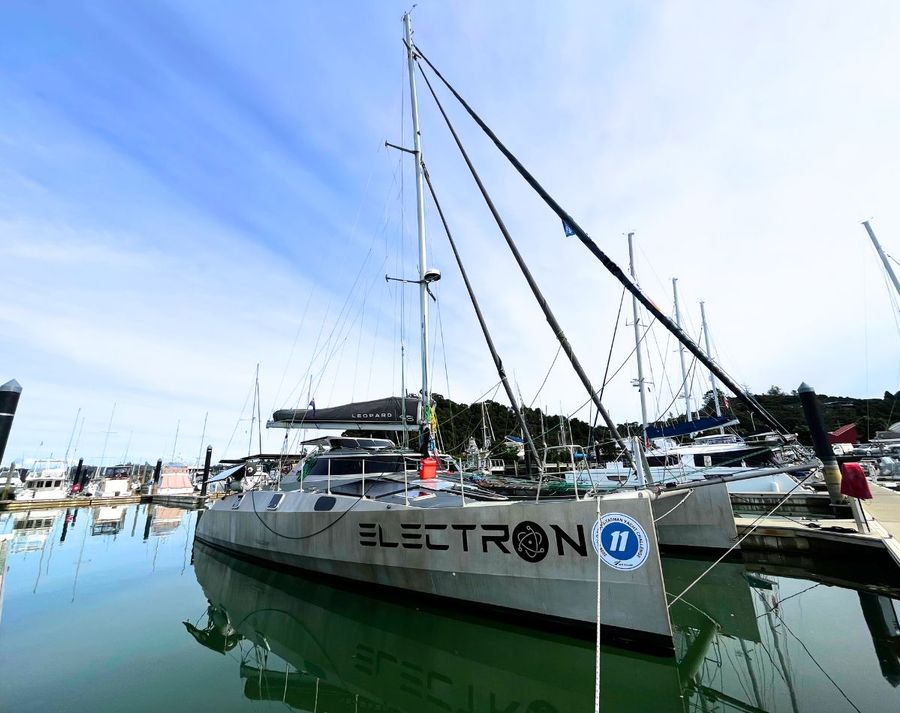
Foster is one of four Australian entries in the race. He arrived in Opua eight days before the start, having solo-sailed Electron, his Mumby 48 aluminium catamaran, across the Tasman from Southport. Seven and a half of those eight days were a hard slog to windward. He is philosophical about it.
"We're well acquainted now," he says of the boat and the conditions.
The story of Electron begins in Opua, several years ago, when Foster had just completed a solo passage down from Fiji. He made the run in his old 40-foot monohull, caught decent winds, and was feeling good about his eight-day passage until a Tim Mumby-designed catamaran slid past at 15 knots and finished the same run in five days. The message was not lost on him.
"The less time you're at sea, the safer you are," he says. "And as a family, we needed a little more space."
Foster bought the Mumby 48 plans, sourced the aluminium, and sent the project north to Harvey Bay in Queensland, a boatbuilding mecca, he calls it. There he found the Hull Brothers, identical twins who build hulls for a living and whose surname, as it happens, is Hull.
"They did an amazing job. It was a joy to work with those guys." The keel went down three years ago and the boat came together in about 14 months. Foster made one change to the plans: everything raised 40mm, because at six foot three he had no intention of spending years crouching inside his own vessel. Below decks remains a work in progress, already fitted with four queen-size cabins, two heads, a separate shower, and joinery crafted from salvaged 100-year-old Crow's Ash timber pulled from a local weatherboard house. A mountain bike lives aboard. So does a surfboard.
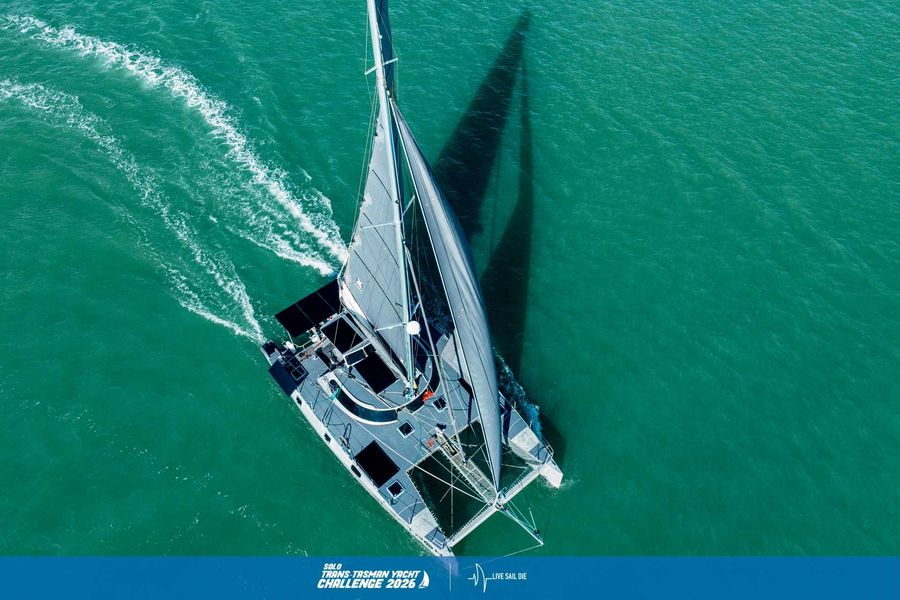
Electron is, as Foster is at pains to point out, not a racing boat. "She's a boat that can race."
The name Electron reflects the boat's power philosophy. Foster set out to build an off-grid cruiser, and for the past two to three years Electron has run on electric propulsion, twin motors fed by ten 440-watt solar panels and two 250-watt panels, 4.9 kilowatts in total. The 48-volt propulsion bank and 12-volt house bank operate completely separately, though power can transfer between them.
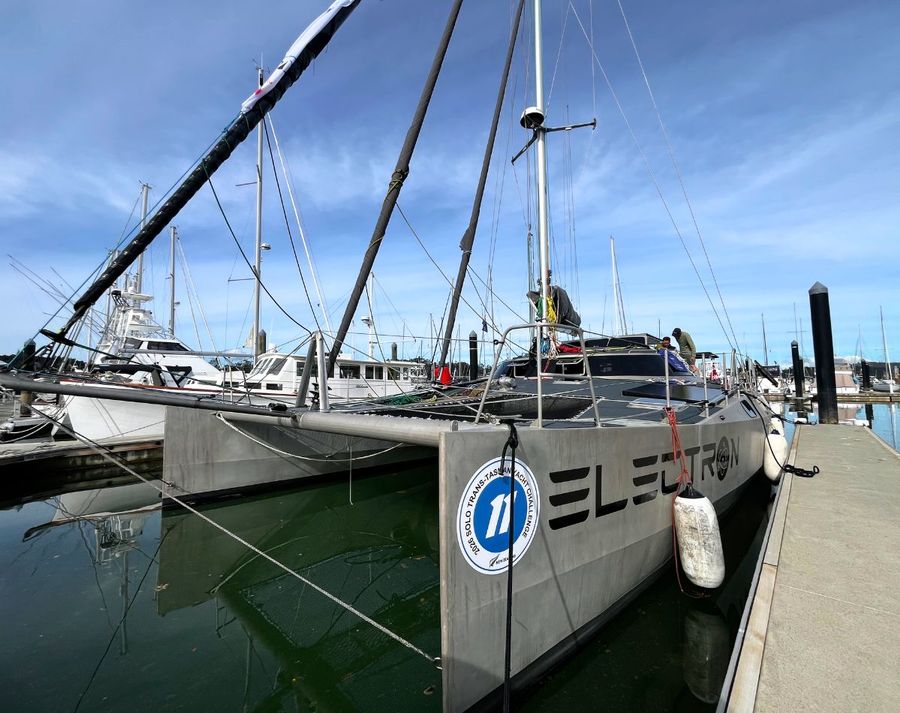
Six weeks before departure, one motor failed. With no time to source a replacement, Foster pulled it out and bolted an outboard to that hull instead. He is not pleased about it.
"She'll be going back to fully electric," he says flatly.
The solar setup has otherwise been faultless, with one catch. Back in Australia, a flat bank recharges in under two days. In Opua in winter, the same job took a week. "Welcome to New Zealand. You've come a long way south," he was told. He nodded. He knew.
For a boat still being fitted out below decks, the solo delivery from Southport was a thorough shakedown. Electron wants to go fast, 10 or 11 knots even upwind, and the skill Foster has developed is knowing when to hold her back.
"Potholes," he says. "If there are potholes in the road you slow down. That's the major factor. Keeping her comfortable."
His target for the race home to Southport is seven to seven and a half days, a modest improvement on the delivery. He is not chasing the front of the fleet.
"I'm not racing. I'll be doing my best to be safe and comfortable. I think this old girl will look after me."
Foster did not arrive at a solo Trans-Tasman without a track record. He has around 20,000 nautical miles of short-handed sailing behind him, with roughly 4,000 of those completed solo. His partner of 21 years, Adele, and their two children, now aged 12 and 14, have sailed together to Hawaii, the Solomons, and the Pacific twice over, and the family spent a year living in Tonga.
His approach to sleep at sea is straightforward: bank rest early, then use PredictWind's over-the-horizon AIS to read the traffic and judge how safely he can close his eyes and for how long. "If I get out past nine and there's time for a 15-minute nap with no boats around, I'll take it. Because I know there's going to be a blow and time overnight when sleep won't come easily."
Being the youngest in the fleet at 49 is a fact that keeps circling back, and Foster's concern reaches well beyond his own place in the standings. He worries about what becomes of offshore sailing when his generation steps back, about the cost of entry, Cat 1 requirements, and the sheer weight of compliance that can make a first offshore campaign feel less like an adventure and more like a procurement exercise.
"What's going to happen in another 10 or 15 years when the Malcolms are done? Is there going to be an influx of younger people?"
He plans to still be racing when that question gets answered. At 49, the youngest in the fleet, with a half-fitted aluminium cat and a Trans-Tasman delivery already in the log before the race has even started, that is not hard to believe.