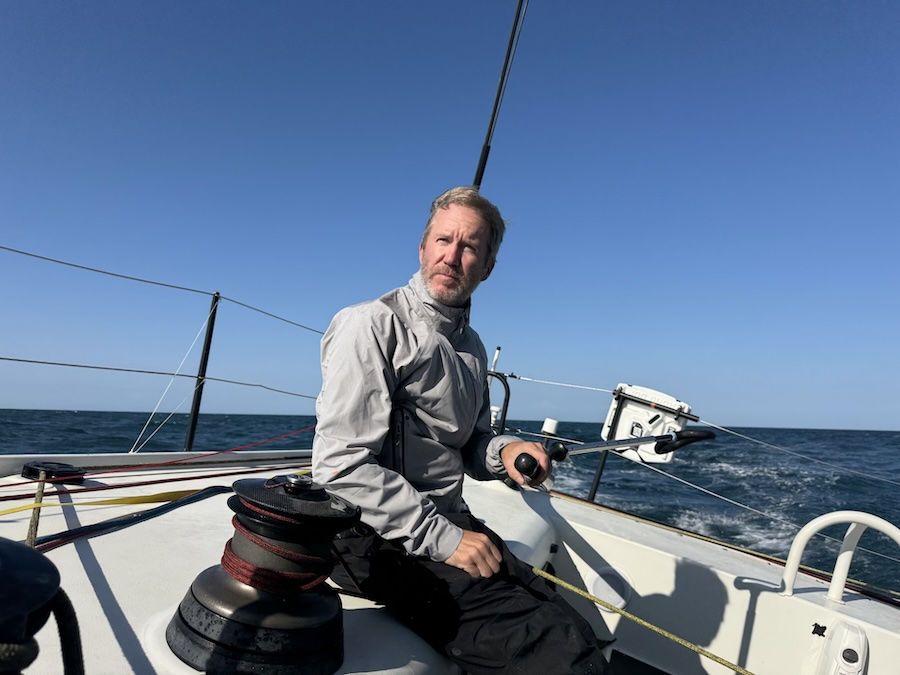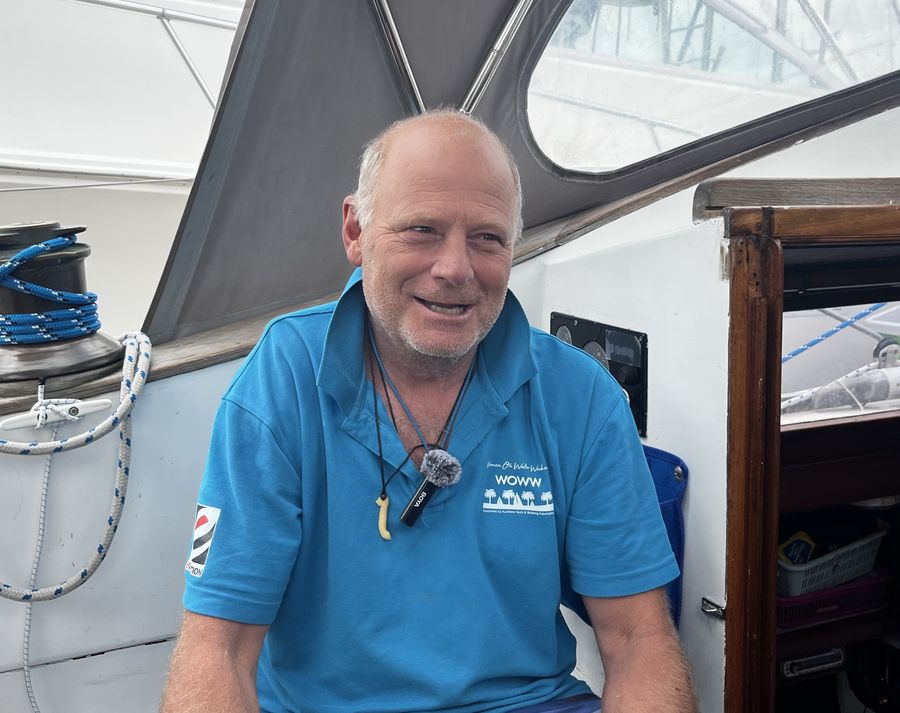
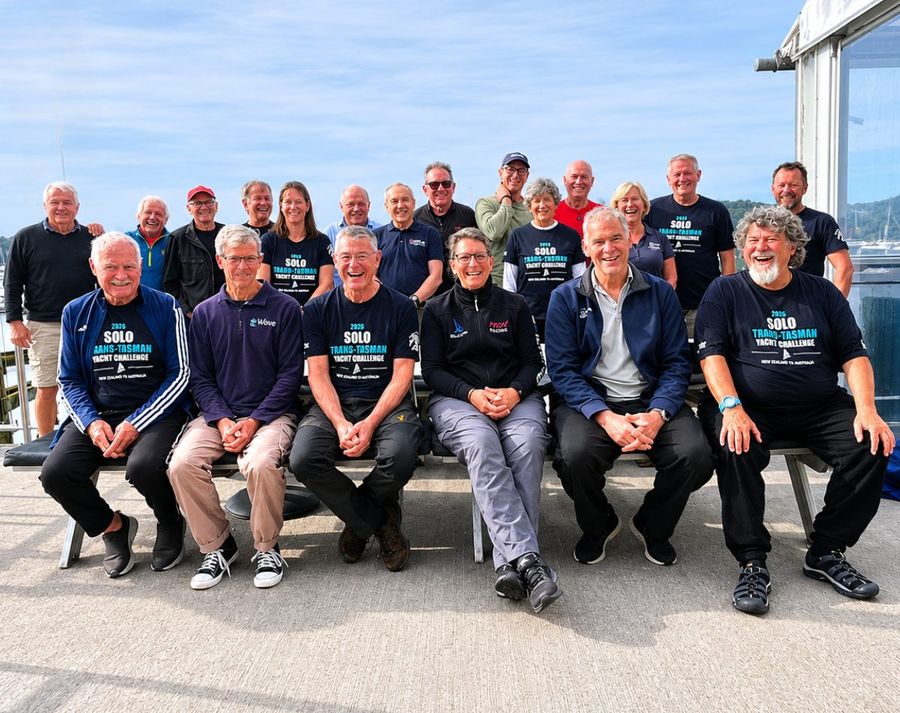
Sixteen solo sailors will depart Opua Cruising Club at noon on Saturday, bound for Southport Yacht Club on Queensland's Gold Coast across 1,170 nautical miles of Tasman Sea. The Race Committee has confirmed that start time for the 2026 Solo Trans-Tasman Challenge. Opua makes its debut as the race's departure point, though any satisfaction in that milestone has been largely swallowed by what the weather models are currently showing.
The pre-start briefing made for uncomfortable listening. Arnaud Monges, a French meteorologist and PredictWind's in-house forecaster, walked the fleet through his analysis via pre-recorded video, drawing on PredictWind's modelling to chart what competitors are likely to face. Keryn McMaster, a two-time Volvo Ocean Race veteran and PredictWind's lead Customer Support and Routing Expert, joined by video call to field questions from the assembled fleet.
The opening hours offer at least some encouragement. At the noon start, the Bay of Islands should produce northeast winds of 15 to 20 knots, building as boats push northwest toward the cape. The front runners are expected to be rounding Cape Reinga by Sunday midnight, where the forecast calls for 25 knots of wind and seas of 2.5 to 3 metres. What follows is harder to absorb: roughly 24 hours after departure, a frontal system arrives, bringing north winds of 25 to 30 knots, gusts to 35 to 40 knots, and seas running 3.5 to 4 metres.
You could feel the entire room grimace at that thought.
Once the front passes, lighter westerly conditions provide some respite before a second low-pressure system moves through mid-week, bringing rain and 20 to 25 knots from the west. The fleet will be going upwind by that point, and the routing model specifically flagged significant bow slamming as a factor for that stretch. The models project crossing times of six to seven days, with 70 percent of the passage on a reach and 30 percent upwind, a race average of 15 to 20 knots, and maximum gusts to 40 knots.
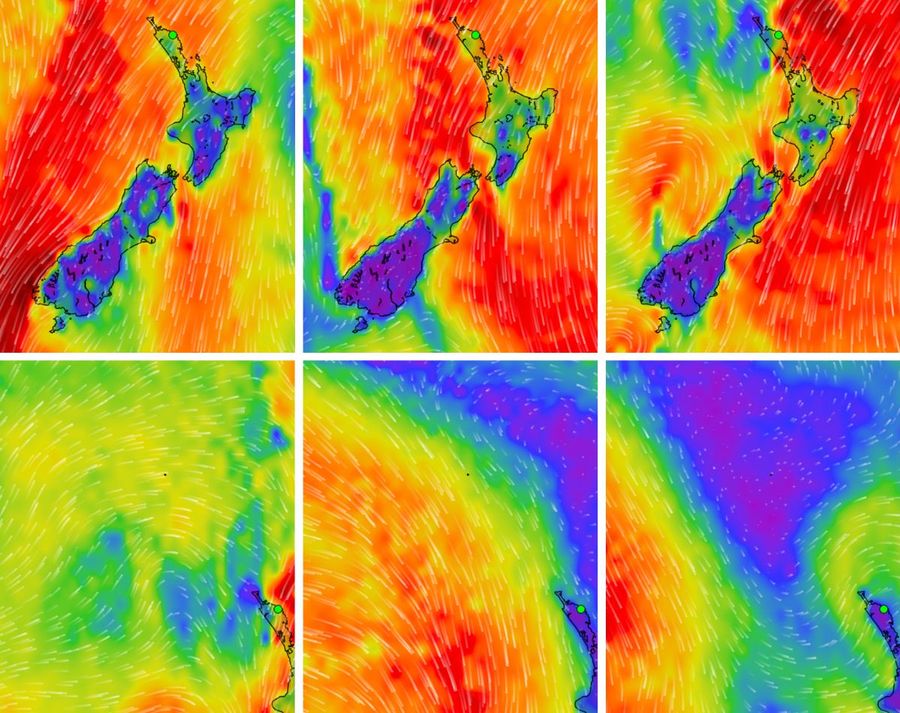
The Race Committee did examine whether a delayed departure might open a more favourable weather window. A departure planning tool was run across several scenarios: leaving Sunday or Monday would offer no real improvement, with similar or worse gusts expected across those windows, while only a Tuesday start would produce meaningfully reduced conditions. The Race Committee held firm on the Saturday midday start regardless. An updated forecast, prepared overnight by Monges in France, will be distributed to competitors before racing begins on Saturday morning.
McMaster's closing message to the fleet was plain-spoken: "It's not looking like an amazing forecast. Prepare yourselves and your boat early, food, tie everything down. There's going to be some time where it's pretty nasty."
Weather was not the only concern raised during the briefing. Peter (Pete) Thomas, Deputy Harbourmaster for the Northland region, warned skippers of a potential floating hazard that could sit directly along the course. The vessel is Kuparu, a 72-foot World War II wooden patrol vessel formally classified as a Harbour Defence Motor Launch (HDML). Kuparu lost power and was abandoned approximately 70 nautical miles off the Northland coast. Speculation that recent weather conditions might have sent her to the bottom proved unfounded. Thomas confirmed Kuparu is still afloat, though her precise whereabouts are now uncertain. Her last tracked position, recorded on Monday afternoon, placed her 23 miles off Ahipara on the west coast. Since then the tracker appears to have lost battery power and gone dark. Thomas noted that Kuparu's current owner has confirmed aviation resources are being arranged to search for her. Until she is located, she remains a danger to all vessels in the area, Solo Trans-Tasman competitors among them, and all skippers were asked to report any sighting by radio.
A team from the Rescue Coordination Centre joined the briefing by phone to explain what a mid-ocean emergency actually looks like in practice. New Zealand's Search and Rescue region covers 30 million square kilometres, roughly half the distance between Opua and Australia. The operations room runs around the clock, but resources are limited and the Tasman is unforgiving. Should any solo skipper require rescue, the response will not be quick. Distance and location make every scenario inherently difficult, and rescues can take hours. The options available are an Air Force aircraft, a diverted ship, or the nearest fellow competitor. Rescue at sea is not a towing arrangement. A skipper brought off their boat will not be getting it back.
The missed-schedule protocol was also covered in detail. Two consecutive missed skeds spanning 26 hours, with no response to contact attempts by the Race Committee, will trigger escalation to the RCC and initiate a full search and rescue response. Competitors were reminded that a fellow sailor may in many cases be the closest resource available.
Safety Officer Ian Templeman, who completed inspections of all boats over the preceding days, offered three pieces of advice: never leave the cockpit without your harness clipped on; if you think you should reef, reef; and if you think it might be time to shake the reef out, make a cup of tea first.
The start channel off Opua Cruising Club will be cleared of other vessels under the Northland Harbourmaster's direction from 9:30am through to 12:30pm, half an hour after racing begins. The channel is deep enough for the fleet's maximum three-metre draft at dead low water. Engine use at the start was also addressed during a live discussion at the briefing, with the race director and protest officer agreeing that safety takes precedence in the channel. An amendment to the sailing instructions will establish a discretionary penalty for any competitor who uses their engine to avoid a collision.
The race tracker goes live at noon on Saturday.