For the skippers charging through polar seas in the Vendée Arctique, Svalbard is a waypoint. For the scientists stationed across the same archipelago, it is a long-term laboratory. Amid the ice and perpetual light, French and German researchers are quietly assembling a body of knowledge that will outlast any race record by decades.
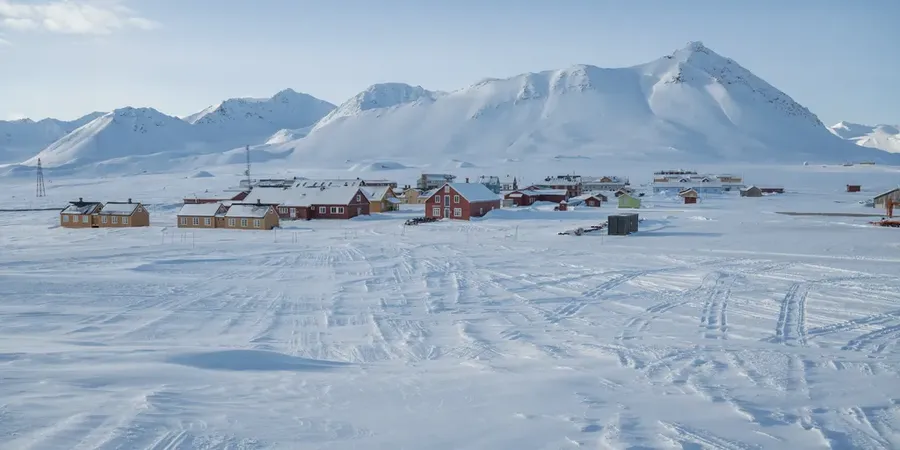
France has maintained a scientific presence in the High Arctic for more than thirty years. On Spitzberg island, the French Polar Institute has historically operated two facilities: the Charles Rabot station, located within the settlement of Ny-Ålesund, and the Jean Corbel station roughly 5 km away. The turning point came in 2003, when the French Polar Institute and the Alfred Wegener Institute chose to pool their resources, creating AWIPEV, a joint French-German research base that has since operated year-round across the disciplines of atmospheric science, glaciology, geology, and biology.

The legal framework underpinning all of this reaches back more than a century. Svalbard is a Norwegian archipelago, but its governance is shaped by the 1920 Paris Treaty, which grants citizens of forty signatory nations equal rights of scientific access, bans military activity entirely, and explicitly allows the establishment and operation of research stations. Nine countries now keep a regular presence in Ny-Ålesund. AWIPEV is among the few stations that remain continuously staffed through the Arctic winter, a season when extreme conditions make sustained scientific observation both more difficult and more valuable.
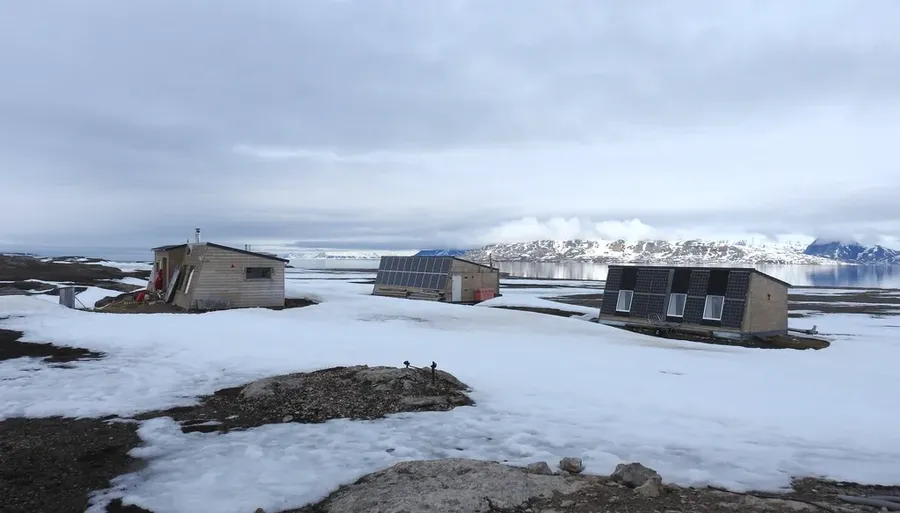
The two stations together reflect genuine ambition in physical terms. Charles Rabot, set within the village, can house around fifteen researchers at once and contains laboratories configured for geophysical observation, chemistry, and biology. Jean Corbel, 5 km to the southeast and deliberately sited away from sources of human-generated pollution, runs on clean energy and accommodates up to eight visiting scientists during the summer months, with a focus on atmospheric measurements and glacial studies. Both facilities benefit from shared infrastructure managed by Kings Bay, the Norwegian company that owns the settlement's buildings and land, providing researchers with access to snowmobiles, boats, and skis as the environment demands.
Three permanent staff members sustain the operation across every season. The station leader handles logistics, welcomes incoming research teams, and carries responsibility for safety. An observatory engineer keeps the scientific instruments running and ensures atmospheric data is collected without interruption. A logistics engineer manages the fleet of boats and vehicles, making certain that equipment reaches each station reliably. Between them, this compact team underpins continuous measurement of atmospheric composition, glacier behaviour, and biological change in one of the most climatically sensitive environments on the planet, even as racing yachts pass through the waters beyond their door.