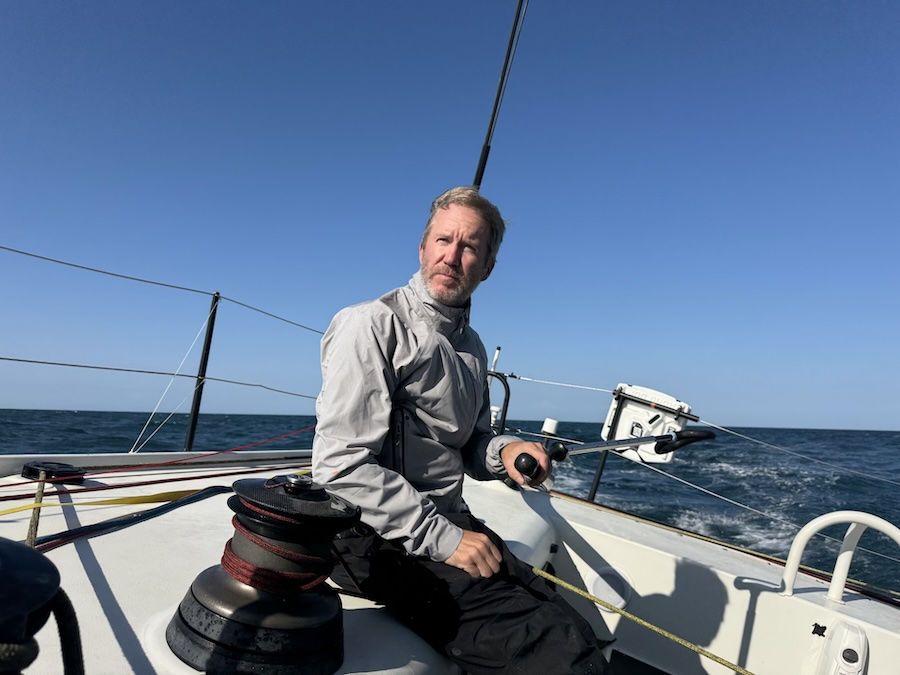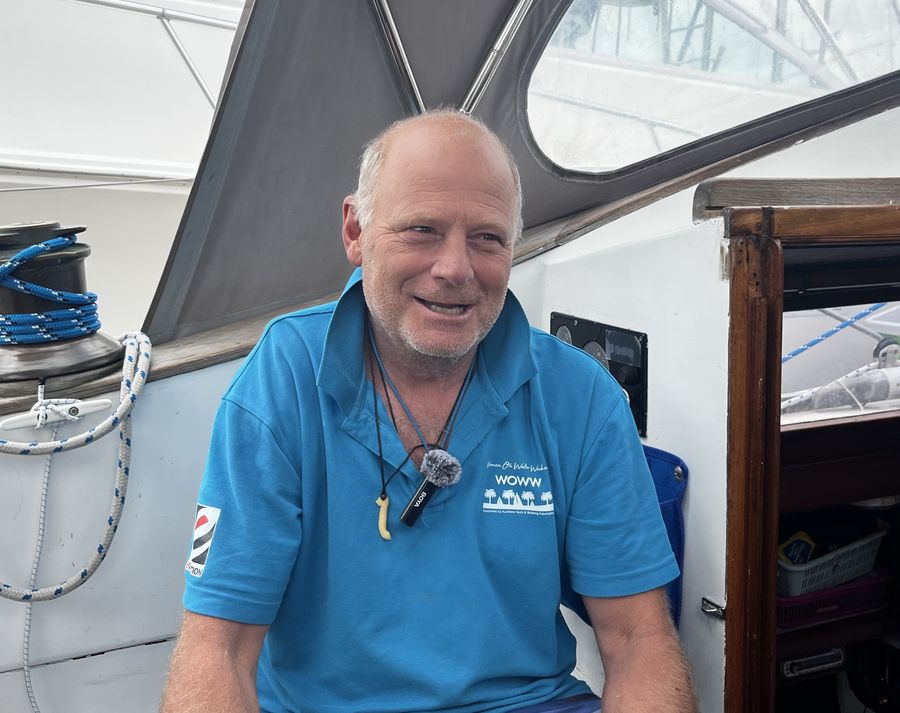

Guy Chester brought the trimaran Oceans Tribute across the Gold Coast Seaway finish line at 19:15 NZST on Friday, 5 June, taking line honours in the Solo Trans-Tasman Yacht Challenge 2026. The passage time was 6 days, 7 hours, 34 minutes and 36 seconds, and Chester was direct in summing up what he had just endured in the moments before he finished.
"This has been the most arduous ocean crossing/passage I've done in any boat," he said.
"Crewed and uncrewed. The most arduous. Violent squalls, violent storms, terrible sea states, challenging weather decisions.
"It's a fantastic achievement to have refitted the boat, got it ready to do this race, sailed it well, and get there first. Everybody says I've got a fast multihull, but they tip over and they can break. I've had to really look after her."
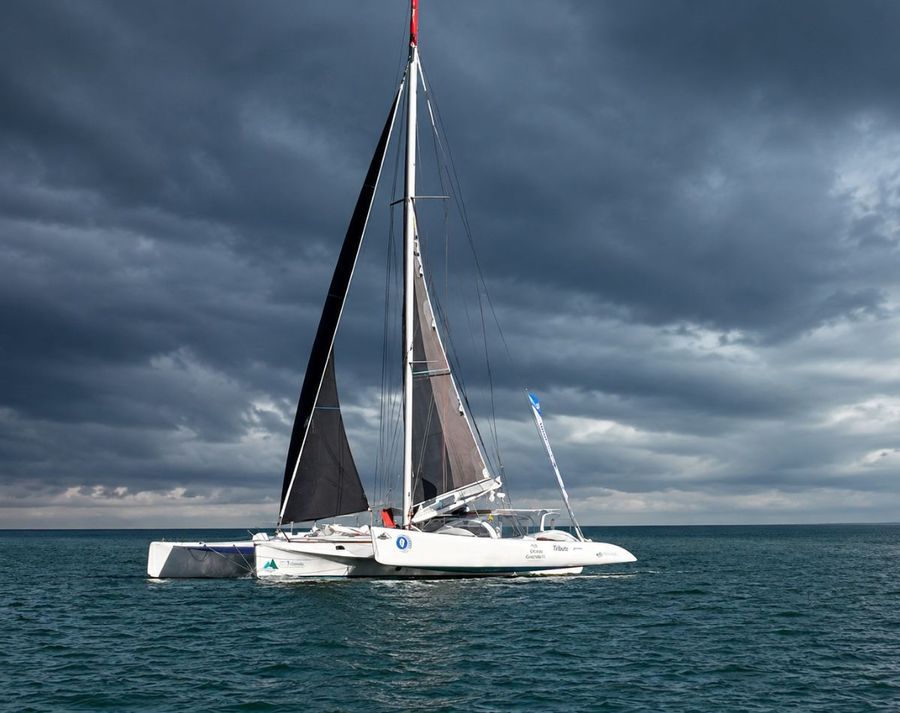
Oceans Tribute is a high-performance trimaran that has completed two circumnavigations and logged more than 45,000 nautical miles under Chester's command. He bought the boat and brought it back to New Zealand for a substantial refit ahead of the Challenge, and throughout the campaign he consistently pointed to the support of the local marine industry and the Opua Cruising Club as one of the highlights of the whole endeavour.
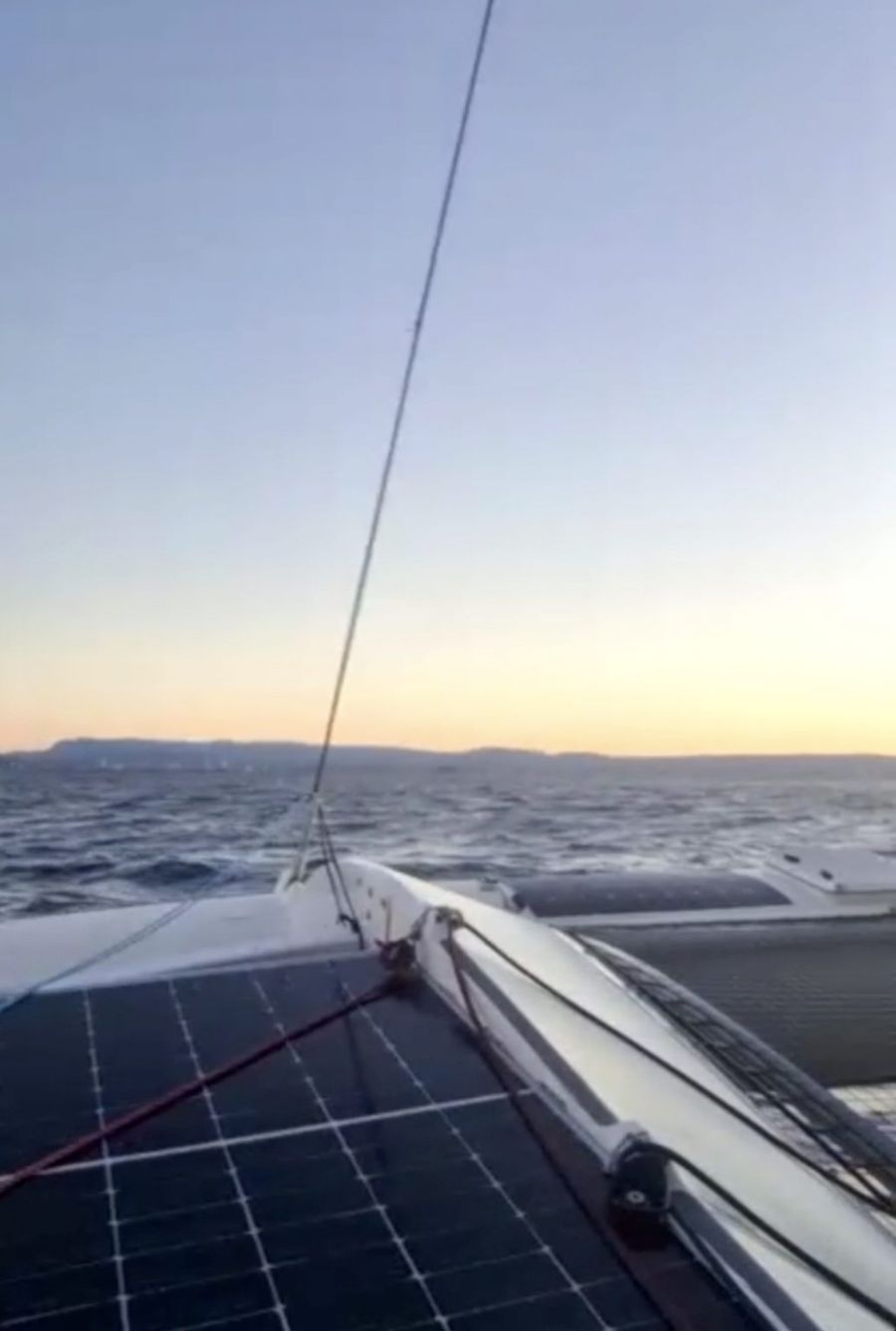
The crossing was brutal from the outset. Heavy weather descended on the first night out of the Bay of Islands, with Chester running off in 50-knot gusts in darkness, dropping the mainsail and staysail and eventually sailing under bare poles until conditions eased. That same night brought two further bursts of 45-knot wind. The sea state was so violent that on two separate 24-hour periods he was unable to cook, getting by on apples, cheese, and muesli bars.
"I've never had a situation in 45,000 miles around the world where I couldn't cook," he said. "I'm talking about cutting up onions and garlic and putting them in a frying pan. I couldn't even boil the kettle."
Chester's routing strategy leaned heavily on weather modelling via PredictWind, tracking multiple forecast models and comparing their agreement to time each course deviation. Rather than holding the direct track, he pushed considerably further south and then north, adding miles to stay in pressure and find the right angles as weather systems developed. His final distance sailed was 1459 nautical miles, well ahead of any other competitor to date.
"I relied very much on the modelling of PredictWind," he said. "Using the different models, looking at when they agreed, looking at when there was variability, and looking at the detailed outputs and routing. That's how you make those decisions to go 50 miles off course to be better in 12 hours."
Before the race, Chester worked directly with PredictWind to refine his boat's polar measurements so the routing algorithm could generate accurate, usable guidance for a vessel he has sailed over four years and tens of thousands of ocean miles.
He crossed the finish with Vixen Racing, the Verdier 40 skippered by Sharon Ferris-Choat, pressing hard in second place on line honours, while James Foster's Mumbay 48 catamaran Electron and Malcolm Dickson's 55-foot Sarau were also among the front runners.
For Chester, the line honours finish represents what he described as "the penultimate" achievement of a sailing career.
"Been sailing for 60-odd years," he said, just before signing off to make the finish. "This is it."
Results are provisional.