Guadeloupe hasn't settled for a single finish-line party. As the first Route du Rhum skippers close in on Pointe-à-Pitre after their solo crossing from Saint-Malo, the island has thrown open not one but three villages to greet them.
Sailors felt the emotion of passing through Saint-Malo's locks at the start. That feeling is expected to be matched, if not surpassed, when they tie up beneath the Mémorial ACTe, the arrival point at the heart of the celebrations.
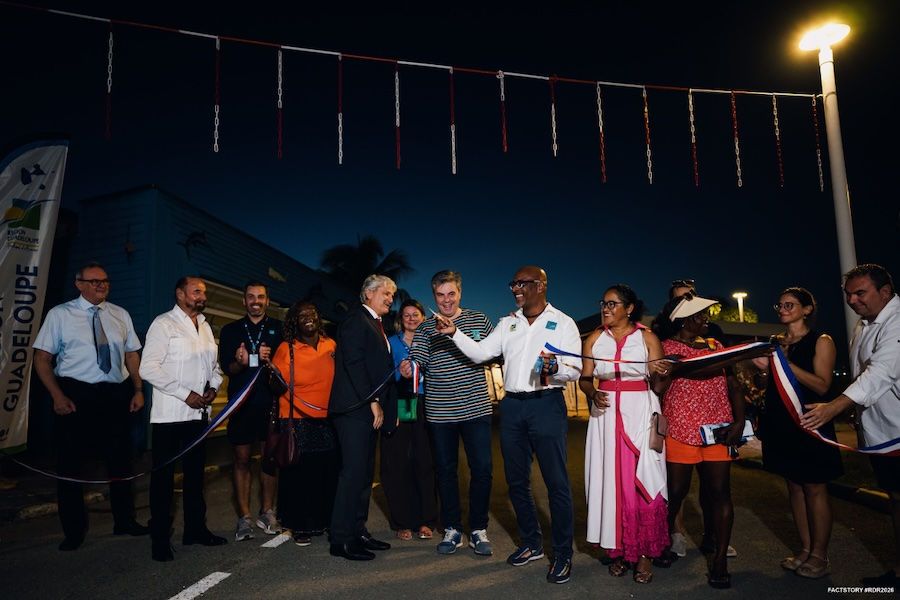
Each of the three villages has its own character. At the official village's inauguration late on Friday 6 November, Jean-Claude Nelson, regional councillor and president of Guadeloupe's culture commission, put it simply: "This mythical race allows us to put the spotlight on our archipelago. It's a formidable showcase that lets us shine around the world."
The MACTe village, running from 5 to 15 November, is where the real action happens. Skippers step ashore here after crossing the line, greeted by the popular fervour Guadeloupeans are famous for. Between the multi-sector pavilion and a dedicated spirits-tourism space, the site mixes food, culture and rum, with Guadeloupe's distilleries sharing their craft at the rhum-makers' village. Come evening, concerts light up the waterfront late into the night.
The archipelago's history carries real weight here too. The Mémorial ACTe is dedicated to the memory of the slave trade, slavery and its abolition. Through its cultural and memorial programme "La Traversée", the institution invites visitors to explore what shaped Guadeloupean society, a bridge between sporting celebration and historical memory.
A few minutes away, Marina Bas-du-Fort has become an educational village looking toward the ocean's future. Running from 5 to 18 November, it introduces young people and enthusiasts to the marine environment through daily interactive workshops and talks on maritime careers and training, with plenty on offer for anyone wanting to understand the fragility of the planet and today's environmental issues.
Before the final stretch into Pointe-à-Pitre, sailors must clear a key waypoint, the Basse-Terre buoy. The Basse-Terre village, open from 5 to 8 November, gives spectators on the port esplanade a front-row seat to that last push.
Spectators keen to watch the finishers come home on the water, rather than from the villages, will need to plan carefully. Organisers have locked down two regulated zones around the island, with a 10-knot speed cap and a ban on tracking race boats inside their boundaries, in force from 6 November right through to 3 December.
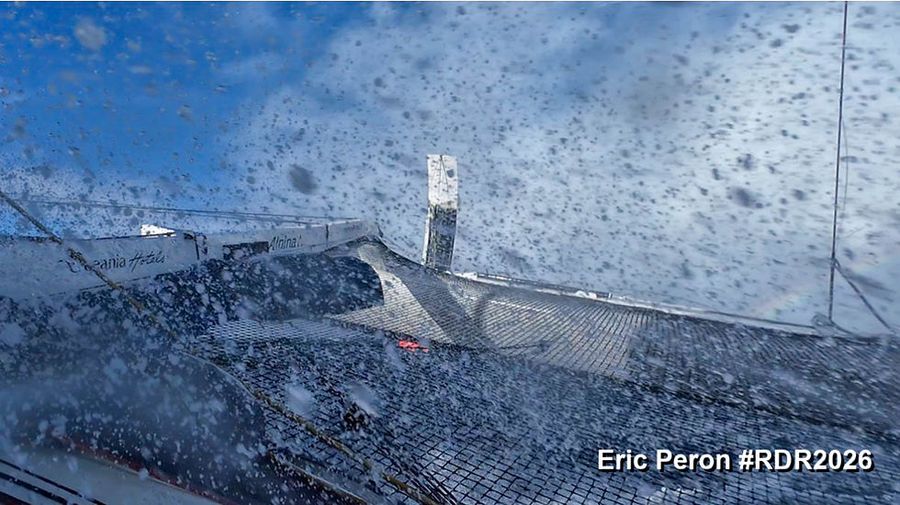
Out on the water, the fleet has had anything but an easy run in. Jean-Baptiste Daramy's approach to Guadeloupe turned particularly rough, with gusts of 35 knots as the trade winds deserted him, while further back the Class40 fleet copped an even harder night, with Robin Follin and the rest of the pack caught in a depression north of the Azores. Even so, fatigue and squalls haven't stopped skippers finding beauty in the Atlantic light, a mood that seems set to carry through to these final, emotional miles into Pointe-à-Pitre.
For New Zealand followers of IMOCA and Ultim racing, used to seeing these skippers in Vendée Globe and Ocean Race coverage, the scenes building in Guadeloupe mark the moment the Rhum enters its climactic phase.