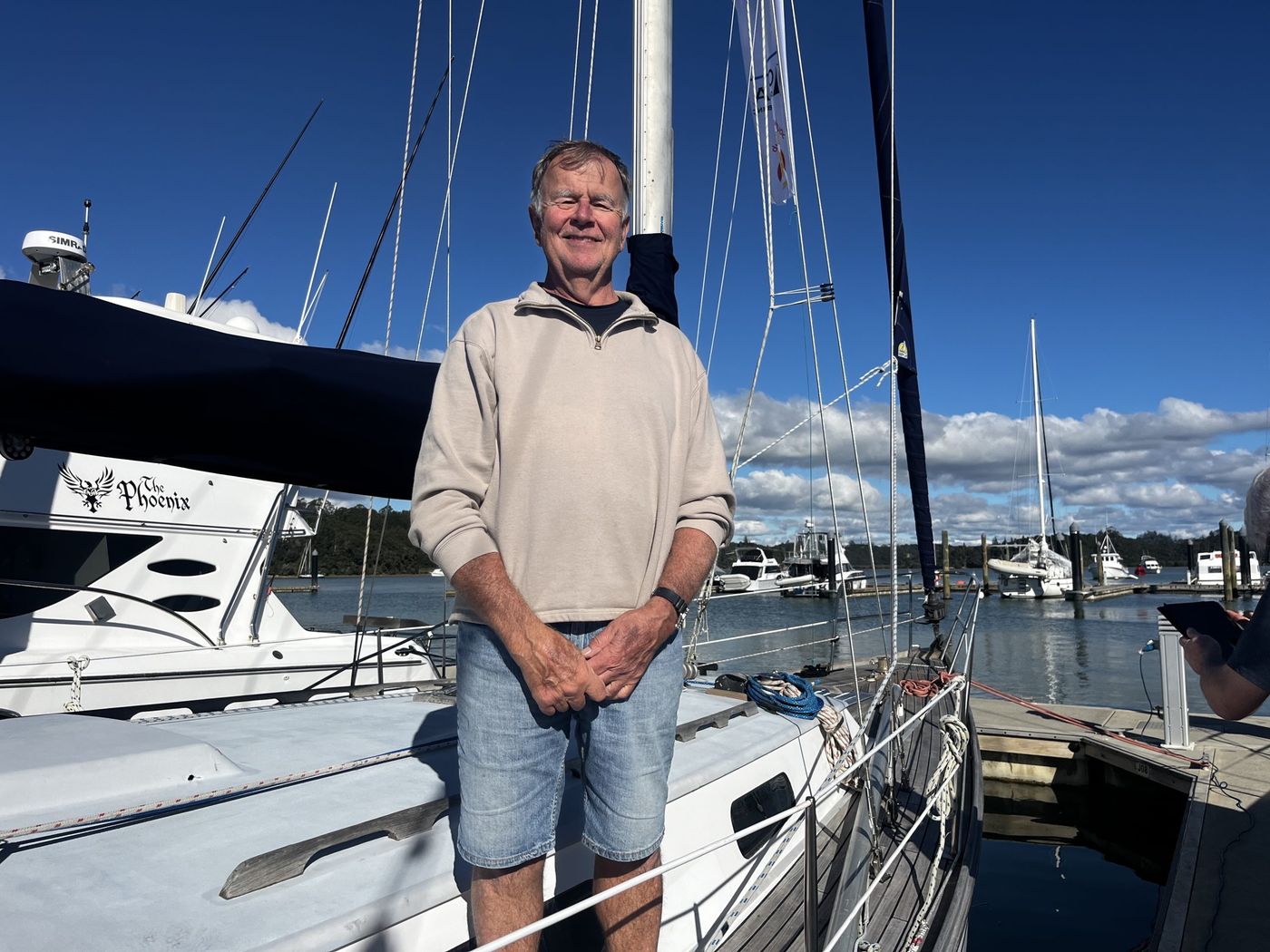
There is something quietly purposeful about a sailor who waits nearly four decades between starts, then arrives with a fully rejigged boat, a fresh genoa, and a Starlink antenna bolted on. Francis is not chasing ghosts of past races. He is simply ready to go again.
His first Coastal Classic came in 1986, aboard a Chico 30 he had built himself. Carpentry was his trade, and building your own boat was an entirely normal thing to do in that era. When the race was done, he and his partner worked their way along the Australian coast, heading south from Queensland to Sydney before turning for home. "Great cruising up and down the coast of Aussie," he recalls. The memory has not dimmed.
The 2018 return was a different proposition altogether. He sailed Robbery across to Australia, spent six weeks with family, then flew back to Bundaberg with a friend to bring her home over 10 days, a trip he remembers fondly. The race itself was another story. He turned west too early and sailed straight into the grip of a high, sitting becalmed for two full days, crawling along at one or two knots on whatever whisper of breeze came off the water after dark and going nowhere at all once the sun climbed and killed it. "Big rolly swell and becalmed. Quite frustrating." That navigational call has stayed with him.
Robbery carries a history worth knowing. She was launched in the early 1980s, built upside down in a shed alongside a sister vessel, both boats turned and fitted out together. They came onto the market at a particular moment in New Zealand history, just as Prime Minister Sir Robert Muldoon introduced a tax on boats, and Francis believes the name says plainly what owners thought about that policy. The interior joinery adds another layer: the timber is kauri, salvaged from the Tihuana ranges before a valley was flooded. Francis has photographs of the logs being hauled out. "Classic, you know. Great little boats."
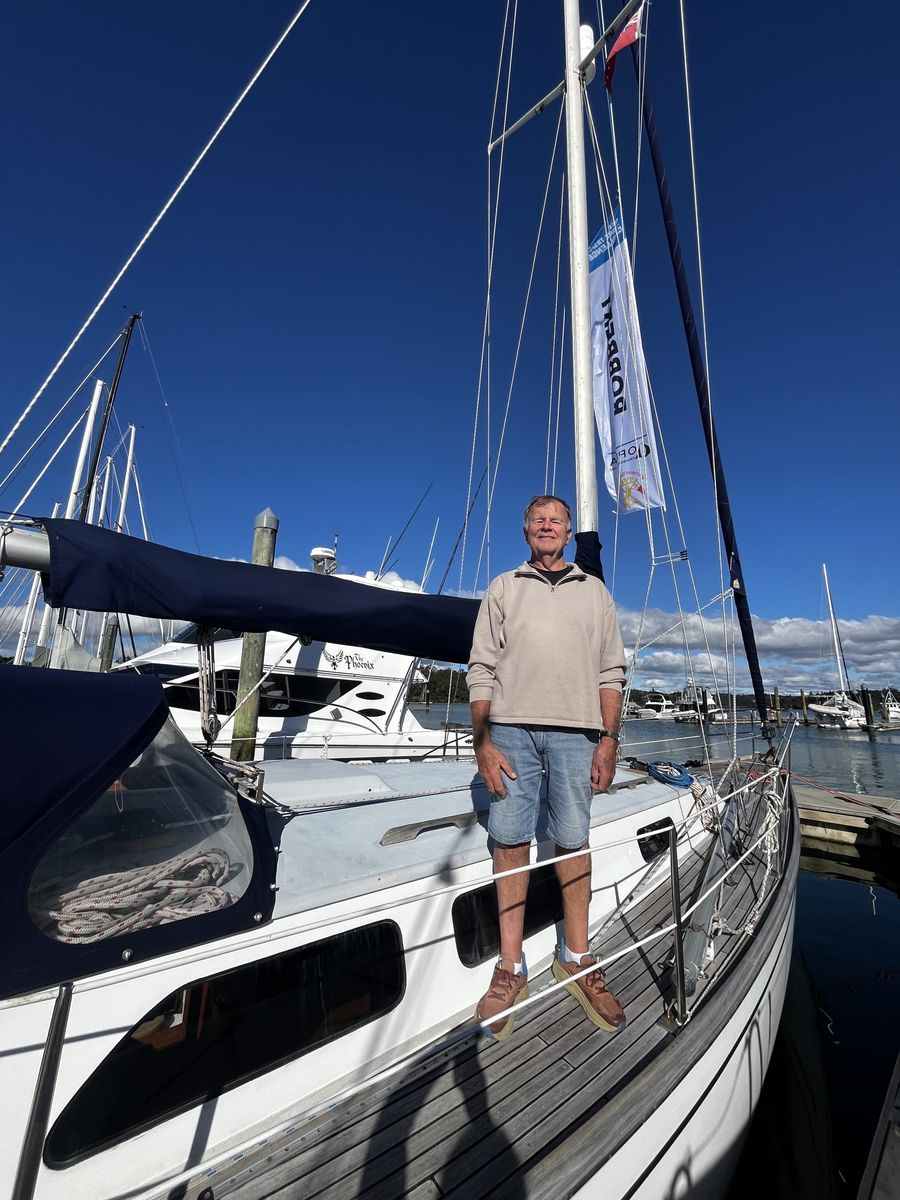
Preparation for this year's race started in October last year. The mast came down, the full rig was replaced, a new genoa was fitted. The engine had already been changed out a couple of years prior. Instruments were upgraded and Starlink was installed. The mast alone cost a small fortune, with the new sail adding another $6,000. Then came the Cat 1 certification, an advanced first aid course, an offshore course, and an IVC requirement that Francis views as straightforward duplication of the Cat 1 work. Both assessors were examining essentially the same preparation. "One signed it off and the other one said, 'it's good enough for me.' Just a waste of money, a waste of time."
Beyond a thoroughly prepared boat, Francis brings nearly 40 years in ship work to the start line. Broken sleep and irregular hours were simply part of that career, and managing fatigue at sea is not something that troubles him. He considers it one of the most valuable things a solo sailor can carry offshore. The ability to sleep in short bursts, remain functional while exhausted, and stay composed when conditions deteriorate is not built in the weeks before a race.
"A young person coming on board, they've got to learn a lot," he says.
"Not only have the boat set up and be comfortable with it, but have the time to get the boat ready, get themselves mentally ready, and then try and sail the race with short sleep as well."
Francis has a connection to the Coastal Classic that goes well beyond competing in it. He served on the organising committee during the years the race was run out of New Plymouth Yacht Club, and he was present when its future was being debated in earnest. Entry numbers had fallen. The commercial port offered limited infrastructure. Customs clearance was a headache. When a committee member suggested approaching Julie and Bill Kidman at Opua Cruising Club, the idea met little pushback. "They grabbed it and they've just done a fantastic job."
That is not a dismissal of what New Plymouth contributed across 50 years of hosting. The race built something real there, and the community around it mattered. But when serious inquiries had dwindled to two or three with 18 months still to run before the start, it was clear the event needed a new home. Fifteen boats are entered this year. The club serves meals six nights a week. There is a working marina. Customs officials come to the pontoon. "You come up here and look at it, it's just magnificent."
His target for the passage is somewhere between 10 and 12 days. He managed 12 in 1986 and 16 in 2018. He will be monitoring PredictWind closely as the fleet rounds North Cape and the picture to the north becomes more readable. At the far end, he wants to cross Southport's bar in daylight and close to high tide. Last time he arrived around five in the afternoon. In 1986 he came in after dark, which was manageable enough, but he knows the bar and he knows which conditions he would rather have beneath him.
His son, currently studying at Victoria University of Wellington, is planning to fly over during his mid-trimester break and sail home with him. Francis had made his peace with doing the return trip alone if it came to that, though the prospect held no appeal. He knows what it is to stand watch on a glassy, moonless night when the sky is so clear the stars seem to reflect up from the surface of the water, with nobody to call down to the cabin. "Come on, have a look at this." That moment, the wanting of another person to witness what you are seeing, is already something he finds himself thinking about.
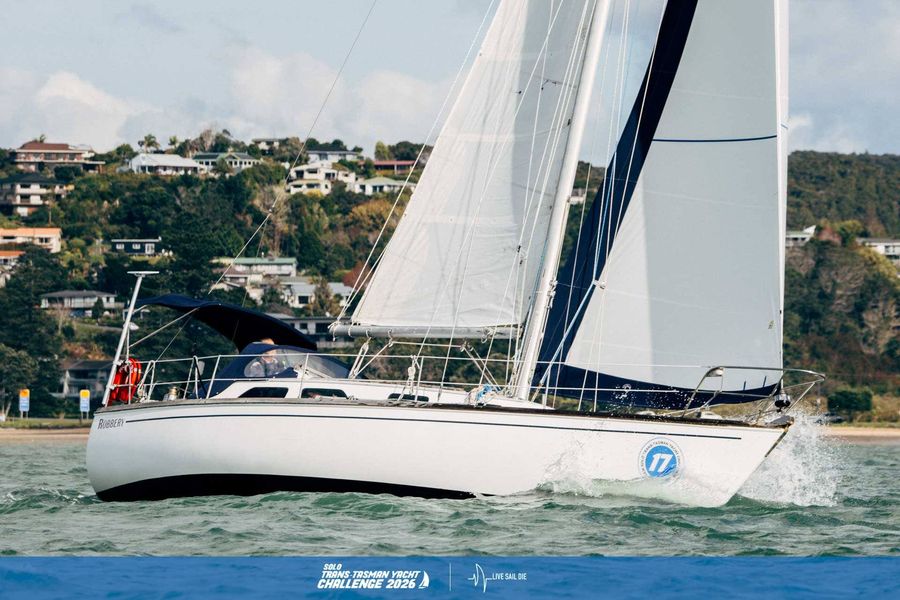
Robbery is berthed at Gulf Harbour. Francis lives in New Plymouth and drives up for a couple of weeks at a time, uses the boat, works on her, then drives back. He is not here to chase a placing. The race gives him a reason to make a passage, and it is the passage itself that draws him. What waits at the other end, time with family, quiet sailing, the voyage home, is what he is actually sailing toward.
He expects the 2029 edition to attract a stronger fleet. The Opua facilities are a genuine drawcard, and the concentration of boats along the east coast means competitors no longer have to round the top of the country and make their way down to New Plymouth just to reach the start. "I can only expect the race to grow. It really can."