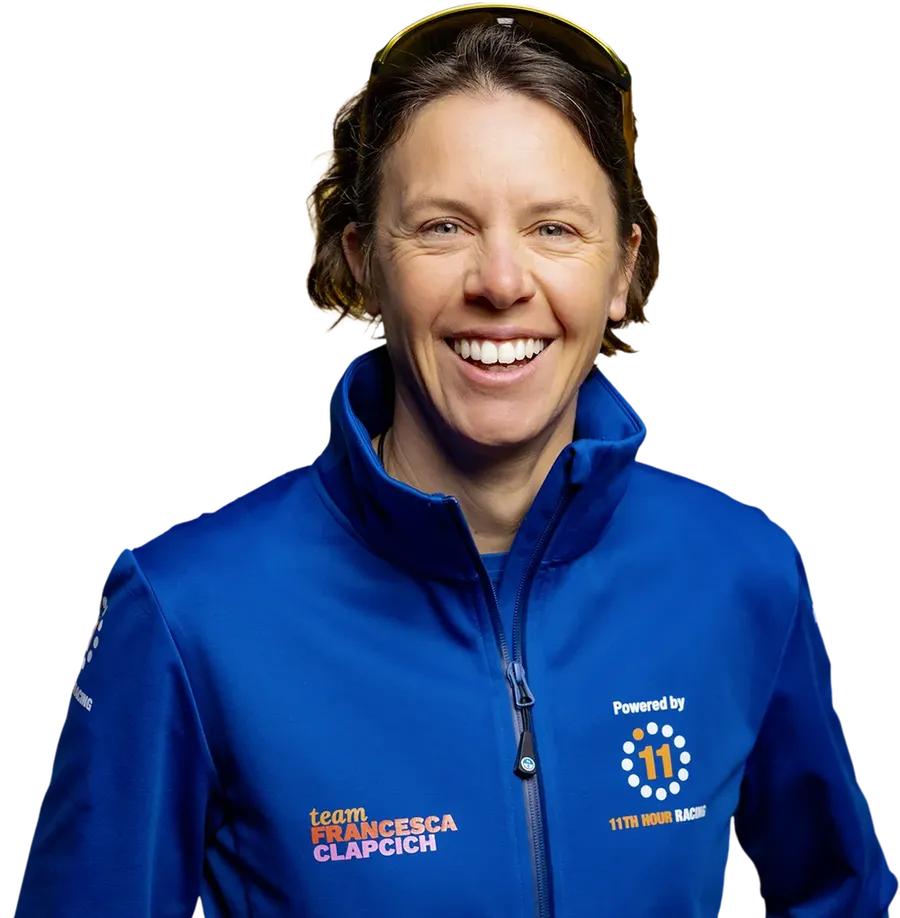
Francesca Clapcich lines up for the Vendée Arctique 2026 with credentials that could reasonably make her the most decorated female ocean racer currently on the circuit. Her name may not carry wide recognition across the Southern Hemisphere, yet her record would earn immediate respect from any serious offshore sailor in New Zealand. The Italian-American professional has spent a decade building results across disciplines as different as Olympic trials and the 40,000-nautical-mile circuits of The Ocean Race.
Born in Italy and now based in Utah, Clapcich is a genuine rarity in professional sailing: versatile across formats, consistently competitive at the front of the fleet, and evidently still drawn by whatever challenge lies ahead. Her record spans Olympic campaigns in two separate classes, the Laser and the 49erFX, a skipper's victory with 11th Hour Racing in the 2022–23 Ocean Race, and a second-place finish in the IMOCA Class at the 2025 Transat Café L'OR double-handed transatlantic race. Her 60-footer, built to a 2022 VPLP design, competes under the colours of 11th Hour Racing, a sustainability-focused American organisation headquartered in Rhode Island.
For anyone shaped by New Zealand's offshore sailing culture, that Ocean Race victory carries particular weight. The event demands competence across an enormous range of conditions, from trade-wind downwind passages to Southern Ocean attrition, and Clapcich handled both, managing crew and race strategy across five continents at the sport's highest level. Moving from that team environment into solo Arctic racing represents a sharp increase in complexity, piling extreme cold and demanding navigation on top of an already formidable set of requirements.
The Vendée Arctique is deliberate preparation for her next stated goal: a start in the 2028 Vendée Globe, with everything a non-stop circumnavigation involves. A race of more than 40 days to the Arctic Circle and back is a meaningful rehearsal for that ambition, testing a solo sailor on sleep management, technical decision-making, and the kind of mental endurance that no short-course event can replicate. Clapcich has already demonstrated an ability to absorb mechanical setbacks, isolation, and sustained physical stress at sea. The northern route adds new variables, but layers them onto pressures she already knows well.
What sets her apart beyond the results sheet is a genuine commitment to sustainability and to widening who belongs in professional ocean racing. In a sport historically shaped by well-funded European programmes and the financial reach of wealthy individuals, she has worked consistently to bring greater diversity to her campaigns and to the broader culture around the sport. Her progress through the Arctic is well worth following for anyone in the New Zealand sailing community.