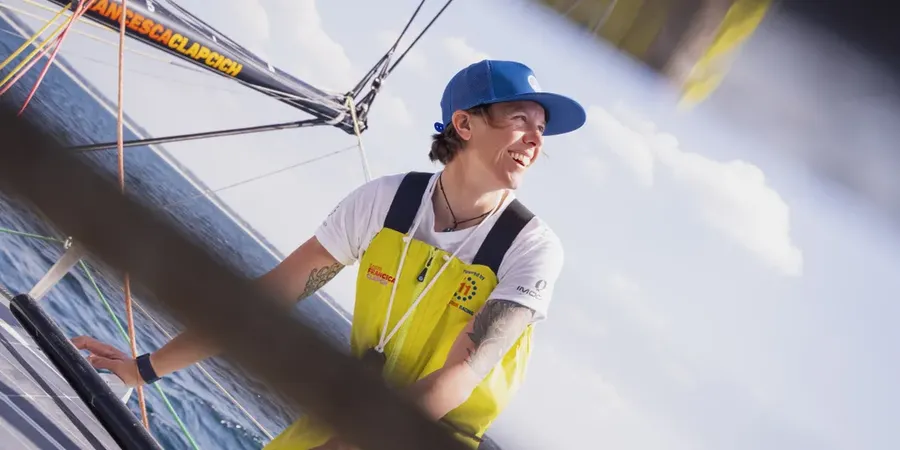
Francesca Clapcich has a reputation in offshore sailing circles that suits the nickname almost everyone uses for her. Frankie. At 38, she splits her time between polar ocean campaigns and the mountain terrain around Park City in Utah, speaking about both with the same focused intensity. The drive to push further, to find out exactly what she is capable of, runs through everything she does. What tends to surprise people who know her only through race results is the thing sitting right alongside that hunger: a genuine, unashamed devotion to the spreadsheet.
It is not a minor contradiction. Clapcich is a two-time Olympian, a 49er FX world champion, and a mother who has completed a round-the-world race on a crewed boat. Freedom and unconventional thinking are central to how she talks about herself. Put a question about what draws her offshore and she speaks about the sheer scale of the ocean. Shift the conversation to how she manages daily life and she will describe, without the slightest embarrassment, colour-coded cells covering everything from household schedules to camping trips. Structure, in her view, is not something that constrains her. It is what keeps her steady.
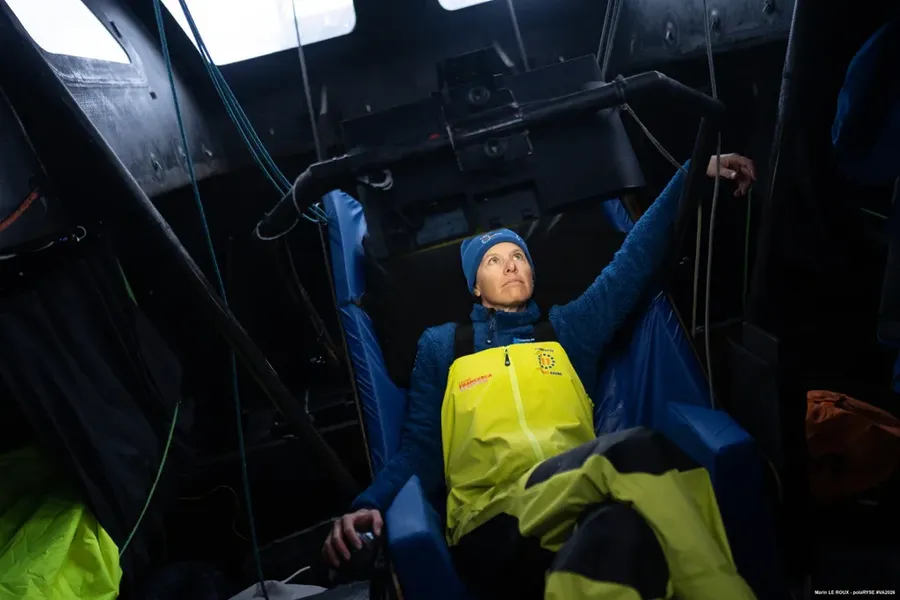
"I like having a plan, but I'm not rigid," she explained. "I'm flexible, even though I love plans. I adore spreadsheets. I have a main spreadsheet for everything, activities, camping, absolutely everything. It helps me stay calm, plan things, and make sure the people around me know what's coming. A bit of structure never hurt."

The Vendée Arctique will test that philosophy in earnest. Clapcich is still building her record in IMOCA single-handed racing, with only one previous result in the class to point to: a fifth-place finish in the 1000 Race earlier this spring. The Vendée Arctique takes her further north than she has raced before, into conditions that demand precisely the combination she has been working to develop. Thorough pre-race strategy must coexist with the willingness to discard it completely when the situation shifts. Last autumn, sailing double-handed alongside Will Harris, she contributed to the tactical groundwork that brought them home in second place in the Transat Café L'Or. That same meticulous preparation will serve her well here. The Arctic has a particular talent for rendering careful plans useless, and a skipper's ability to adapt quickly can count for more than the quality of their preparation.
Every skipper in the fleet understands this. Weather at those latitudes does not ease its way in. It arrives suddenly and changes hard, with no regard for anyone's ambitions or the calculations made before the start. What may set Clapcich apart is not simply a gift for planning or a gift for improvisation, but something less easily defined: the instinct, in a given moment, to recognise which of the two the situation is actually calling for.