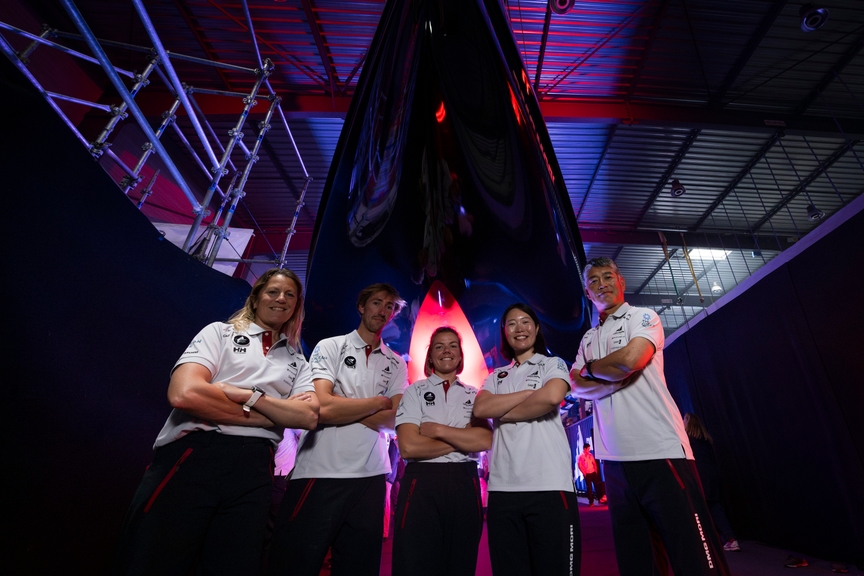
The atmosphere in Lorient carried genuine weight when Kojiro Shiraishi brought together friends, family, and media to unveil DMG MORI GLOBAL ONE, an IMOCA that marks a clear departure from anything else currently sailing in the class. Shiraishi has been forthright about this being his final racing campaign, and the ambition threaded through every aspect of the project reflects the significance he places on it.
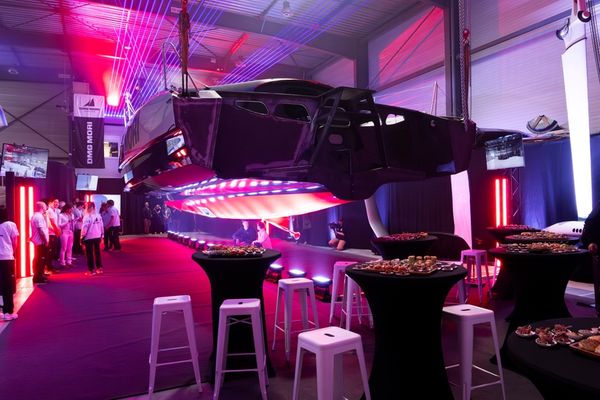
At the heart of the design is a hull that challenges the assumptions IMOCA designers have long taken for granted. Guillaume Verdier drew his inspiration from the central hull of a trimaran, arriving at a form calculated to get onto the foils sooner, shed drag more efficiently, and handle wave energy with greater forgiveness. The conventional approach within the class has been to build boats that work at steep angles of heel, but Verdier deliberately moved in the opposite direction. "We've been designing boats to heel over but that's not how we are sailing when we race around the world," he said. "So we pushed the other way. We designed a foil to be more upright."
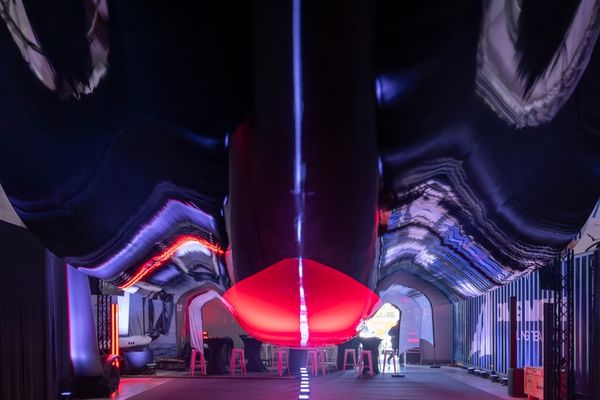
Verdier was given unusual freedom from the beginning. Shiraishi's instruction was simple and expansive: "I asked him to have a free mind, free ideas, no limits, and that's how we ended up here." The result was a design process that treated the boat as a single integrated system, with hull form, foils, aerodynamics, and rudder developed together rather than as a series of separate technical problems solved independently of one another.
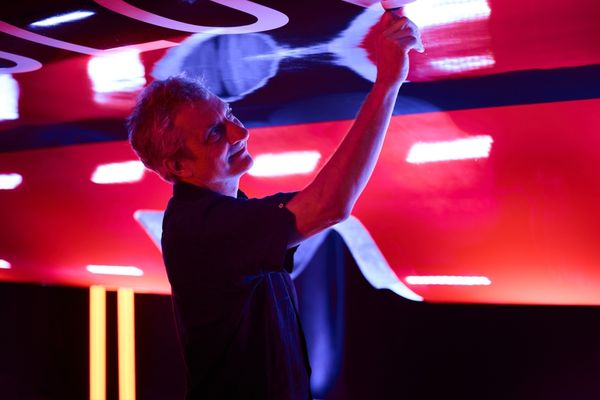
Verdier is candid about the nerves that come with pushing into unfamiliar territory. "It's very different, which is always a bit scary. We did a lot of work on the shapes and we thought there was a new possibility." The potential gains extend beyond outright speed. Modern IMOCAs have earned a reputation for punishing those aboard in challenging offshore conditions, and Verdier believes the revised hull geometry could offer meaningful comfort alongside performance. "The sailors have been suffering so much the way the boats have been before. We hope this is more like the feeling of sailing on a multihull with a lot less wetted-surface."
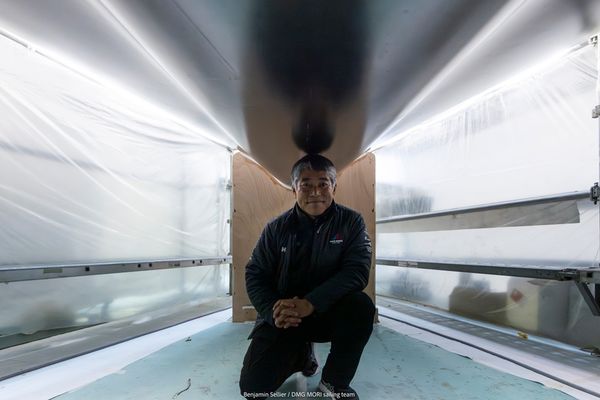
Sam Davies, confirmed as Shiraishi's co-skipper for The Ocean Race Atlantic in September, is keen to get moving. "We can see right away the new evolution in the hull shape, which is different from any IMOCA out sailing today. It will be really fun to learn to sail," she said. The timeline ahead is tight, with the boat due to ship to New York in under two months. "We're all quite impatient to get sailing. In 'new boat' terms that isn't a long time, but we're very confident as Kojiro has an incredible shore team and everyone is highly motivated."
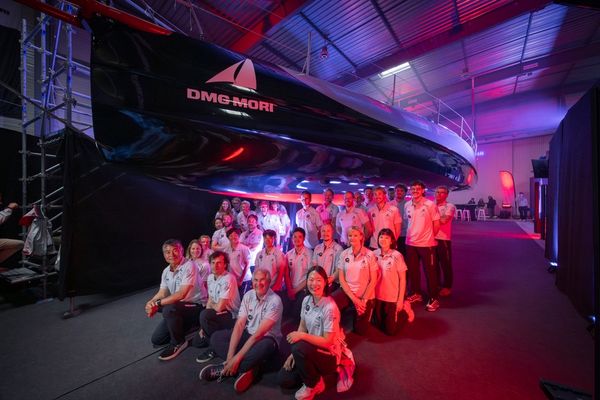
DMG MORI GLOBAL ONE is expected to remain in the yard for approximately four more weeks before launching, with sea trials and final Atlantic preparations to follow. The round the world race itself is set to begin in January 2027. Team manager Jacques Caraës offered a straightforward summary: "It's a new page in IMOCA design. The boat should be very stable, and foil earlier. This is what we are hoping."