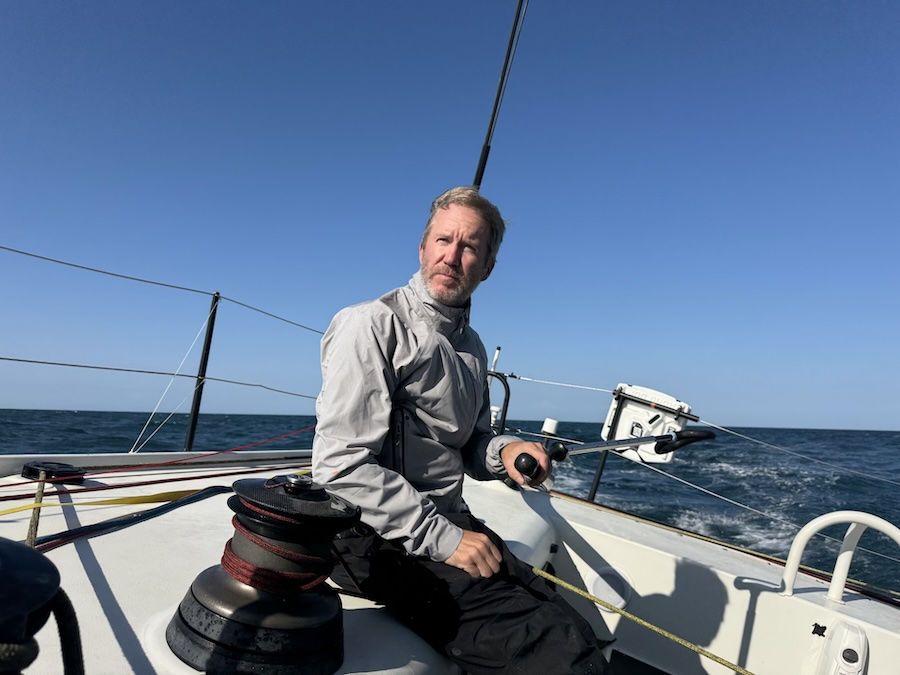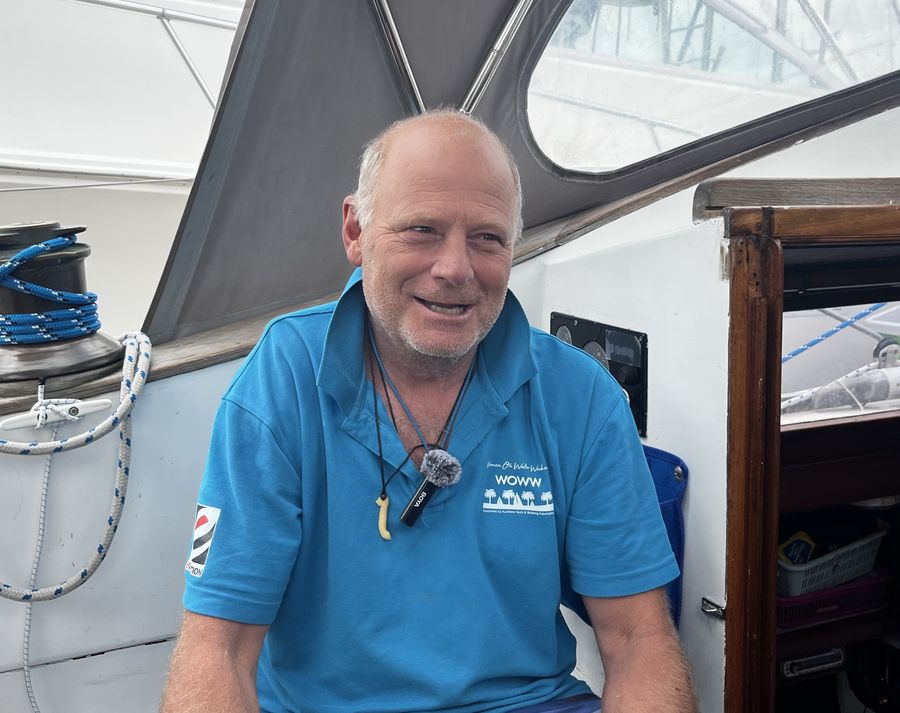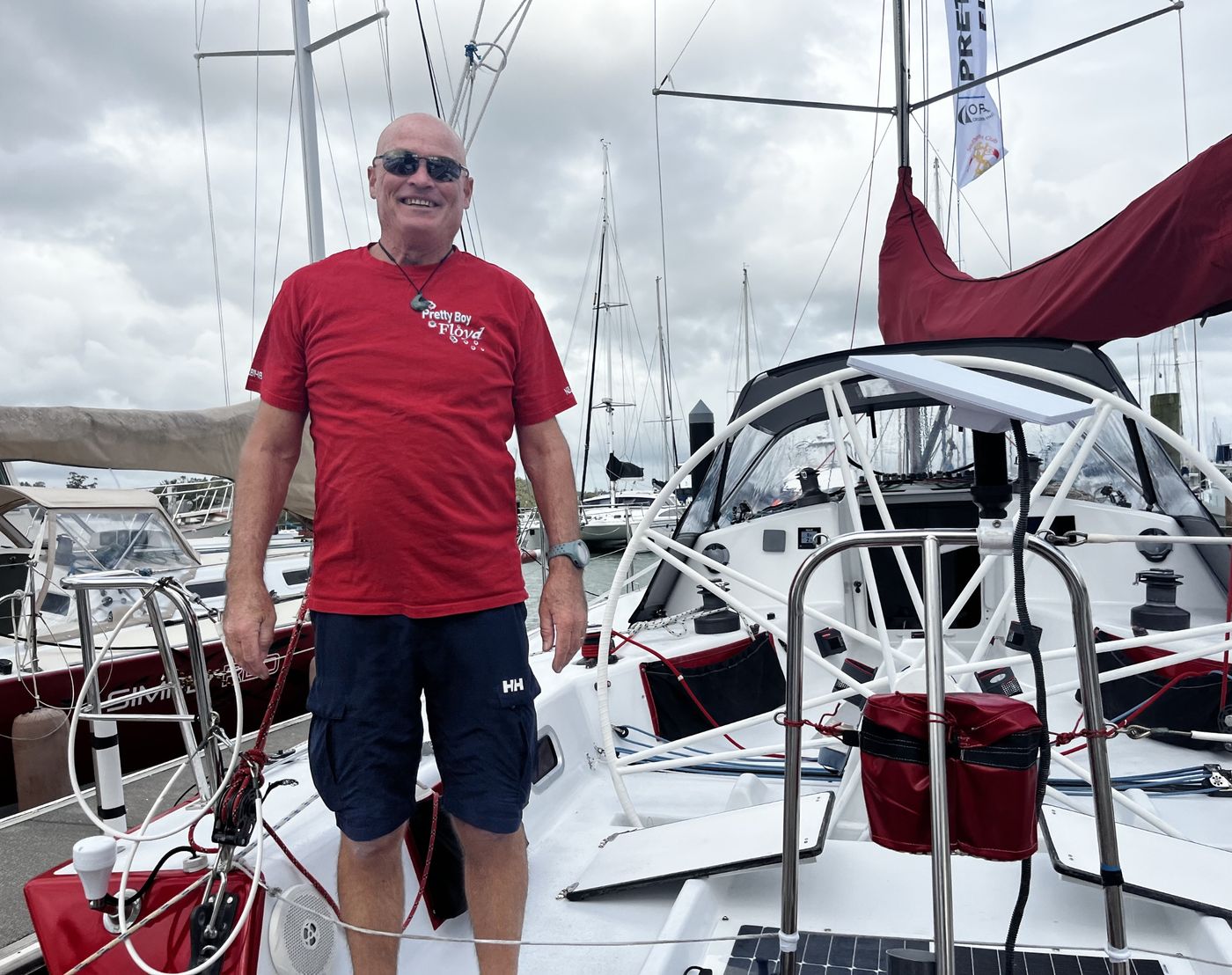
There is a deliberate irony painted on the transom of Bill Kidman's 1994 Murray Ross 12. Pretty Boy Floyd shares her name with the Depression-era American bank robber who won public favour by destroying mortgage documents during his heists. Built originally for New Zealand rich-lister Eric Watkins and constructed by Kerry Alexander in Brown's Bay, she has spent her life in motion, racing across Australian waters and making passages to Noumea, Fiji, and Tonga. Now she is pointed at the most demanding challenge of her career: the 2026 Solo Trans-Tasman Challenge, departing Opua for Southport, Queensland.
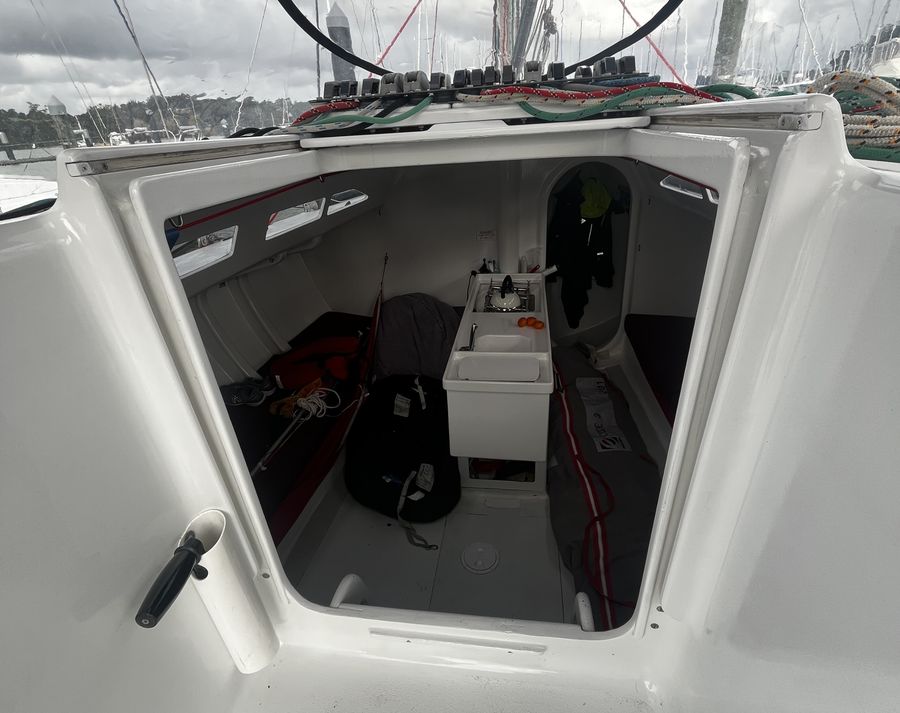
Murray Ross built his reputation designing high-performance racer-cruisers, and Pretty Boy Floyd wears that heritage visibly. Her red hull beneath clean white decks is genuinely striking, and the lightweight racing feel of the boat is immediately apparent to anyone who steps aboard. She spans roughly 3.8 metres at the beam, giving a sense of real space on deck, and her steering wheel is about a metre in diameter at the very least, possibly more. It is an imposing piece of hardware. Below, she is fitted out as a thoroughbred racer, built for endurance and rough handling rather than comfort. Murray Ross himself sailed her shorthanded on occasion.
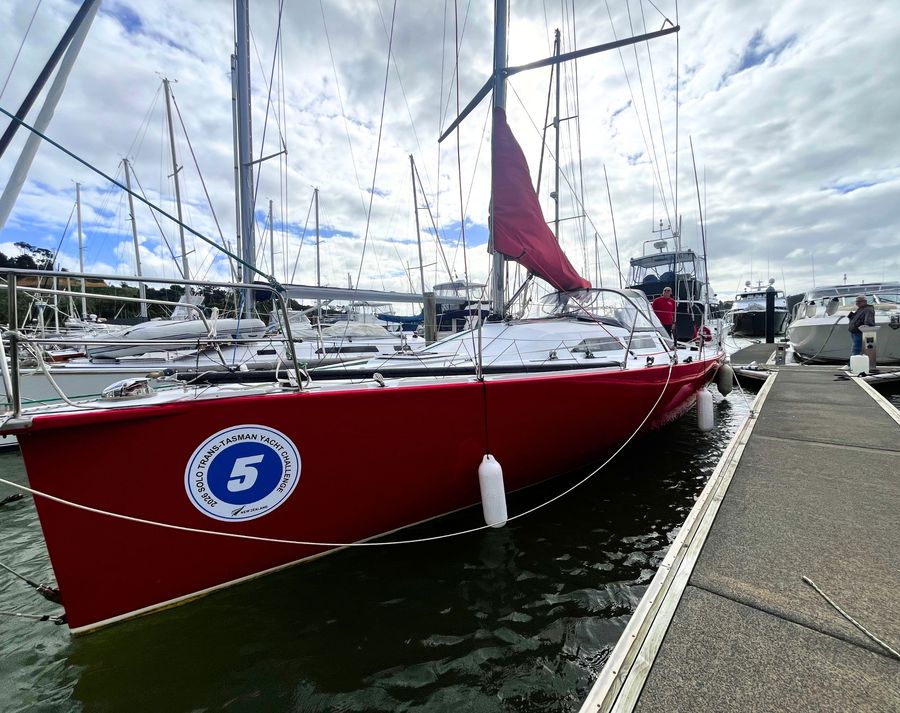
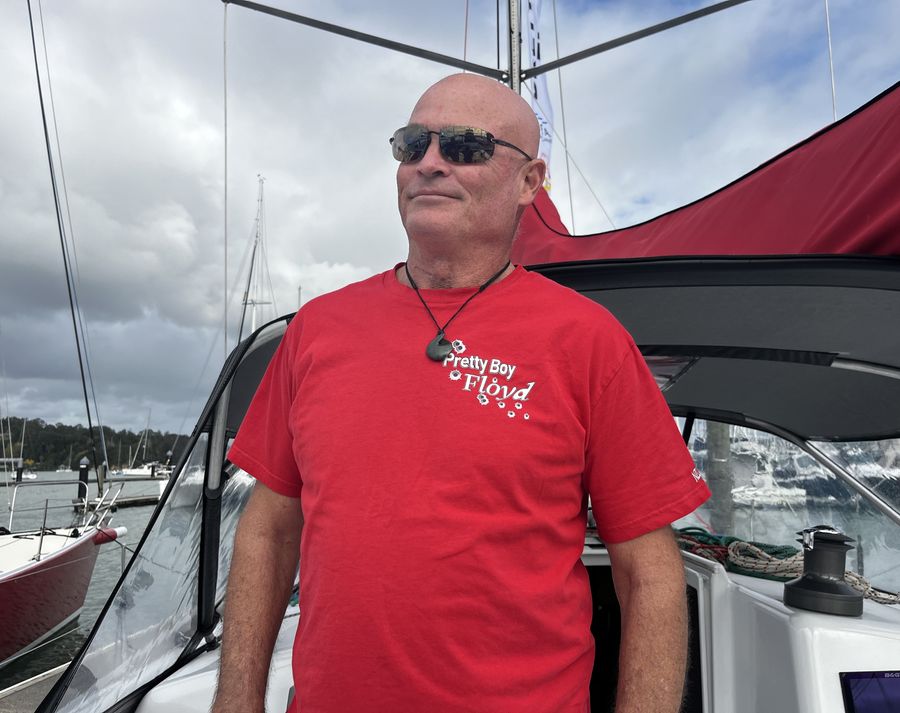
Bill Kidman's sailing life started before he can reliably place the memories. His parents sailed a K class, Norseman, then moved to a half-tonner called Thrasher, then a Young 88. By the time Kidman was racing in earnest, he was campaigning Ross 930s, and eventually built his own 8.5-metre Murray Ross design, Dodge Taxi. He completed the Round the North Island two-handed in 1999. Keelboats, multihulls, skiffs, dinghies, and enough boats built from scratch to have formed firm views about all of them.
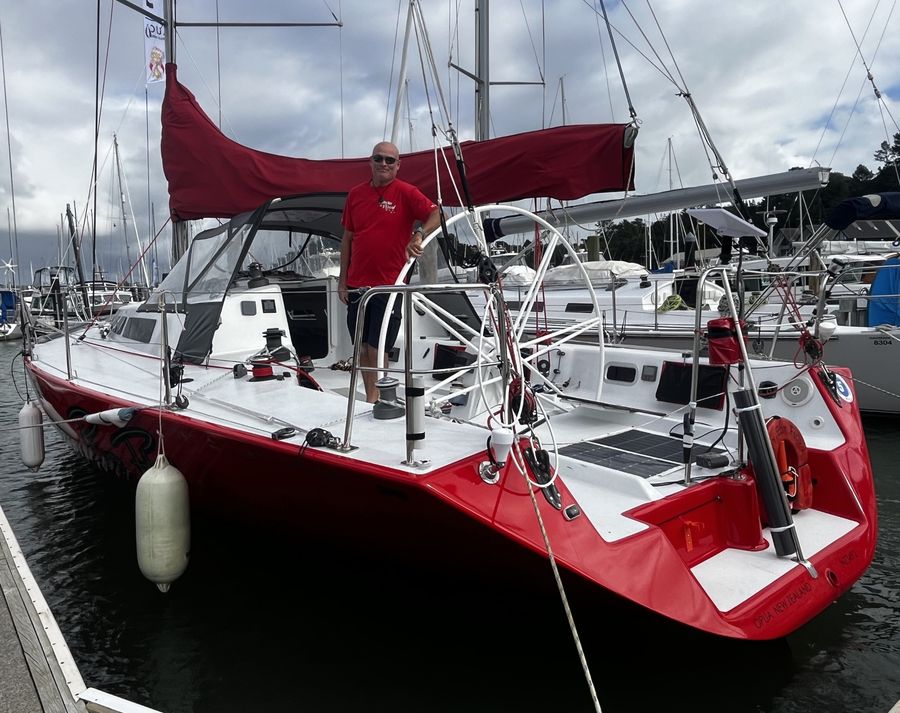
The decision to enter the Solo Trans-Tasman had been forming for years before it finally came together. The race had been on the list, deferred repeatedly by the demands of life: nine years running the Great Escape Sailing School and Yacht Charters with his wife Julie, then the sale of that business. Before that, two offshore family cruising trips aboard Synchronicity, the 14-metre cat he designed and built himself. Then came a knee replacement, and with it a sudden clarity of purpose. If not now, when?
"Do it today," he says, "because tomorrow doesn't exist."
The past year has been spent preparing Pretty Boy Floyd for the crossing. New rod rigging was handled by New Zealand Yacht Services. New batteries were fitted. Water ballast was added to compensate for the weight of the crew she will not be carrying. A Starlink aerial was installed. Fresh paint, a prop treatment from Propspeed and International Yacht Paint, and a full below-waterline system from Altex completed the package, with much of the work carried out through Bay of Islands Boatyard. Kidman makes no great effort at modesty on the subject: she looks like a racing boat, because that is precisely what she is.
Sailing her alone is a different proposition from how she was designed to be sailed. Pretty Boy Floyd was built for a crew of twelve. The sail plan, the deck systems, the sheer physical scale of the running rigging, all of it assumes multiple bodies available to handle things. Kidman has adapted where he can and made his peace with the rest. His operating position is the cockpit, kept within arm's reach of the clutches and sheets at all times. A large dodger, made specifically for the crossing, provides shelter. A beanbag, a net rigged across the hatchway, and multiple thermal cups of coffee on standby. When conditions allow, he rests there rather than going below, because offshore, things develop too quickly to be out of sight of the deck.
Sleep comes in 20-minute cycles, continuous through day and night. A timer keeps the rhythm: wake, scan the horizon, check navigation, check for traffic, rest again. From experience, Kidman knows it takes roughly two days before that pattern settles into something manageable. He is also clear-eyed about what sustained fatigue does to experienced sailors, and his preparation reflects that. Every significant manoeuvre, a tack, a gybe, a sail change, has a laminated checklist. Procedures you would execute without thinking in ordinary conditions become genuinely unreliable after three days at sea. He tells a story from a qualifying passage that makes the point: three and a half days offshore, he worked through a tack and had the nagging sense something was not right. He could not identify it. He consulted the checklist, glanced up at the mainsail, and found he had never released the runner. The boat had been sailing, just imperfectly. He fixed it and continued.
That same qualifying passage took him 170 miles offshore before an unforecast weather system arrived. He saw winds above 45 knots and swells of six metres. It was not comfortable, but it was useful. A handful of things he had expected to handle in a particular way, he discovered he would actually handle differently. Finding that out 170 miles from port is considerably better than discovering it 700 miles from anywhere.
The autopilot will manage most of the steering for the crossing. In heavy air on a deep reach, Kidman expects to take the helm himself. The boat has genuine pace in the right conditions. In light air reaching, he believes he can be competitive near the front of the fleet. On a hard reach in breeze, the larger boats will pull clear.
He is measured about his expectations for the race. Sharon Ferris-Choat on Vixen Racing, a Verdier 40, and Malcolm Dickson aboard Sarau, a Dickson 55, he regards as the likely leading monohulls. Glen Jeffery on Wave, a Grand Soleil 50, and Geoff Thorn on Catnip, a Beneteau First 45, represent the realistic benchmark against which he expects to be measuring himself. Kevin Le Poidevin's Roaring 40, a Lutra BOC Open 40 with serious offshore miles behind it, he flags as one to watch. His stated target is fourth or fifth overall, with anything above that a welcome surprise.
Pretty Boy Floyd departs Opua at noon on Saturday, destination Southport, Queensland. Bill Kidman might just find himself pleasantly surprised by the time she arrives.