Twelve thousand offshore miles, and not one of them sailed alone. For most people, that might read as a curious gap in a sailing résumé. For Doug Esterman, it speaks to a life spent putting others first on the water.
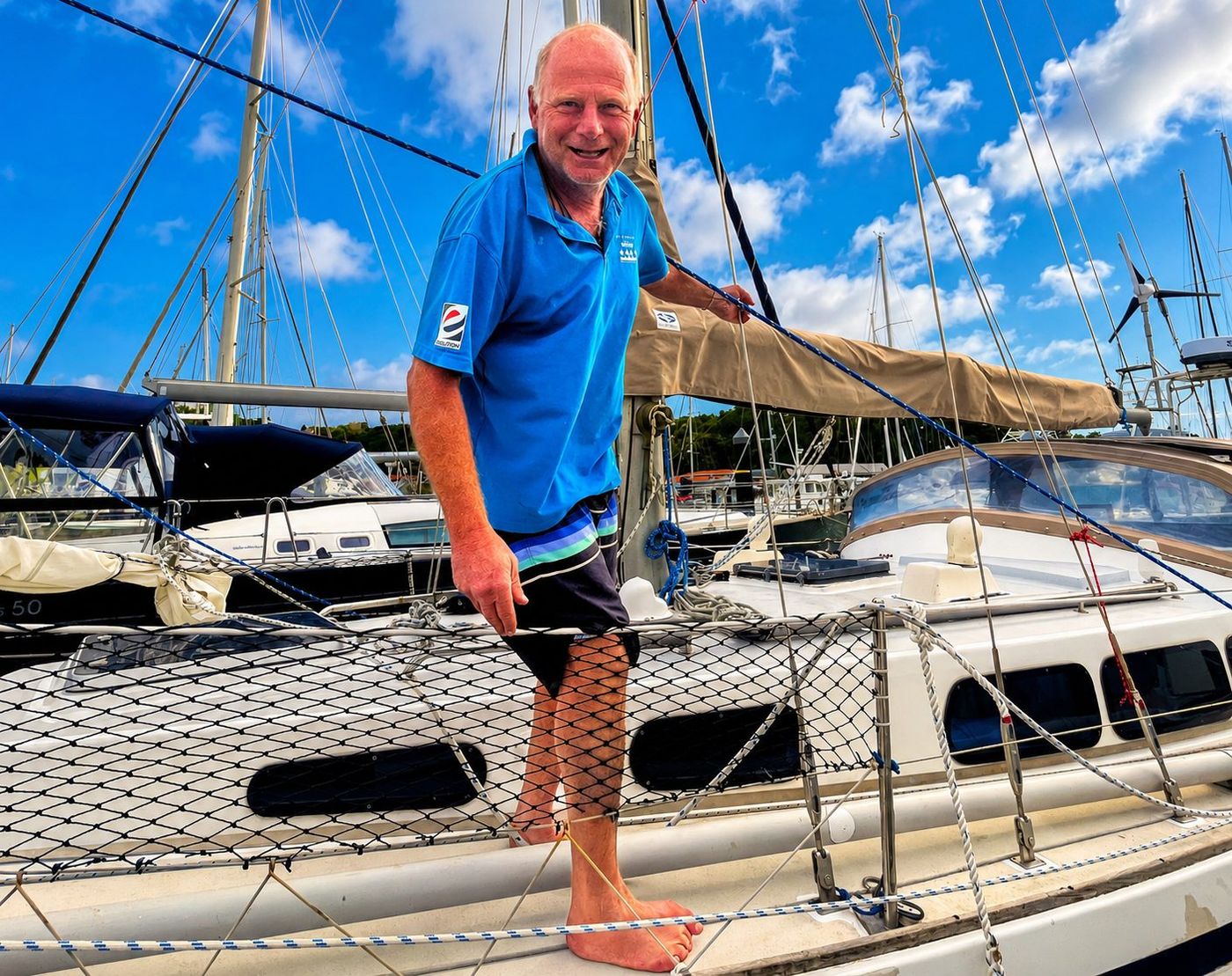
The 62-year-old Tauranga osteopath has channelled his seafaring years into something far broader than personal achievement. For twenty-four years he has run Women on Water in Tauranga, building Thursday night fleets of 150 sailors from the ground up, frequently using his own boat to give nervous first-timers their footing. Those first-timers grew into helmswomen confident enough to goosewing in a decent breeze. He has a photograph of his daughter, six months old in a sling, on deck at one of those events. She is 23 now, and she can sail. The sea, for Esterman, has always been bigger than his own ambitions on it.
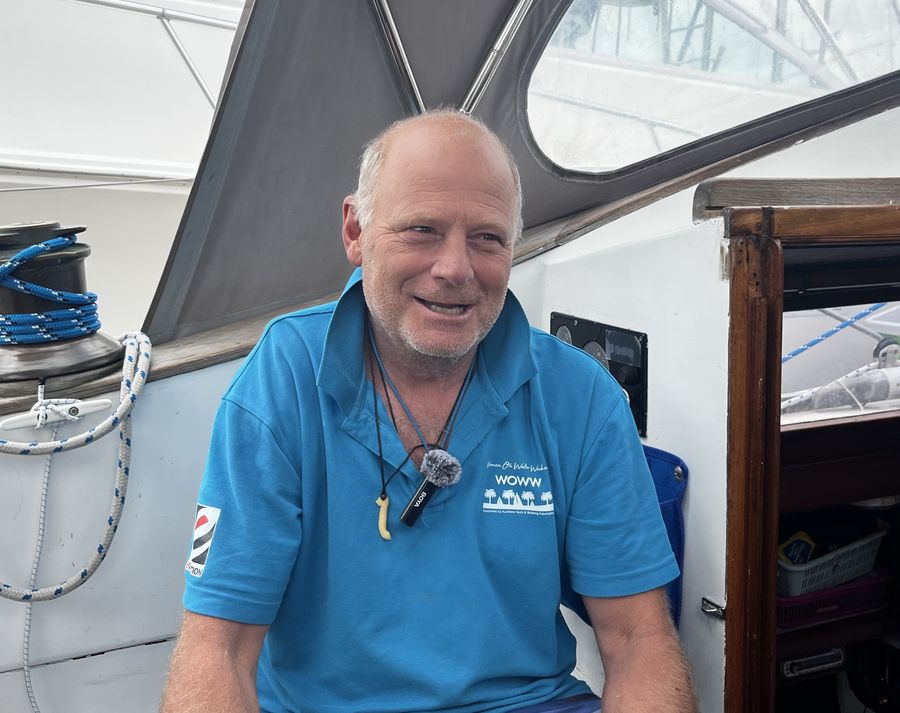
Against that backdrop, his entry in the 2026 Solo Trans-Tasman Yacht Challenge carries a particular weight. At 62, he is pointing Fair Seasons across one of the most punishing stretches of water on the planet, solo, for the very first time. He has no interest in dressing that up.
DOUG ESTERMAN
"No solo offshore miles, so the journey begins. There are some real serious sailors here. I'm the junior of the field."
The anticipation behind those words is unmistakable. After a lifetime sailing for others, alongside others, and in service of others, the Tasman belongs entirely to him.
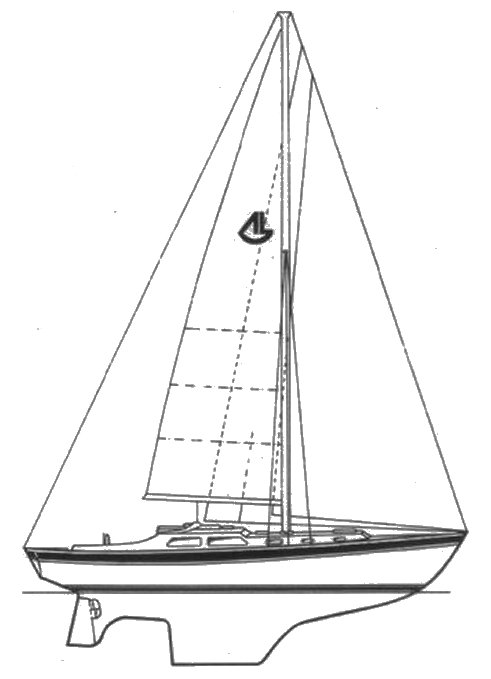
Fair Seasons is steeped in family history. She is a Cavalier 39 from the early 1970s, designed by Bob Salthouse, and Doug's father purchased her in Tauranga in April 1988. That very first delivery trip north to Auckland set the tone for everything that followed.
DOUG ESTERMAN
"They got the shit kicked out of them, and basically got in and went, 'We've brought a good boat.'"
His father kept Fair Seasons moored at the bottom of his section in Pauanui until the end of his life. After he passed, Doug bought her from the estate and has been at her helm for fifteen years since. That accumulated familiarity, an intimate knowledge of where things break and why, is a significant part of why she is the right vessel for this particular crossing.
DOUG ESTERMAN
"There's a lot of things that go wrong with boats. Well, I've had 40 years of things going wrong on this one. At least I've got an idea where most of them come from."
Fair Seasons is a centre-cockpit design with a three-quarter keel. Her motion through difficult conditions is considerably more forgiving than many modern hull forms, and her layout offers practical advantages for short-handed sailing. Among them is the fact that the head can be reached without going deep below, a detail that matters when you are the only person aboard.
Doug has set the cockpit up so that the majority of sail handling can be done without leaving it. The boom has been extended to allow full use of the dodger while working the sails, and the bimini and side panels seal together into a weatherproof station. When Southern Ocean swells stack up and the spray begins to fly, his plan is to remain inside that shelter for as long as possible.
The sail plan has been simplified accordingly. The furling headsail has stayed ashore. "It's too hard to change by yourself," he explains. A number one carries Fair Seasons upwind to around 25 knots, at which point a number three hanked to the staysail takes over. The main is managed by an early Leisurefurl boom furler, a piece of equipment Doug describes with the confidence of long familiarity. "I shook a reef out in 20 seconds," he says. "It's tidy. It's easy to manage."
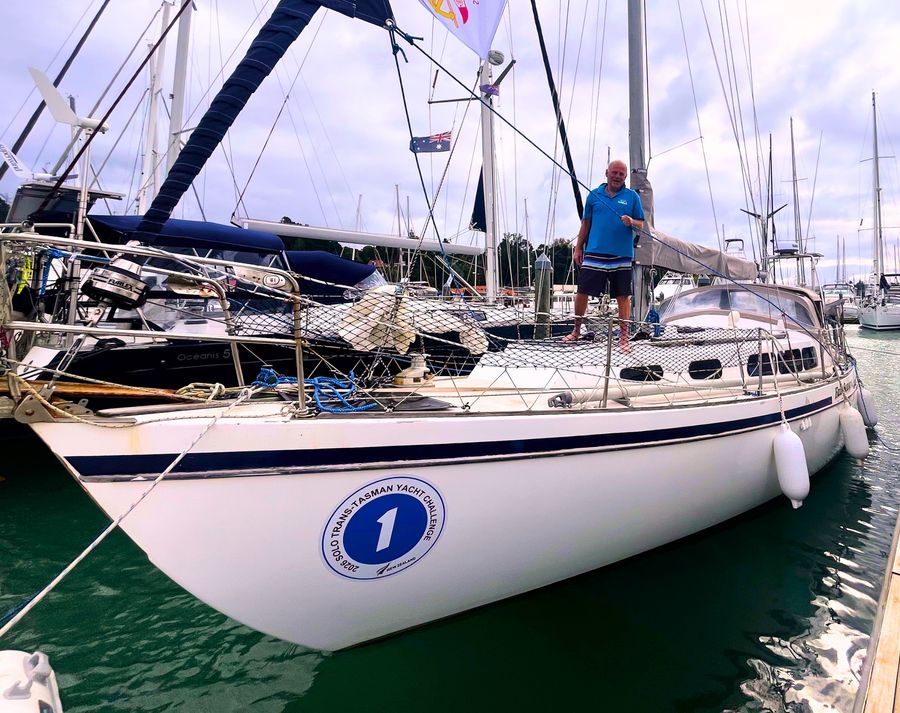
Two autopilot systems are installed. One sits on the wheel, with a windpilot on the stern serving as backup. The decision to fit the second system grew directly from hearing what happened to fellow competitor Bob Wise during the New Plymouth to Malula Bar race. Wise's autopilot failed 24 hours out, and he hand-steered the remaining 1,100 miles. "I've been going, I don't think I could do that," Doug says. "If my autopilot blew five days into it, then maybe. But one day from the start..." He shakes his head. "He'd built the boat himself. There was no way he wasn't going to do it. That's legendary."
On the question of experience, Doug is straightforward. He has sailed to Tonga, completed the New Zealand to Fiji run and back, and accumulated coastal miles by the hundred. His first genuine solo overnighter came only a couple of months ago, a 500-mile solo loop completed just five weeks after a hip operation. He loved it. Two weeks later he went out again overnight and spent 24 hours seasick. He is not pretending that is much fun, though he takes genuine comfort in having managed to read below in rough conditions on his most recent passage, which he regards as a meaningful breakthrough.
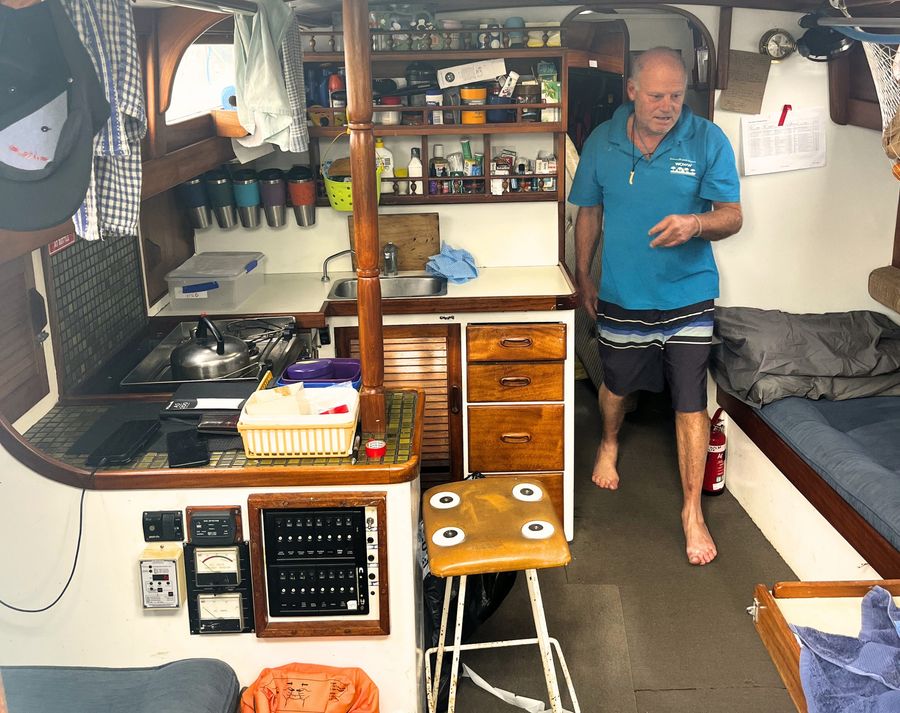
He refers to the Solo Trans-Tasman as a challenge rather than a race, and the distinction matters to him. "Fair Seasons is not a racing boat, but it's comfortable. It's a bit slow." Troubling the front of the fleet is not his intention, and he has no need of it. "You can be canvassed up fully and you'll do seven and a half, or you can reef right down, and you'll do 7.49."
Beyond the Gold Coast finish line, Doug has kept the calendar deliberately clear. His osteopathy practice is wound down for the year, and there is no flight home booked, no fixed schedule pulling him back. He is turning over the idea of drifting north towards Vanuatu, and eventually perhaps Fiji, where he has previously volunteered doing osteopathy work in island communities, bringing manual therapy to villages with no access to it. His last attempt to reach those communities ended with him spending his time in a customs office training officials rather than getting out to the villages. He is hoping this time he will get further.
For now, the Tasman holds his full attention. Race Number 1, hull number 3242, 11.9 metres of Salthouse craftsmanship, and a skipper who has spent a lifetime on the water preparing to do something he has never done before.
Race Start — Saturday 30 May (12:00pm)