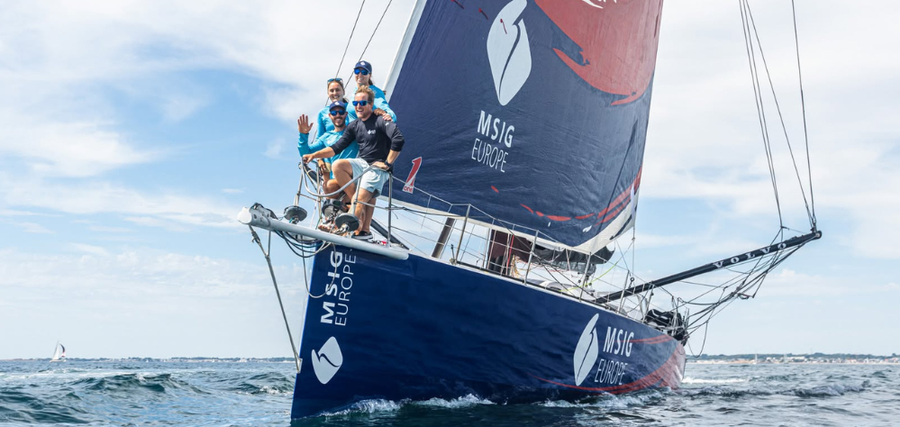
Speaking to Go Boating NZ by phone from the Atlantic, Skipper Conrad Colman said his all-Kiwi crew, the first to compete in an Ocean Race event since 2012, is getting its first extended test together three and a half days into the delivery of the yacht, called MSIG Europe, to the United States.
The original route out of France took them south along the Portuguese coast, past Madeira, and around the Azores anticyclone. The idea was to stay clear of unsettled weather further north. Instead, a large depression developed across the North Atlantic Basin and delayed their departure by a day. They left France on Sunday and sailed directly into its remnants.
"There was a massive depression that had dominated all of the North Atlantic Basin and would have been quite uncomfortable to go and interact with," Colman said. With that system now easing, the crew expects to tack over within about twelve hours and angle back toward the direct course. Colman warned it won't be the last: as many as three or four separate depressions could still cross their path before they reach the United States.
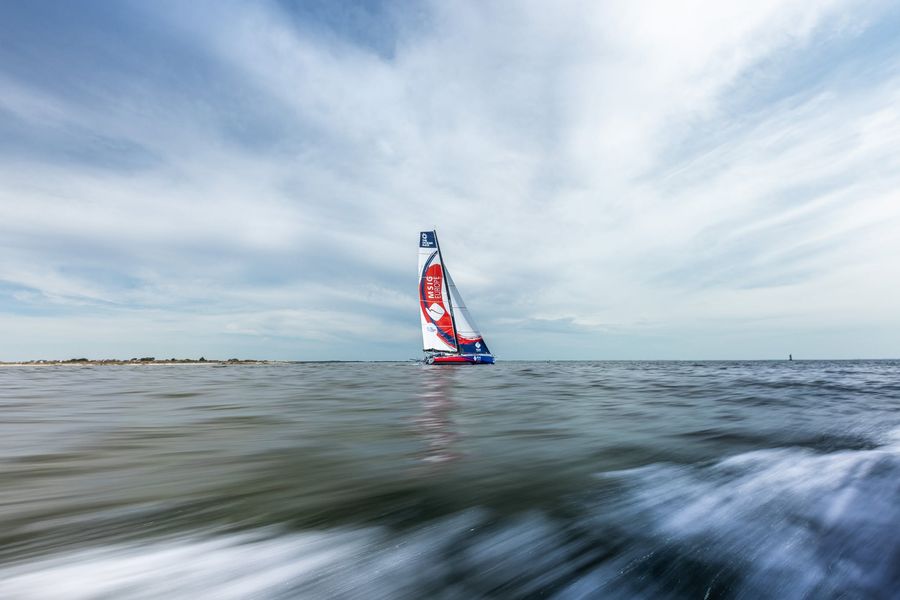
Colman is sailing MSIG Europe on a delivery leg that doubles as the crew's first extended trial ahead of the inaugural Ocean Race Atlantic, which starts from New York on 1 September and finishes in Lorient. Alongside him are Anna Merchant, Aaron Hume-Merry and Megan Thomson, whose arrival in France had been delayed by the visa requirement for crew entering the United States by sea. On Board Reporter Georgia Schofield has stayed behind to finish editing footage of the team coming together and will rejoin the crew in Newport in a few days.
A few hours before the call, Aaron Hume-Merry was thrown clear of his bunk and into the underside of the deck. Colman described it as a comparatively moderate day. Four sailors are now adapting to life aboard an IMOCA designed for one, working out new sleeping arrangements, routines and watch systems while the boat continues west. Colman described a team gelling well despite it, sharing expertise and comparing notes between their PredictWind routing and the French equivalent as they work out the best way across.
Hume-Merry has also been struck by the boat itself, a 2007-generation IMOCA that Colman raced fossil-fuel-free through the 2016 Vendée Globe. Colman relayed his crewmate's take on sailing "such a beautiful but powerful boat that's full of such complicated systems."
With the race still weeks away and the boat needed for a fast turnaround once it reaches the United States, Colman said there is little upside in pushing hard through the weather. "We're certainly conscious of the fact that we're on delivery mode, and there's little to be gained by putting us and the boat at risk," he said, adding that a faster, more direct route would likely cost more time in repairs than it saved. The crew is instead trying to position itself to meet the next system in around 35 knots rather than 25.
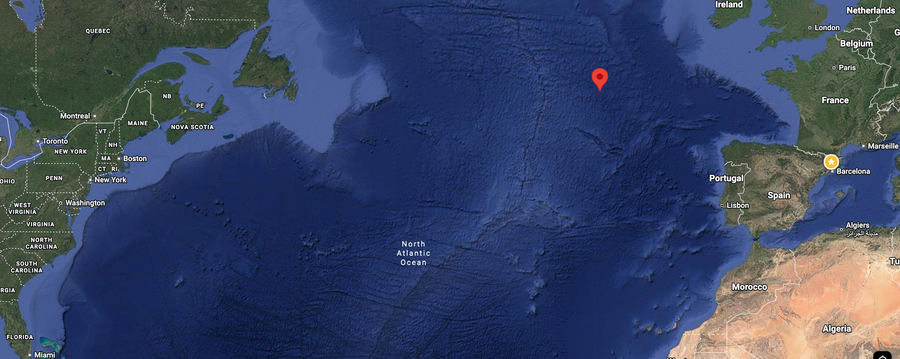
When Go Boating spoke to him, MSIG Europe was at mid-Atlantic. Colman put a nine-day crossing still within reach if the crew pushed hard through a depression forming near Newfoundland, but the team was leaning toward adding a full extra day instead. "It really depends. The key question is how much of a deviation we need to do to avoid the next depression," he said. "If we get our foot in and we're willing to risk everything, then we probably could do a nine-day crossing. But we're currently examining potentially adding a whole extra day to try and avoid the worst of the weather."
The boat still needs final preparations in New York before the fleet lines up against five other Ocean Race Atlantic entries on 1 September.