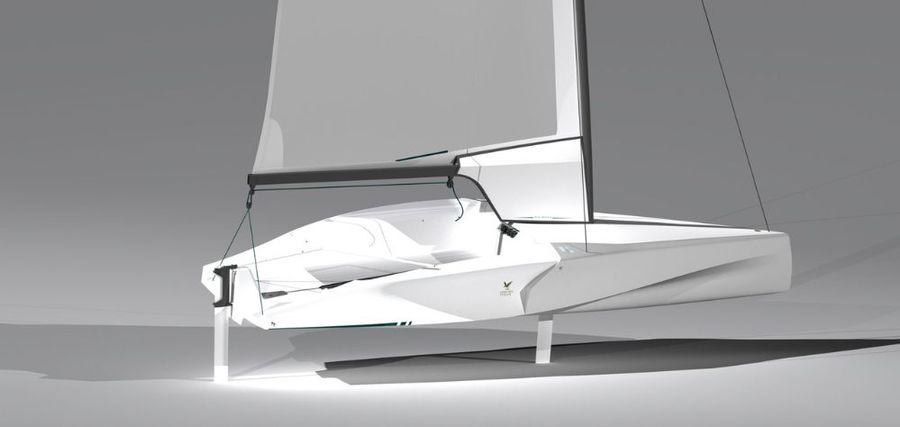
A new single-handed foiling dinghy out of France, the Airborn Foiler, uses an electric system to control the foils while the sailor sails the boat. Designed by naval architect Thomas Tison, the system adjusts the foils as the boat moves, rather than leaving that balance to the sailor's hands and feel.
Tison's most recent high-profile project was with INEOS Britannia's design team, which won the Louis Vuitton Cup in Barcelona in 2024 before going on to contest the America's Cup match against Emirates Team New Zealand, who retained the trophy.
Airborn says the electric system reads the boat's movement and adjusts the foils automatically, instead of the mechanical or manually-trimmed setups found on many existing foiling dinghies. The company claims sailors can take off in as little as 6 knots of wind, with a top speed above 30 knots, and rates the battery for around four hours of use.
The launch has drawn coverage from Germany's YACHT magazine, France's Bateaux, Italy's Giornale della Vela, the Swedish sailing website Blur, and the US-based Sailing Anarchy.
Airborn is targeting sailors between 45 and 95 kilograms across four sail sizes. The hull is self-draining and designed to be unsinkable, and the company says no prior foiling experience is required to sail it, a claim that, like the performance figures, hasn't yet been independently tested.
Construction is under way in France, with more than ten boats already sold ahead of the first hull being completed, and an inaugural fleet racing event set for autumn in the south of France.