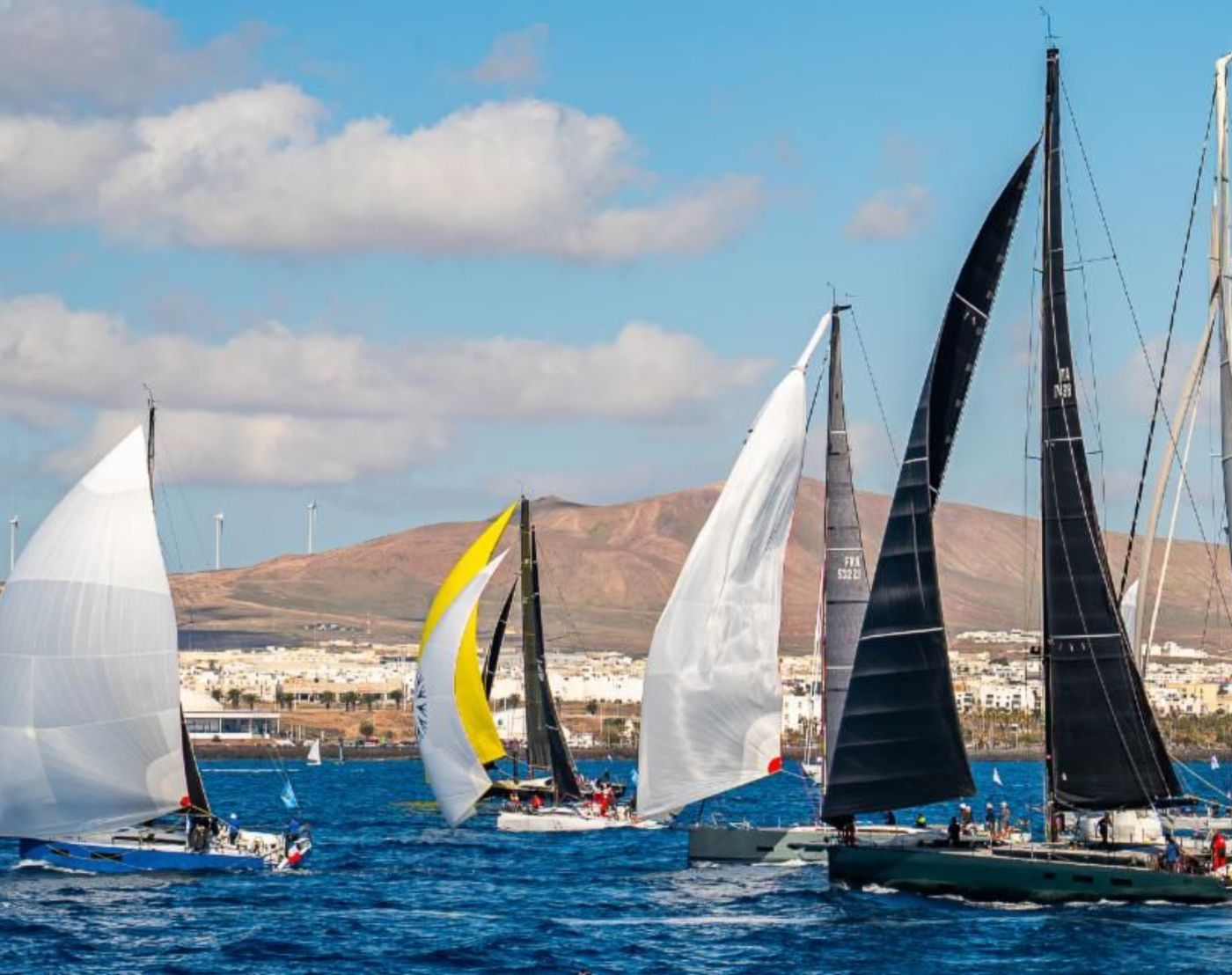
The 13th edition of the RORC Transatlantic Race will depart Marina Lanzarote in the Canary Islands on Sunday 10 January 2027, with the fleet racing 2,995 nautical miles non-stop to Antigua in the West Indies.
Organised by the Royal Ocean Racing Club in association with the International Maxi Association and the Yacht Club de France, the race has earned a reputation for fielding one of the most varied fleets in offshore sailing. High-performance multihulls, foiling superyachts, two-handed crews, and classic yachts racing under IRC time correction all share the same startline and the same stretch of ocean, giving the event a character that is difficult to find elsewhere on the racing calendar.
The 2026 race raised the bar for future editions. French Mach 50 Palanad 4, skippered by Antoine Magre and owned by his father Olivier, claimed overall honours on IRC corrected time, setting a new IRC course record of 11 days, 12 hours, 30 minutes and 32 seconds. The father-and-son dimension gave the victory a particular warmth, something Olivier Magre put plainly: "Winning the RORC Transatlantic Race with my son is a fantastic dream come true." Antoine framed the result in more technical terms, speaking to what it confirmed about the boat: "This race is a very strong first proof of concept for the Mach 50. Winning overall here really sets the bar."
James Neville's Carkeek 45 Ino Noir finished second overall. Third overall, and winner of IRC Two, was the corinthian crew aboard the 30-year-old J/125 Jackknife, whose crossing stood out across the entire fleet. The crew hand-steered throughout, never yielding control to an autopilot across the full Atlantic passage. Skipper Sam Hall was clear about what made the difference: "We hand-steered the entire way, day and night. The consistency of our performance made the difference."
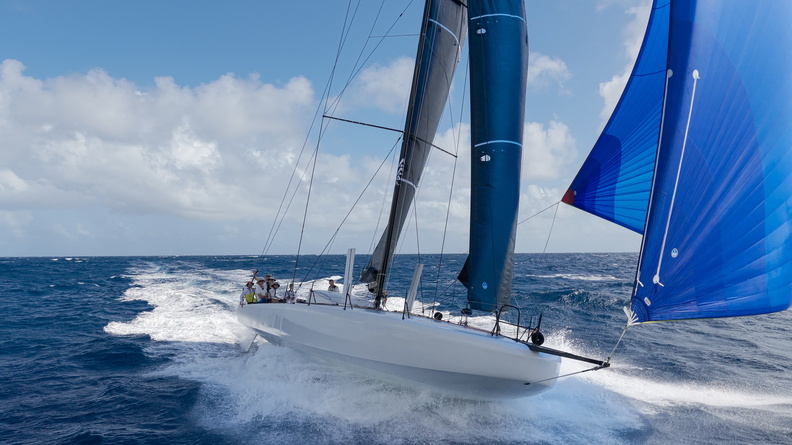
The multihull division produced racing of fierce intensity. MOD70 Argo set a new multihull course elapsed record of 4 days, 23 hours, 51 minutes and 15 seconds, finishing just two and a half hours ahead of rival MOD70 Zoulou after the pair had raced at speeds above 30 knots for the bulk of the crossing. Monohull line honours went to the foil-assisted Baltic 111 Raven, which established a new monohull race record of 6 days, 22 hours, 27 minutes and 47 seconds.
The 2026 edition was also marked by tragedy. German entry Walross 4 suffered a fatal accident mid-Atlantic. The crew completed their crossing, and the race was dedicated to them.
The 2027 edition serves once again as a feeder race for the RORC Caribbean 600, which starts from Antigua each February, making the pairing a natural fit for crews aiming to combine two of offshore sailing's premier events.
Entry is open to monohulls and multihulls of all sizes. Dependent on conditions, the fastest multihulls are expected to finish within five to six days. The majority of the fleet is anticipated to arrive between 12 and 14 days after the start, with later finishers completing the crossing in 17 days or more.