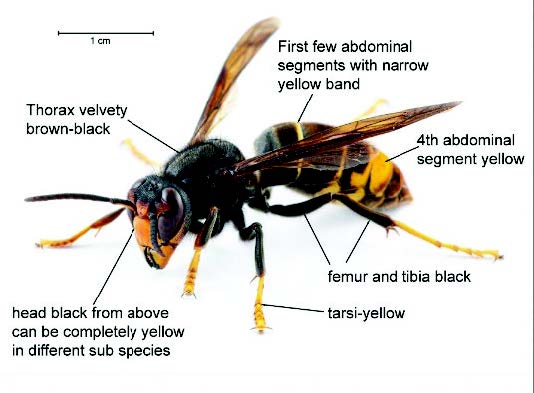
Biosecurity New Zealand has confirmed new nests and additional queens in the North Shore suburbs of Glenfield and Birkdale, as the yellow legged hornet response continues to expand across Auckland.
Nine queen hornets have now been confirmed in total since 17 October, all based on collected specimens. Seven of those nine showed clear evidence of active nesting. Among the most recent Glenfield finds, one small early-season nest contained a queen, two worker hornets, and a further two adults that were close to emerging. A tenth possible queen has been identified from a photograph taken in the same suburb, though officials are treating the image cautiously. The misuse of previously published images on social media has made photographs alone an unreliable basis for confirmation.
Public reporting has been substantial, with more than 2,800 notifications logged up to 15 November. Every verified sighting helps narrow the search area, and Biosecurity NZ says the pattern emerging from those detections is giving their teams a sharper sense of where the hornets may be concentrated.
More than 100 MPI staff are now involved across the wider operation. Of those, over 20 are dedicated to intensive ground searches in Glenfield and Birkdale, working methodically through tree canopies, roof eaves, fence lines, and dense shrubbery. As the search area widens, those teams will also move into local parks and reserves.
Trap deployment has expanded significantly. More than 180 traps are now laid across targeted zones where female hornets have been detected, checked daily, with further traps added each time a new queen is found. No hornets have been caught in traps to date, but officials describe the expanding grid as one of their strongest tools. Protein bait traps are also being introduced alongside standard units. These lures attract both queens and workers, increasing the likelihood of intercepting hornets as they travel between food sources and potential nesting sites.
A Technical Advisory Group (TAG) of independent scientists is guiding the operation, providing advice on everything from trap placement to seasonal behaviour patterns and the most effective methods for managing a social wasp incursion heading into summer.
Despite the scale of the on-the-ground effort, Biosecurity NZ is clear that the local community remains the most effective surveillance tool available. People are being asked to report only when they have a specimen, a clear photograph, or a possible nest to hand. Keeping reports focused on credible detections helps staff avoid the wave of misidentifications that typically rises through summer. Staff will be out at local markets again this weekend to help residents identify the hornet and understand how to report safely without disturbing a nest.
Sightings can be reported online at report.mpi.govt.nz or by calling the exotic pest and disease hotline on 0800 809 966. General enquiries can be directed to MPI on 0800 008 333, with further information available through the official yellow legged hornet updates page.
For those using marinas, boat sheds, or coastal launching areas, check around rooftops, shed eaves, bush edges, and any sheltered structures nearby. Early-season nests are small and easily overlooked, and a prompt, accurate report at this stage could make a real difference to whether the hornet gains a wider foothold over summer.