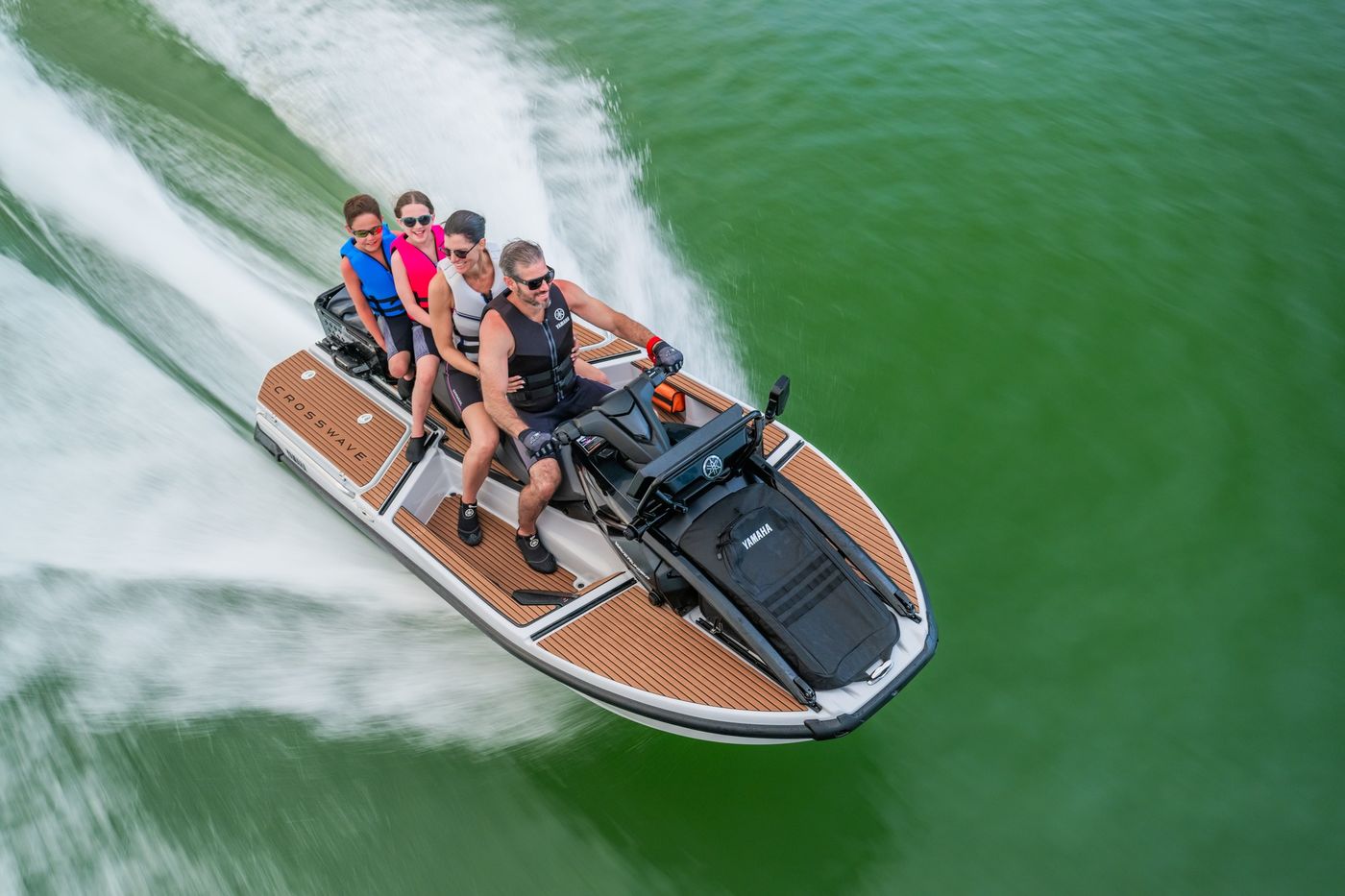
Yamaha has never been shy about pushing the boundaries of personal watercraft design, but the CrossWave represents something genuinely different. Measuring close to 13 feet in length and stretching more than 1.7 metres across the beam, it dwarfs even the flagship FX luxury series. That size is not incidental. It reflects a deliberate shift in priorities, away from raw speed and aggressive handling, and towards space, stability, and the kind of all-day usefulness that most PWCs have never attempted.
Bryan Seti, Yamaha WaterCraft's General Manager, put it plainly: "This isn't about going faster or carving harder. The CrossWave is about going farther and doing more — with the space, flexibility, and purpose that a growing segment of the PWC industry has been waiting for."
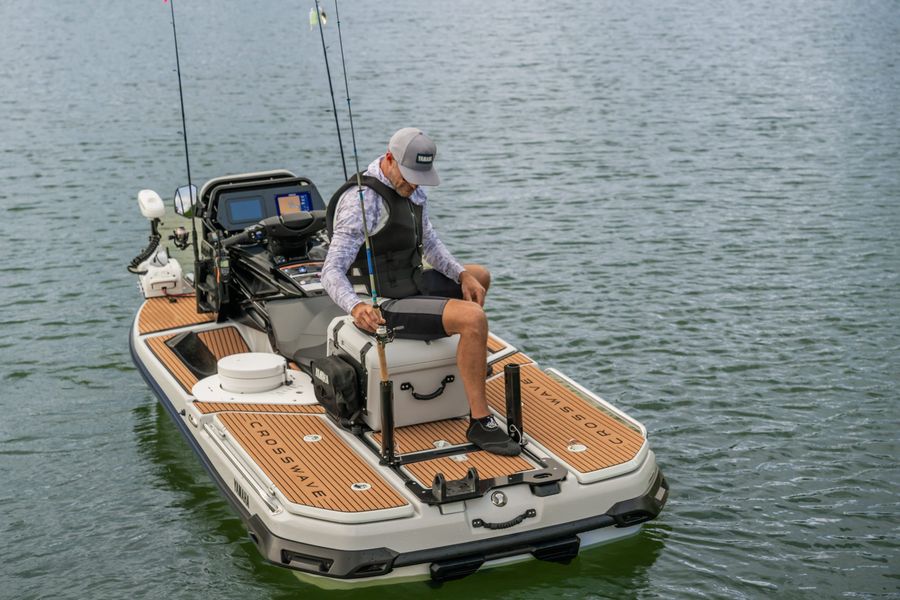
What sets the CrossWave apart immediately is its walkaround layout. Full 360-degree movement from bow to stern is possible, making this the first personal watercraft where you can genuinely walk about the deck, fish off the bow, or shift position without awkwardness. In doing so, Yamaha has deliberately softened the distinction between tender, utility boat, and WaveRunner.
The seating configuration carries up to four people, but the third and fourth seats detach in seconds, opening up a wide stern deck for gear, catch, or simply extra room. That adaptability means the CrossWave works just as comfortably on a solo fishing trip as it does on a family run to the bach. Storage has been taken seriously, with 310 litres (82 gallons) of capacity spread across the vessel, including a dedicated anchor locker, rod storage, and twin stern compartments. A 52-litre cooler, sized at 55 quarts, comes included as standard.
Running across the deck is Yamaha's integrated T-Track system, which allows rod holders, trolling motor brackets, washdown kits, and shallow water anchors to be clipped on or repositioned depending on the day's plans. Rather than locking buyers into a fixed configuration, the CrossWave is built to be tailored for each outing.
At the helm, the layout breaks new ground for the PWC class. A floating console carries dual 7-inch displays arranged in a horizontal format: Yamaha's own Connext touchscreen alongside a Simrad NSX chartplotter and fishfinder. Navigation, fish-finding, and vessel management all sit within easy reach in a configuration that will feel intuitive to anyone who has spent time on a conventional runabout. Factory-fitted Bluetooth speakers are built into the footwells, and the platform is set up to accept additional audio equipment if required.
The electrical architecture of the CrossWave is another industry first. Wired for a Group 24 deep cycle marine battery, it uses an integrated battery switch to prevent drain when the craft is sitting idle. For anyone running a trolling motor, navigation lights, or a collection of electronics, this is a meaningful practical advantage rather than a marketing footnote. Yamaha has also transferred its patented cleanout port technology across from its jet boat range, allowing debris to be cleared from the jet pump without the rider needing to enter the water. The kind of considered detail that makes a real difference during a day on the water.
Power comes from Yamaha's 1.9-litre High Output Marine Engine, the largest displacement motor currently found in the PWC segment. It delivers the responsive performance Yamaha has built its reputation on, while offering enough efficiency to make long runs practical. A 26.4-gallon fuel tank gives the CrossWave the range to match its adventure-oriented brief.
Yamaha has kept the model range straightforward. The CrossWave is offered in a single fully equipped specification, with buyers customising their craft through a growing catalogue of modular accessories, including casting decks, leaning posts, and additional seating options. A Yamaha trailer and the cooler are both included with every unit.
The broader ambition behind the CrossWave is the creation of an entirely new Adventure PWC category, something that sits between a traditional WaveRunner and a small multipurpose boat without being a compromise of either. Its fishing-focused design, modular deck system, and long-range capability make a compelling case that such a category has a genuine future. For beach house owners, keen fishers, or anyone wanting a single craft capable of handling varied demands, the CrossWave could well shift the way personal watercraft are thought about, not as recreational toys, but as capable and adaptable platforms for life on the water.