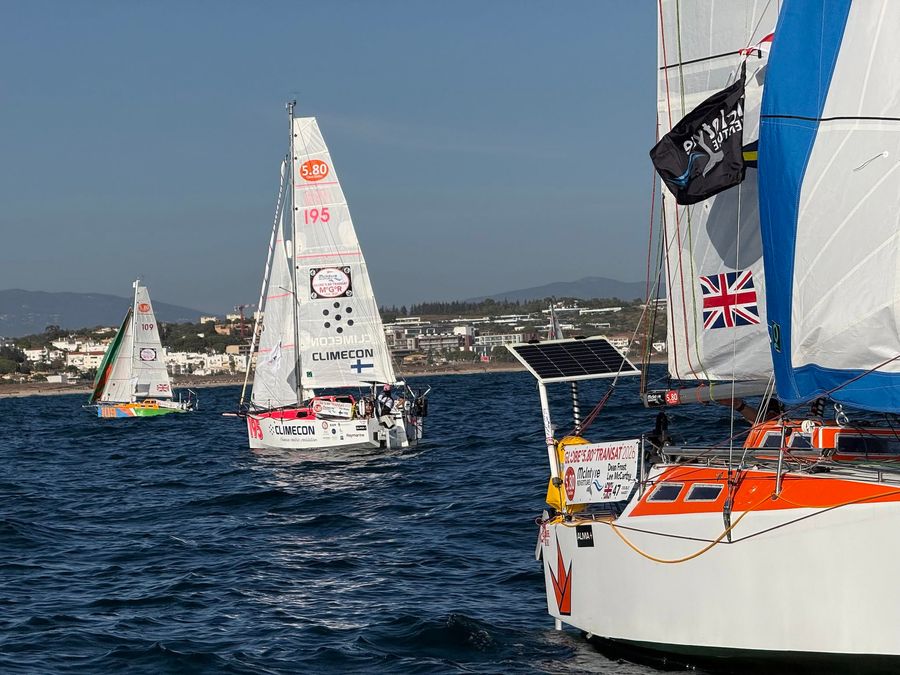
Damien Guillou has stretched his Golden Globe Race lead to 780 nautical miles, but the contest for third has tightened. Four boats are separated by just 92 miles on distance to the finish, and Henry Wootton made the biggest run in the fleet to join them.
Guillou in Solarem had 18,898 miles still to sail to Les Sables d'Olonne at the 16:00 UTC tracker position on Wednesday 4 November, the 59th day of the race. Ertan Beskardes in Miss Beagle is second on 19,678 and Etienne Messikommer in Bernard is third on 20,189. Guillou's lead has grown from 743 miles at our last snapshot, and his latest 24-hour run was 140 miles against 111 for Beskardes. Our reading of the forecast models shows a band of strong wind south-west of South Africa from late on Thursday 5 November UTC, which is Friday morning in New Zealand.
Golden Globe Race at a glance, Day 59 (16:00 UTC, 4 November)
Leader: Damien Guillou, Solarem, 18,898 nautical miles to go, 8,230 sailed
Second: Ertan Beskardes, Miss Beagle, 19,678 to go, 780 behind the leader (743 on Day 58)
Third: Etienne Messikommer, Bernard, 20,189 to go
Best 24-hour run: Henry Wootton, Privateer, 156 miles, ahead of Messikommer on 144 and Guillou on 140
Closest contest: Messikommer, Andrea Lodolo, Wootton and Daniel Pinsky are within 92 miles of each other on distance to go
Shortest run: Gunnar Christensen, Pompoen, 41 miles
Golden Globe Race 2026: distance sailed
Tracker snapshots, start to Day 59
Source: Golden Globe Race live tracker (Yellow Brick)
Who is leading the Golden Globe Race on Day 59?
Guillou has sailed 8,230 miles to Beskardes' 6,940, but the leaderboard ranks distance still to go, and on that measure the gap is 780. Beskardes, who plots his position by hand and whose sextant sights were backed by a passing ship, is the nearest challenger and still a long way back.
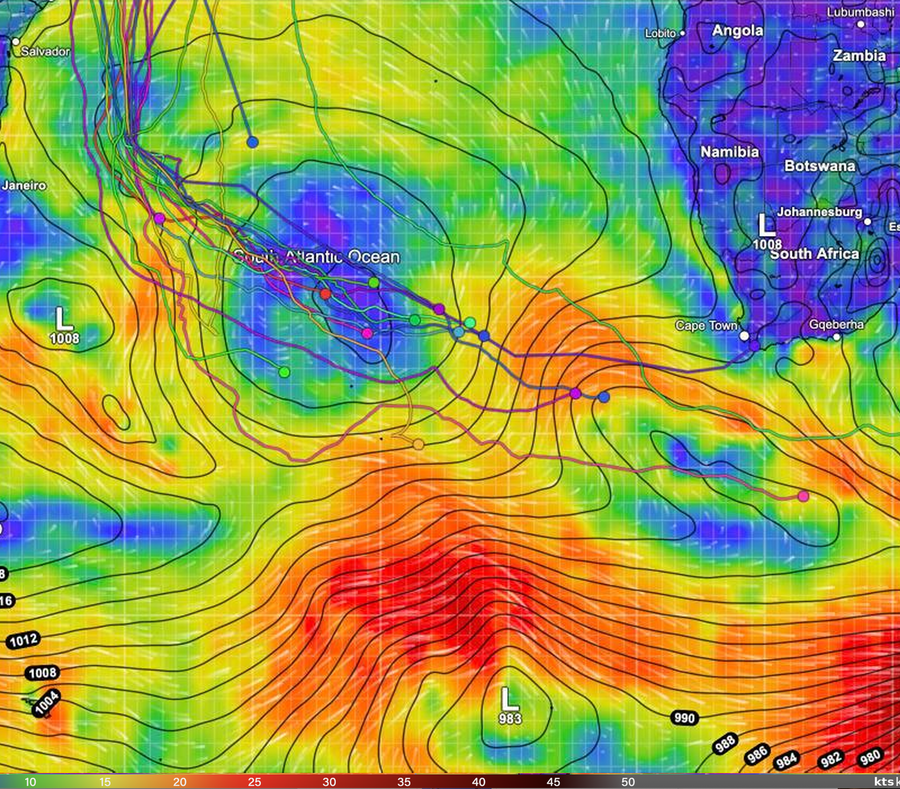
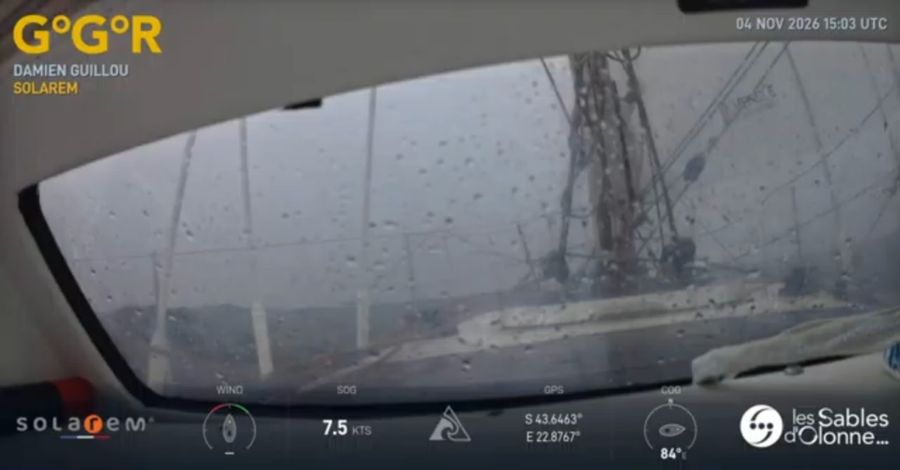
The PredictWind map shows a low south of Solarem, which was making 7.5 knots at 15:03 UTC on Wednesday, at 43.65 degrees south, 22.88 degrees east, with the camera looking out at the deck through a rain-streaked cabin window. That is about 80 miles north of the 45 degrees south limit that entrants must not cross. Guillou has been through heavy weather on this leg before.
Four boats chasing third
Messikommer on 20,189, Lodolo in BiBi on 20,230, Wootton on 20,262 and Pinsky in Exodus on 20,281 are separated by 92 miles on distance to go, and Lodolo and Pinsky are only 51 apart. That is a measure of progress to the finish, not of how close they are on the water. Mara Kveseth's row for Showgirl reads 20,268, inside the same band, but it was last updated at 12:01 UTC, four hours older than the rest, so we have not given her a place.
Wootton made the most ground in the fleet, 156 miles in 24 hours. He has sailed 7,023 miles, 83 more than Beskardes, yet he trails him by 584 miles on distance to go and Messikommer by 73. His daily message made a joke about a sense of humour failure and a day of sun and surf.
Messikommer made 144 miles himself. On Tuesday evening he told his recorder he was closing slowly on Guillou and guessed the gap at between 600 and 1,000 miles, though he was not sure. The tracker had it at 1,286 miles that day and 1,291 on Wednesday.
He reported gusts above 30 knots and squalls, reefed hard under a storm jib and making 6.8 to 6.9 knots, with the hydro-generator keeping the batteries up. He also made a pun. The French word for a reef sounds like the word for rice, so he told listeners he had even taken two. Later he ran through his radio timetable, called it very organised, and announced that it was pyjama time.
Beskardes and a night of 50-knot gusts
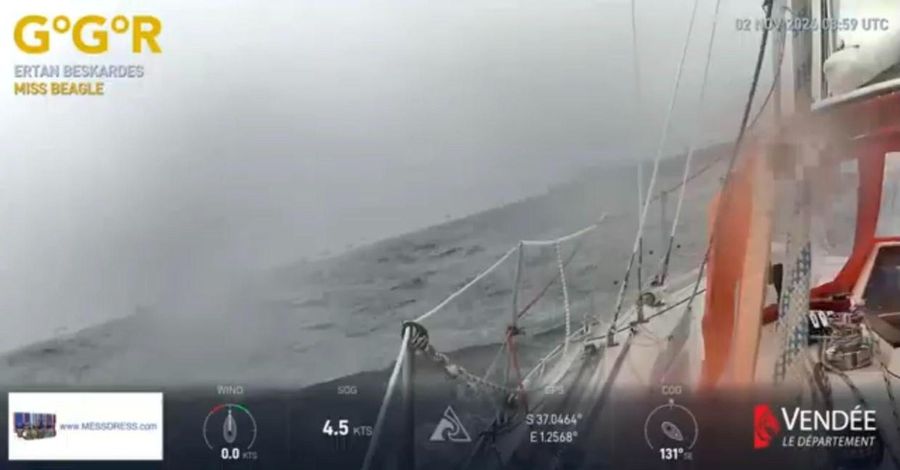
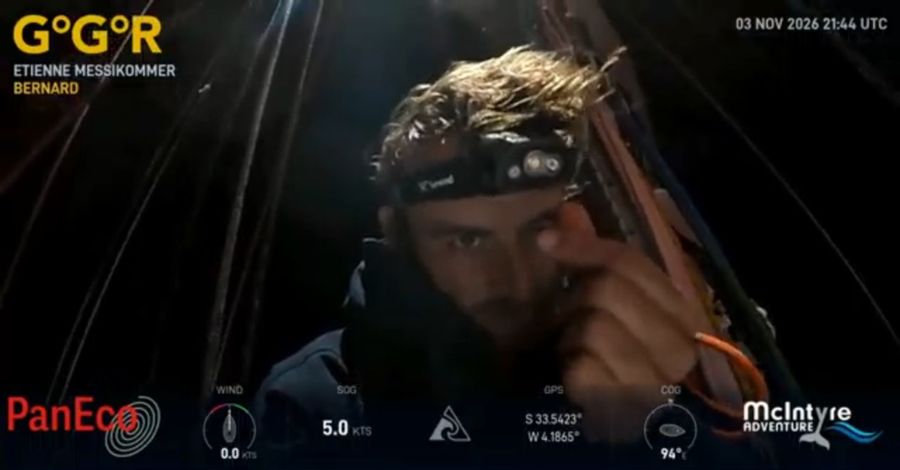
On Tuesday evening Beskardes reported gusts of 30 knots, water in the cockpit and a decision to make about a second reef. He was near 37 degrees south, trying to hold that latitude while the wind pushed him east, and he said he aims for 130 to 140 miles a day but eases the boat when the speed climbs above about 7.5 to 8 knots.
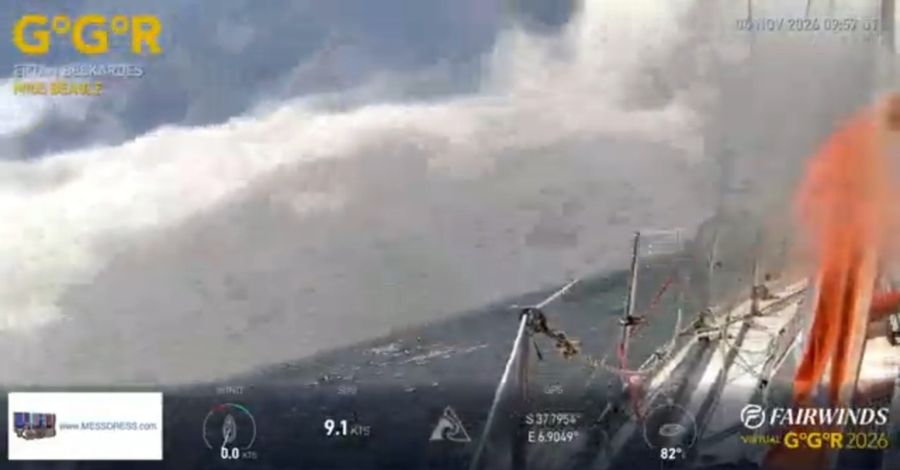
By Wednesday morning the night had been worse. He reported gusts of about 50 knots in the small hours, took the staysail down, and drifted at between 1 and 8 knots for hours before getting back onto a steady course near 120 degrees with the wind-vane self-steering doing the work. His 111 miles for the 24 hours fits that story. He put himself near 38 degrees south and 6.5 degrees east, and he said Guillou was at about 43 degrees south and 23 east, which is close to the tracker. Going south, he reminded himself, does not mean money in the bank, and wanting to dive to 40 degrees south had been a daft thing to say.
The tea helped. On Tuesday afternoon, at 6.8 to 7 knots near 37.4 degrees south, he had tea without milk and cherry jam on Petit Beurre biscuits, which he rated heavenly, although he allowed that only Nutella could improve them. Then he burned his mouth on the tea and told himself off.
A slow day aboard Pompoen
Gunnar Christensen managed just 41 miles in 24 hours in Pompoen, and he told his recorder he was not having a very fast year. His camera had him at 2.9 knots at 16:04 UTC on Wednesday, and he put his speed at 3 to 3.5 knots. He reckoned he was about three weeks behind Guillou and about 600 miles behind the mid-pack, and the tracker has Messikommer 620 miles ahead of him.
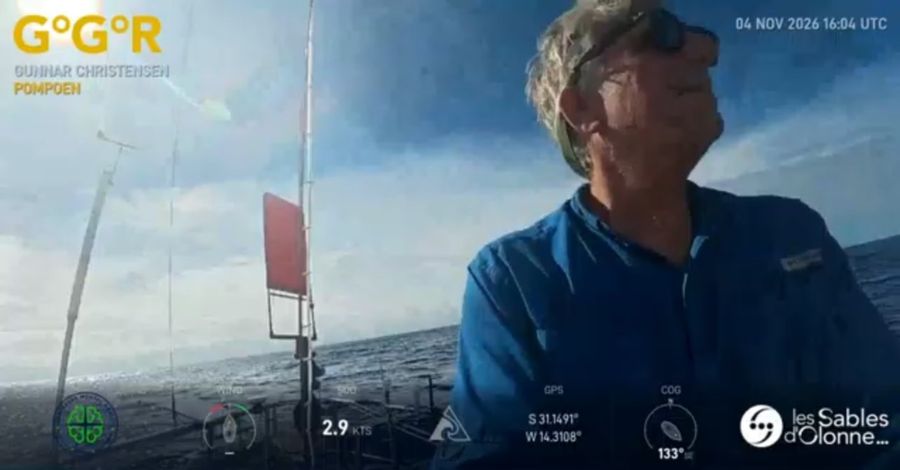
He took it in good humour. He reefed the main under a building mackerel sky, set up a preventer and the staysail, and joked that the rest of the fleet was sipping sarsaparilla while he did the work. Later he ran wing-on-wing with two poles, and reported that his noon sight came out right on the money. Several of his camera mounts have broken and he said he could use one more shackle. He expects another storm on Saturday.
Matt Woodside in Tipi Haere is 21 miles ahead of him on distance to go, and Isa Rosli in Olleanna is 137 ahead. Elsewhere, Guido Cantini in Hannah of Cowes wrote that he had seen his first albatross, and that he felt scared and excited at the doors of the Great South.
Where is the weather risk for the fleet?
We read the European ECMWF and American GFS models side by side in PredictWind. Both show a large area of strong wind, roughly 25 to 35 knots, south and south-west of South Africa at the 11:03 NZDT frame on Friday 6 November, which is 22:03 UTC on Thursday 5 November. GFS shows the higher end. Offshore, west of Cape Town, the wind looks lighter, around 10 to 20 knots.
On Saturday 7 November the strong wind sits along the coast from Cape Town to Cape Agulhas and out to the far south-west, with GFS showing a long band of 30 to 40 knots. By Monday 9 November the picture is light to moderate, mostly 5 to 20 knots. These are forecasts, not observations, and the models may shift. We have not tried to estimate wave heights, and whether the strong wind reaches Guillou's track depends on how far east he gets.
The skippers cannot receive weather routing from shore. The race office sends warnings, but Guillou must make his own decisions. Our earlier reports on Guillou threading the storm gap and Pinsky hand-steering through the night show what the fleet has already faced down here. The positions above are from 16:00 UTC, so the next update may shuffle the order.
Follow the whole race on our dedicated Golden Globe Race 2026 page.