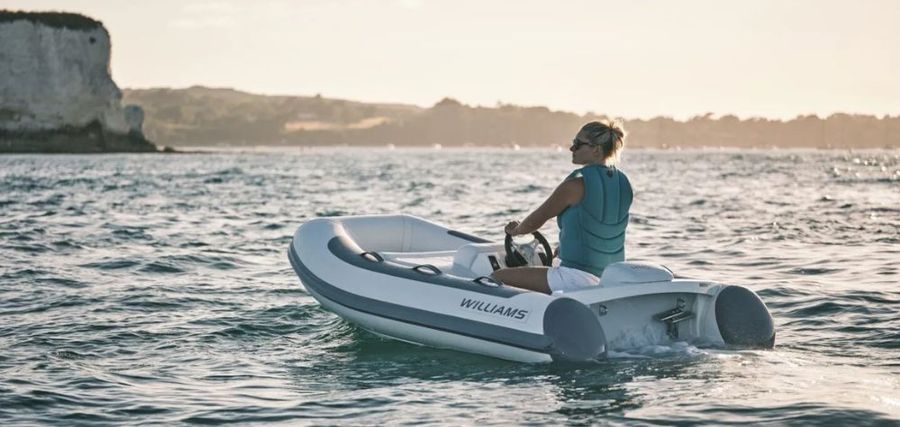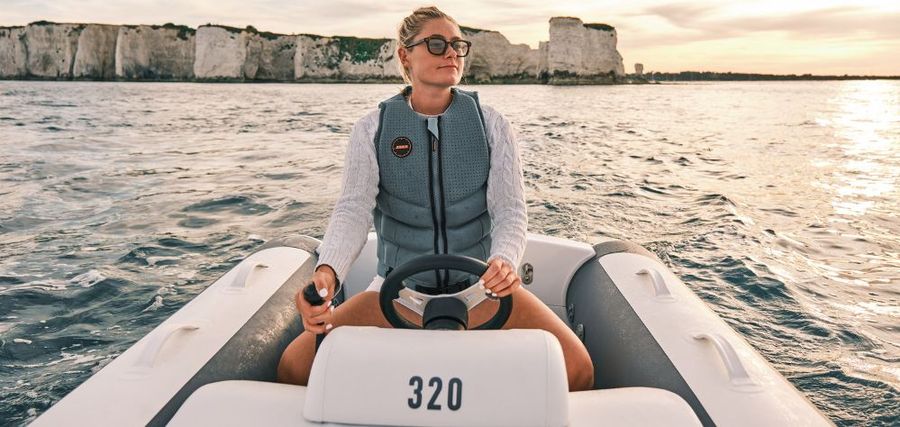
If the TurboJet 280MX was about squeezing Williams quality into the smallest possible footprint, the 320MX is the other half of the story: same new-generation platform, scaled up for owners who need more grunt, more seats and a bigger yacht to hang it off.
What changes when you go bigger
Length grows from 2.79m to 3.19m, engine output jumps from 60hp to 90hp, and top speed climbs from 42mph to 45mph. Capacity goes from three adults and one child to four and one, useful when a family or a full boarding party needs to get ashore in one trip rather than two.
| Spec | 280MX | 320MX |
|---|---|---|
| LOA | 2.79m | 3.19m |
| Dry weight | 230kg | 255kg |
| Engine | BRP Rotax Ace 903, 60hp | BRP Rotax Ace 903, 90hp |
| Capacity | 3 adults + 1 child | 4 adults + 1 child |
| Top speed | 42mph | 45mph |
| Typical fitment | Yachts 11m+ | Yachts 14-20m |
Where it fits
That extra size buys real range in what the tender is actually for. The 280MX is built for owners squeezed by garage space and lifting limits on yachts around 11m and up. The 320MX moves the target bracket to 14-20m yachts, the kind of platform where the owner has room to spare and wants a tender that can carry a full crew, not just a couple.
Power and handling
Both models share the same BRP Rotax Ace 903 engine family, just tuned for different output. Williams built the platform around improved torque and power-to-weight ratio, the kind of margin that matters when the tender is loaded with four adults and gear rather than running light. The same engine carries a catalytic converter, which Williams positions as one of the cleaner options in the jet tender class, relevant for owners increasingly conscious of emissions even on a boat this size.
The hull, control system and jet pump are tuned as one unit rather than bolted-together components, which is what lets a jet tender this size hold a line at speed without the twitchiness that smaller RIBs can have. A BRP multifunction display at the helm covers speed, RPM, compass heading, engine temperature and fuel burn, standard across the range rather than an add-on.
Because it runs jet propulsion instead of an exposed propeller, the 320MX can work closer to shallow water and beaches than a sterndrive or outboard tender of similar size, and it removes the prop-strike risk around swimmers and water skiers boarding from the water. The extra horsepower over the 280MX also puts it in genuine ski-towing territory rather than just casual use, a point Williams makes directly in its own product material.
Standard kit and options
Both MX models ship with vinyl upholstery, a forward-facing helm seat, footpump, automatic fire extinguisher, single-lever throttle and shift control, and Seadek decking as standard, alongside a durable handmade Hypalon tube with grab handles. Three-point lifting pad-eyes and two rear tie-down points cover the practical side of getting the tender on and off a yacht.
The accessories list runs from the practical (towing kit, tie-downs, lifting strops, an overall cover) through to quality-of-life additions like an electric inflator, a 12V waterproof auxiliary socket, a retractable bathing ladder and a waterski bridle. None of it is unique to the 320MX, but on a bigger yacht with more storage and a bigger crew to equip, the fuller accessory list tends to get used more often than it does on the smaller 280MX.
Same range, same timeline
Both models launched together on 11 August 2026, with orders open now through Williams' global dealer network. First customer deliveries are expected from January 2027. The MX range replaces the outgoing MiniJet 280, which finishes production in September 2026.