Long before sunrise on 22 August, an alarm dragged me out of bed at an ungodly hour. By 4:10am I was already on the road, driving north from Cambridge to Auckland's Westhaven Marina. The destination: Z Pier, where part of Skipperi's fleet of Haines Hunter SF545s is berthed, and where a Wild Chix "Women's Day Out on the Water" was about to get underway.
Arriving well before dawn had its advantages. I reminded myself that a later start would probably have meant a rushed one. By 8am the first participants were making their way onto the pier, and the atmosphere shifted immediately. Smiles, hugs, and introductions rippled through the group: "so lovely to meet you", "where are you from?" There were no men, no sense of performance, and no pressure. Just women who wanted to give boating a genuine try.
It was my first Wild Chix event, and I'd come to understand what the conversation around it was about: women learning from women, confidence built through doing, and a community-minded approach to getting more people onto the water.
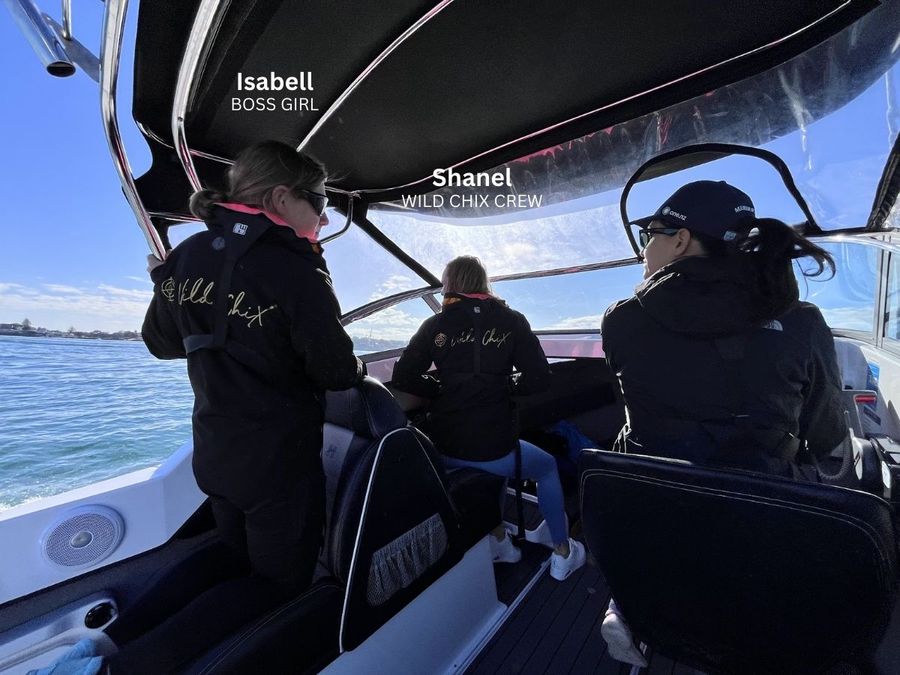
Founder Isabell Zitzelsberger was among the first people I connected with properly. We had only spoken online before, yet she greeted me like someone she'd known for years. Other familiar Wild Chix faces were there too, including Shanel Honore and chef Katie Bachman. Rounding out the team was Sarah Psaila from SARS and Coastguard Education, who focuses her work on children's boating safety. Her involvement made immediate sense: Wild Chix draws in exactly the kind of mothers who want their whole family to have safe, capable experiences on the water.
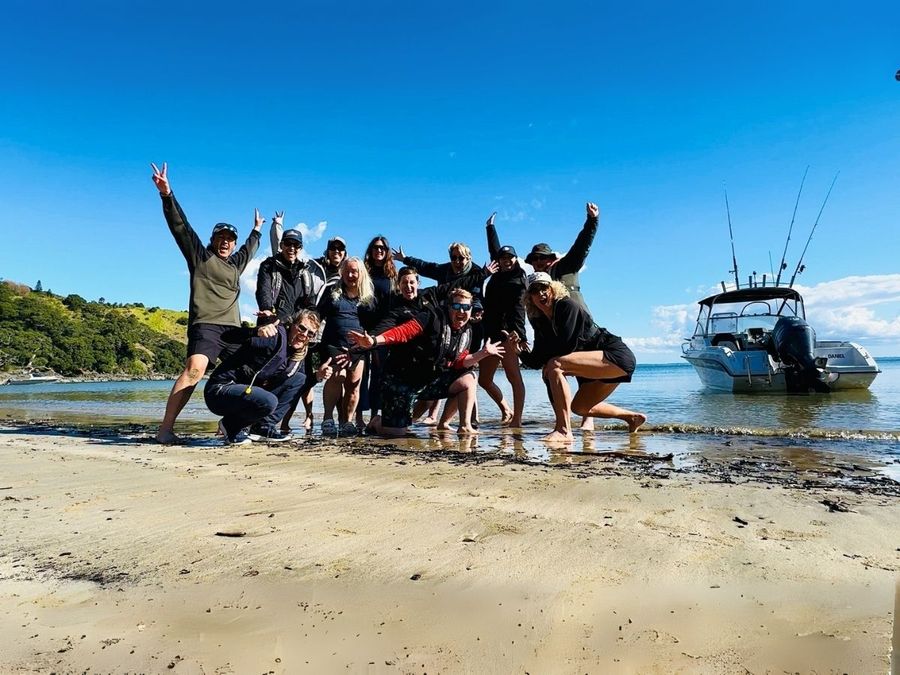
Twelve of us were spread across three boats. A few late cancellations had trimmed the numbers from what was originally planned, but the smaller group only made things more personal. On my boat were Isabell, Shanel, and Danielle, a mum with young children whose family was weighing up joining a boat club. She wanted to build real confidence before diving into boating life alongside her husband and kids. Her reason for being there captured the whole spirit of Wild Chix: giving women the tools and the courage to take the helm on their own terms.
Before anyone left the dock, we worked through the essentials. Lifejackets on, gear checked, each boat's systems explained. There was also a run-through on rods and tackle, because fishing was firmly on the afternoon's agenda and we'd be prepared for it.
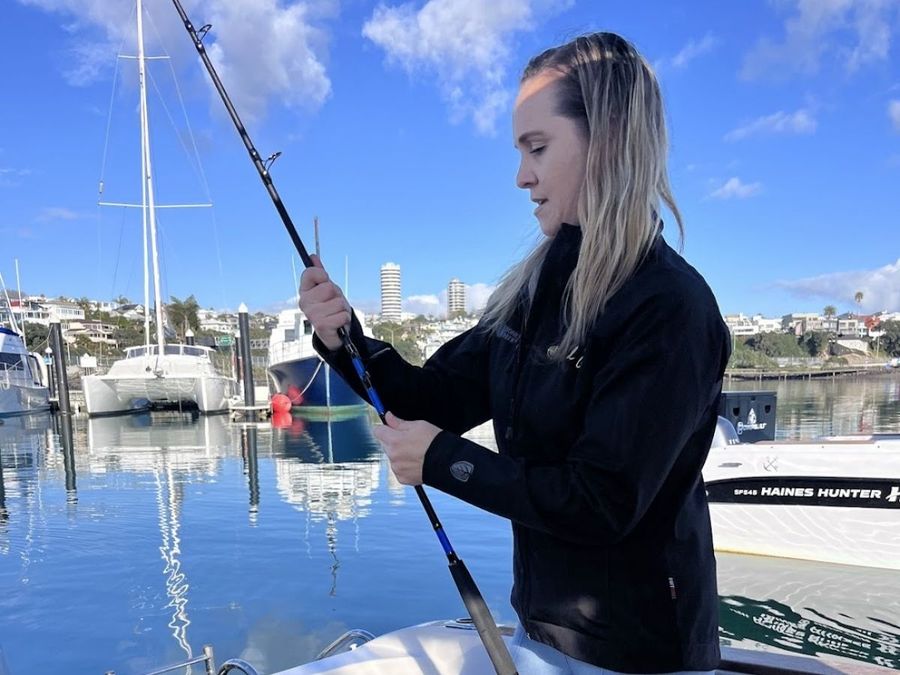
Once lines were slipped, the Haines Hunter SF545s idled out of the marina. The boats were an ideal fit for the purpose: small enough to feel approachable, yet stable and capable enough to offer a genuine learning experience. The Wild Chix skippers walked us through trimming the outboard, speed limits, right of way rules, and the specifics of how Skipperi's geofencing system operates. Push the boat too far or too fast, and it lets you know.
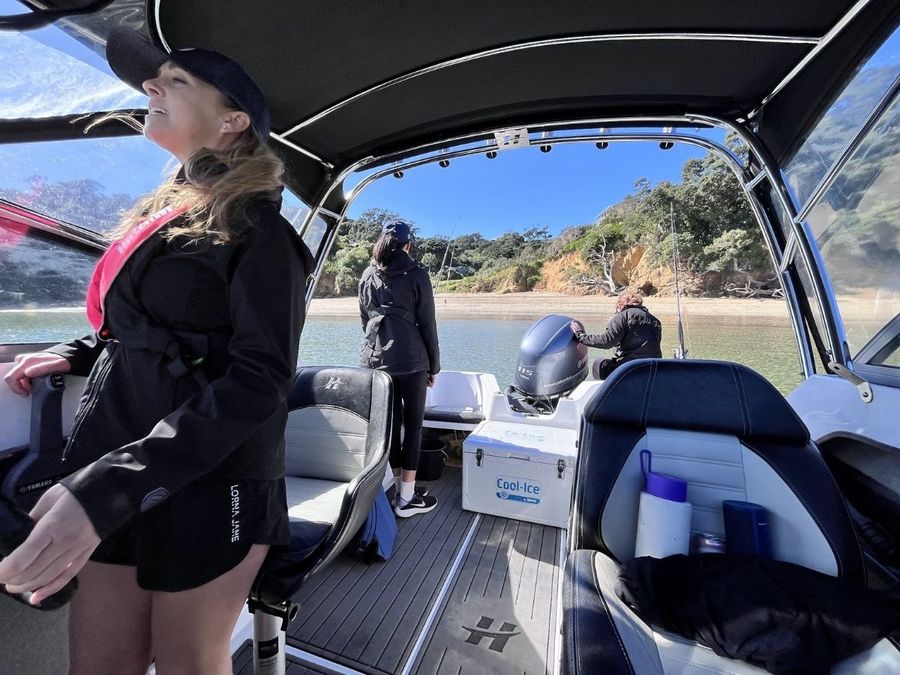
Then it was our turn. Each of us took the helm in rotation: start slow, learn to trim, build speed, get a feel for the steering. Try it, watch the next person have a go, then try again. There was no judgement in any of it, only encouragement. By the time we had cleared Rangitoto and were pointing towards Rakino, the women were driving with a confidence that hadn't been there an hour earlier.
Out at Rakino Channel, the rods came out. Some boats were using soft bait, others live bait, and a few were experimenting with lures. Every boat caught snapper. I didn't land one myself, but I came away having learned new knots and hook rigs, and having watched others celebrate their first fish with the kind of delight that's genuinely infectious.
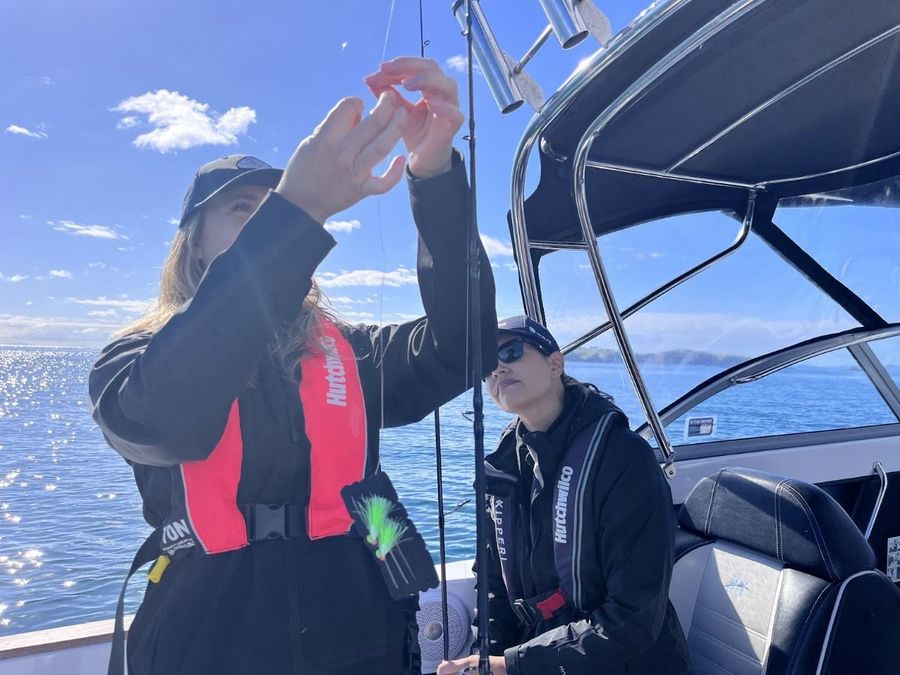
What stood out most wasn't the fishing itself, though. It was watching confidence take hold in real time. Participants who had been uncertain at the helm earlier in the morning were now manoeuvring boats into new positions, adjusting for tide and drift as though it were second nature.
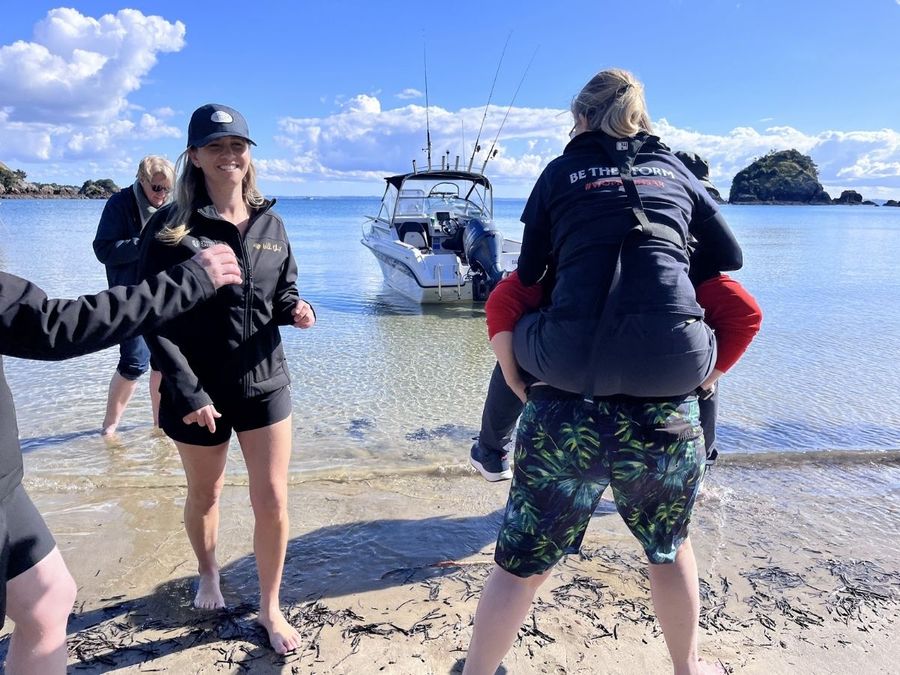
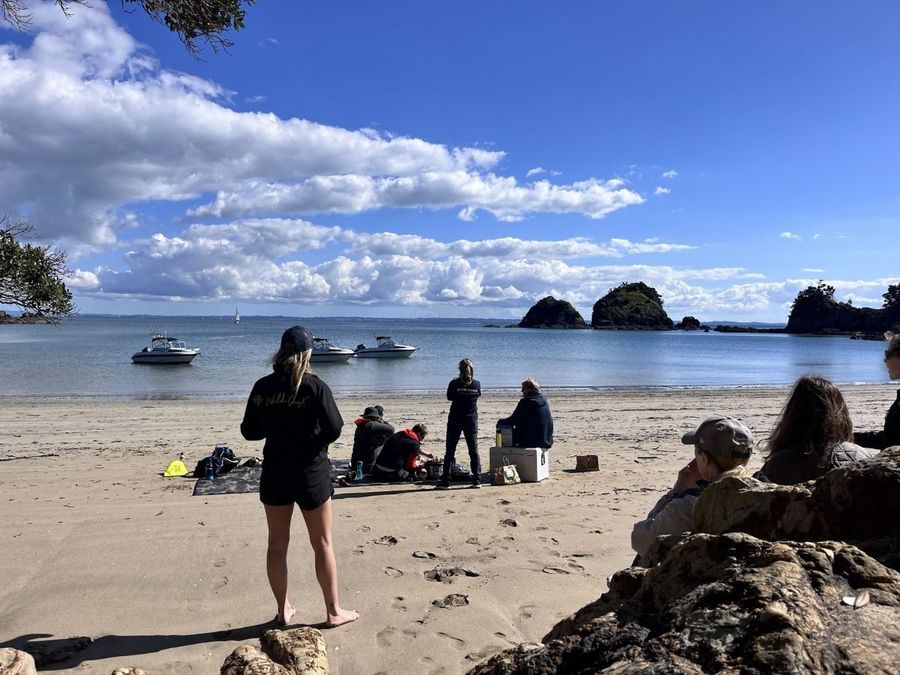
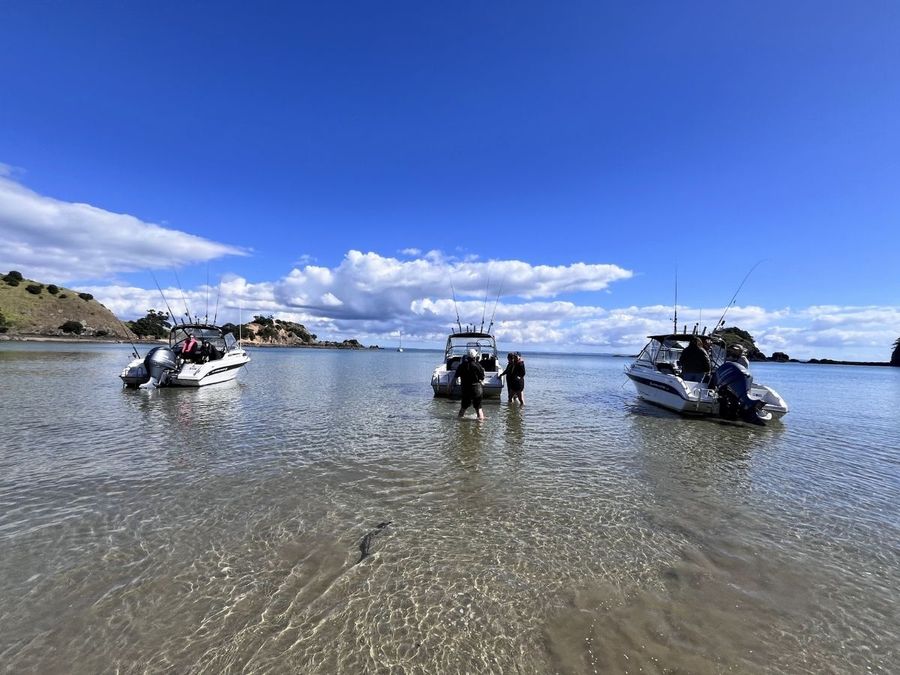
From Rakino Channel we motored into Woody Bay, and I had the chance to drive our Haines Hunter right into the anchorage. Coming from a background of sailing a 50-foot yacht, where every anchorage means deep water and a tender trip to shore, this felt wonderfully uncomplicated. We dropped the hook in the shallows, stepped off into ankle-deep water, and walked straight onto the beach.
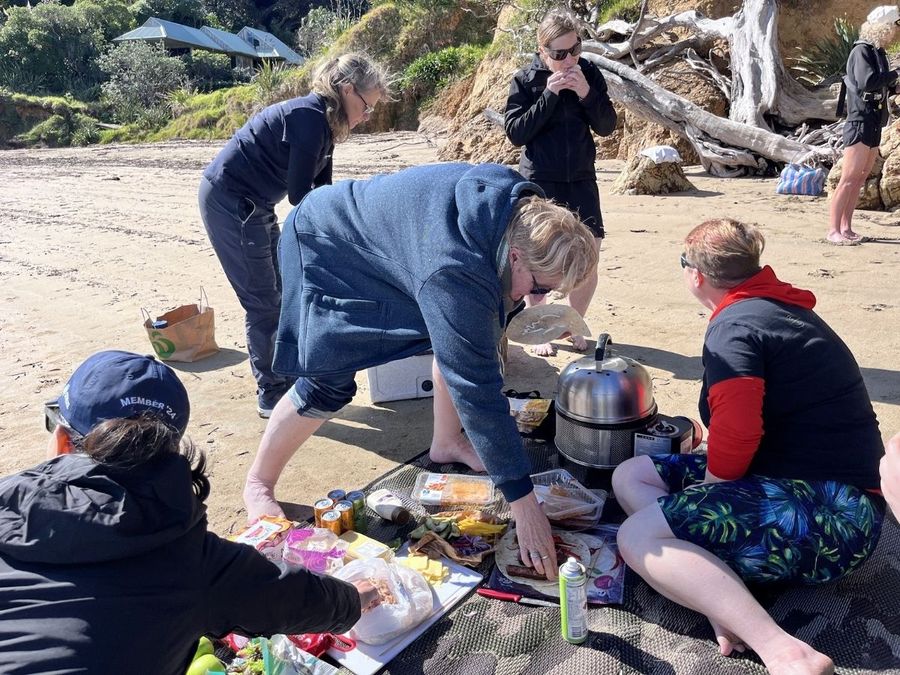
Picknic rugs and chilly bins appeared. Chicken and salad wraps, kebabs off the barbecue, fruit skewers. It was relaxed and unhurried. Women who had been strangers only hours before were now swapping stories about boating, families, and the morning's adventures. Media creators, chefs, educators, and mothers sat together in the sand, and the mix was as varied as it was easy.
After lunch, Sarah Psaila took the helm of our boat and turned attention to two skills that matter more than many beginners realise: anchoring and man overboard drills. The MOB practice in particular brought home the genuine weight of boating responsibility. Working through it hands-on changed the view quickly. Which way to turn, which side to approach on, how to come in close without coming in too close: running through the exercise made it plain that preparation is not optional, and that knowing what to do in that moment could mean the difference between a near-miss and a tragedy.
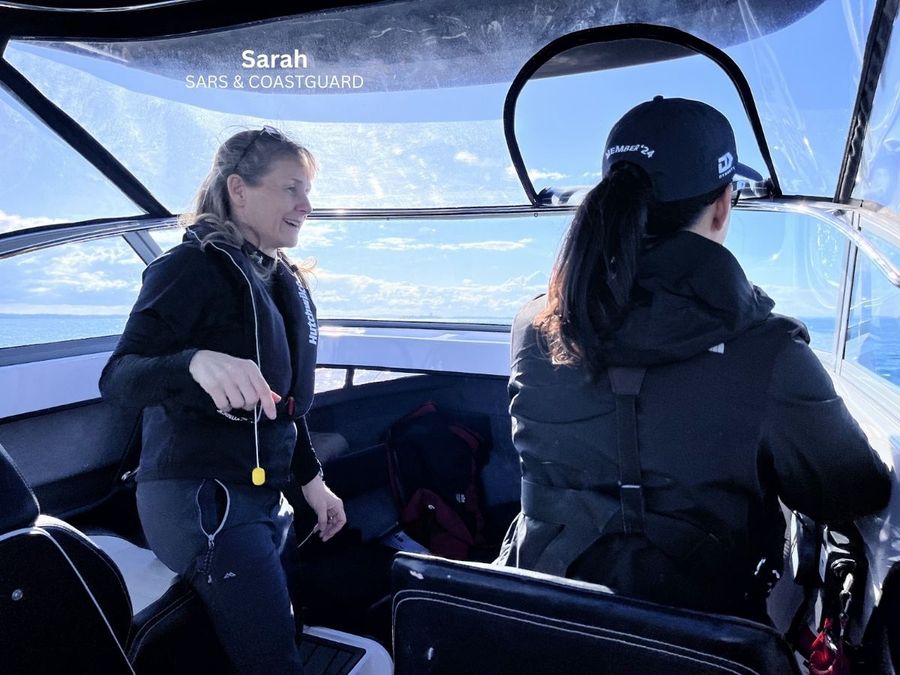
Late afternoon brought the crossing back across the Hauraki Gulf, the sun dropping toward the horizon and the mood light. Boats were washed down, gear stowed, and the group came together for celebratory drinks before the day wound up properly.
The drive back south to Cambridge that evening was a tired one. Sitting alongside the exhaustion, though, was a strong sense of satisfaction. New skills had been picked up, connections had been made with genuinely impressive people, and I'd seen at close range just how well the Wild Chix approach works in practice.
What stayed with me most was the calibration of the day. Not too much, not too little. Enough variety and depth to build real confidence, but never so much information at once that anyone felt swamped. The Haines Hunter SF545s were forgiving and manageable, the instruction consistently encouraging, and the pacing felt exactly right throughout.
Above all, it was fun. The kind of fun that makes you want to come back, learn more, and tell other people about it.
To any woman sitting on the fence about trying something like this, the honest message is straightforward: you won't embarrass yourself. You'll be supported, you'll be encouraged, and you'll probably surprise yourself with how quickly it all clicks.
Wild Chix is only two years old, but its reach across New Zealand is already hard to miss. Isabell has built something that goes well beyond training sessions and seminars. It is a community, and it is quietly changing the way women see themselves on the water. The partnership with Skipperi, a boat-sharing service that strips away the financial and logistical barriers of ownership, is a particularly smart fit. It's not only about learning the skills; it's about having somewhere to practise them, again and again, without needing a boat of your own.
That combination has real potential to reshape boating culture in New Zealand in a lasting way. Women on the water are no longer just along for the ride, there to help with lines or hand up drinks. Increasingly, they are the ones driving.
Would I go back? Without hesitation. The positivity, the practical learning, and the sense of community left a mark that a single day out would not normally leave. For a first boating course, nothing about it needed changing.
It was never about proving anything to anyone. It was about finding out that you could do it. Wild Chix has made that discovery possible for a growing number of women, and that is worth celebrating.