Three chines instead of two. It sounds like a small detail, but for Team Paprec's design office it is one of the defining choices behind the new IMOCA that will carry Yoann Richomme into his Vendée Globe campaign.
The team's current boat, Paprec Arkéa, launched in February 2023, posted the second-fastest time in Vendée Globe history, 65 days and 18 hours. Beating that has been the obsession inside the design office and at Antoine Koch's architecture practice since February this year.
"We were able to use more than 20 billion data points from our old boat to work out what we could optimise in terms of sailing performance and behaviour," says Gautier Levisse, head of the Lorient-based team's design office.
"Overall, we found that Paprec Arkéa was a very fast boat downwind, but that it was sometimes a bit weaker upwind," says Antoine Koch. "Our aim, while keeping its strengths, was to gain upwind and therefore be more versatile and more effective in transition phases." Gautier puts it more simply: "We wanted to make sure the boat gets up to speed more quickly."
Much of that work has centred on the chines, the break in shape between the hull sides and the bottom that increases anti-drift effect and helps the boat surf when heeled.
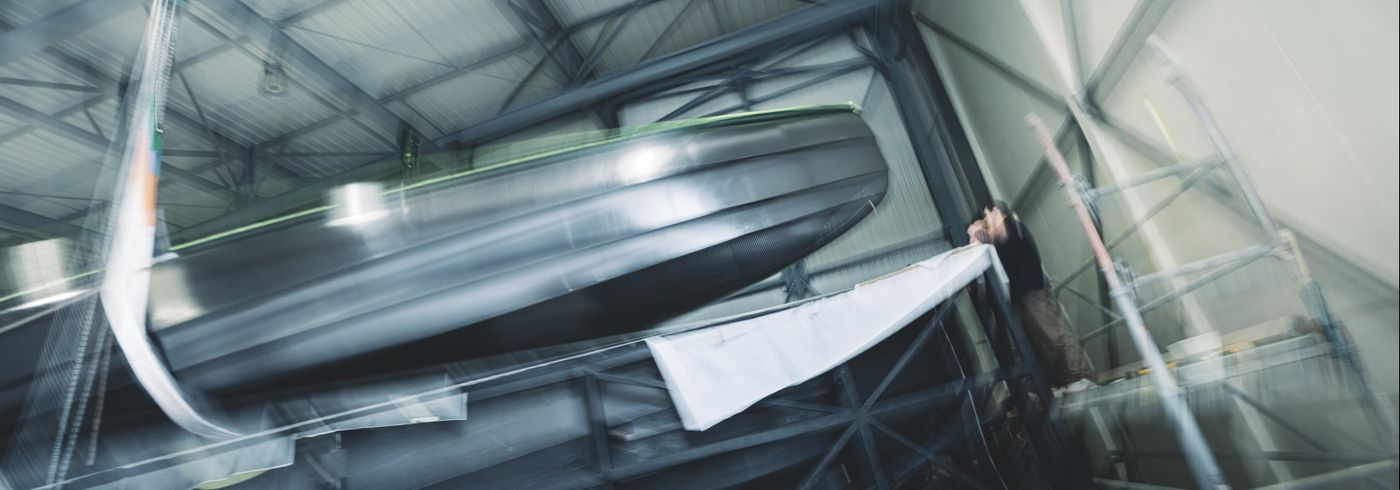
IMOCA sailors didn't see a chine at all until the 2008 Vendée Globe, and even then it was a partial one, running from the transom forward about a third of the hull's length. By 2012 the chine had become standard across the fleet. On the new Paprec boat, the first two chines start at the bow and run right through to the stern. The third, described by the team's engineer as "a bit of a dying line", starts at the bow and fades out around the foil area.
"On our boat," explains Yoann Richomme, "these angles let water be thrown out sideways instead of climbing back up along the hull." That stops the bow from burying. The boat will still nosedive occasionally in a big sea, but the chines help "put the boat and the foils back on their lines, so it doesn't crash and can get going again quickly," says Gautier. It is, he adds, about fighting the aerodynamic drag of the hull.
Adding a second chine over the first boat was never really in doubt.
"Fairly quickly we started thinking about a third one, but that meant extra weight, and that made us hesitate for a while," Gautier recalls. "We ran production tests alongside the boatyard to try to cut that weight down. We realised it wasn't as heavy as we feared, and we signed off on the hull line we've now revealed."
It is the same principle you find on a motorboat, where chines give bearing surface that improves stability and lets the hull lift and plane more quickly. "By drawing in three tiers of chines, we've helped gain dynamic lift," Antoine Koch confirms. "There's more power, so we can get going sooner in medium winds."
That extra power also brings the foils into play earlier. "You need a minimum boat speed before the foil kicks in, so alongside this hull power we tend to move towards lighter, narrower boats," Gautier concludes. That's a subject for another day.
The new IMOCA Paprec is due to launch early next year.