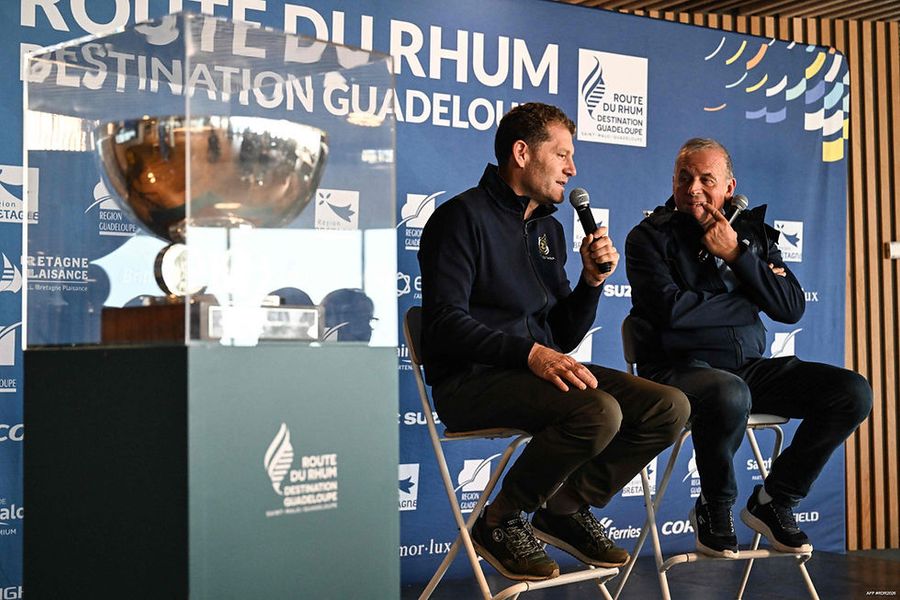
Sunday in Saint-Malo brought a village full of well-rested visitors, the daylight saving change working in everyone's favour for once. Sunshine, a fully reopened village, and crowds who'd actually had a lie-in made for a welcome change after storm Ciarán forced the gates shut earlier in the week. Fittingly, sleep was also the day's big talking point among the skippers themselves.
There was a time in offshore racing when the rule was simple: avoid sleeping. "I quickly realised that to win, you have to," said Charles Caudrelier this morning during a discussion on sleep with Dr François Duforez, organised in collaboration with Bultex, which has built the sailor's custom mattresses for several years now. Sailors and doctors alike have come round to the same conclusion: sleep is central to performance, and it's one of the keys to victory.
That's why so much attention now goes into the bunk, or "banette" as the French sailors call it. This custom-fitted berth has become essential kit for recovery. "The ergonomics of the banette aren't just for the body, they work on the mind too," explains Dr Duforez, a specialist in sleep and sports medicine. "If you wake up in a secure environment, without fear of falling or banging into the boat during your nap, you'll make better decisions."
On a sprint like the Route du Rhum, Caudrelier, skipper of Maxi Edmond de Rothschild, sleeps in blocks of 20 to 40 minutes, a discipline needed to avoid exhaustion and the hallucinations that come with it. "Sometimes you'll hear voices when it's just the wind whistling, or see someone on deck when it's really your sails." Caudrelier has even developed his own fatigue scale, modelled on weather charts. "When I'm in the purple zone, it's well and truly time to go rest," he jokes. Through relaxation and breathing techniques, skippers eventually find their own tricks for falling asleep faster and making the most of every precious minute.
Respecting those rest periods matters hugely for the Atlantic crossing, but the arrival in Guadeloupe is a different story entirely. "You need to have banked sleep before approaching the island," Caudrelier says. "It's impossible to sleep once you start the final approach, there are manoeuvres to make, you need heightened awareness. It's on that last stretch that you can lose the race. We've seen it happen before."
That final-stretch margin is exactly what makes the Ocean Fifty fleet such must-watch viewing this edition, with finishes in that class having come down to as little as 18 minutes at the last Destination Guadeloupe race.

Elsewhere on the pontoons, 115 Breton farmers turned up with crates of cauliflower, cherry tomatoes, Hénaff pâté and other treats for the skippers' onboard supplies. Erwan Le Draoulec (Lazare x Hellio) and Arnaud Boissières took their turn at the tourist office signing session.
Fancy some warmth? Head for the Guadeloupe pavilion, where creole music and the smell of frying oil announce the bokit, the island's most famous street food: golden, crisp bread stuffed with cod, chicken or spiced pork, with a touch of chilli. Born from Amerindian and African traditions, it once fed field workers and fishermen on little more than flour, salt and water. These days it's a point of pride across Guadeloupe.
Tomorrow, the village wakes and does it all again.