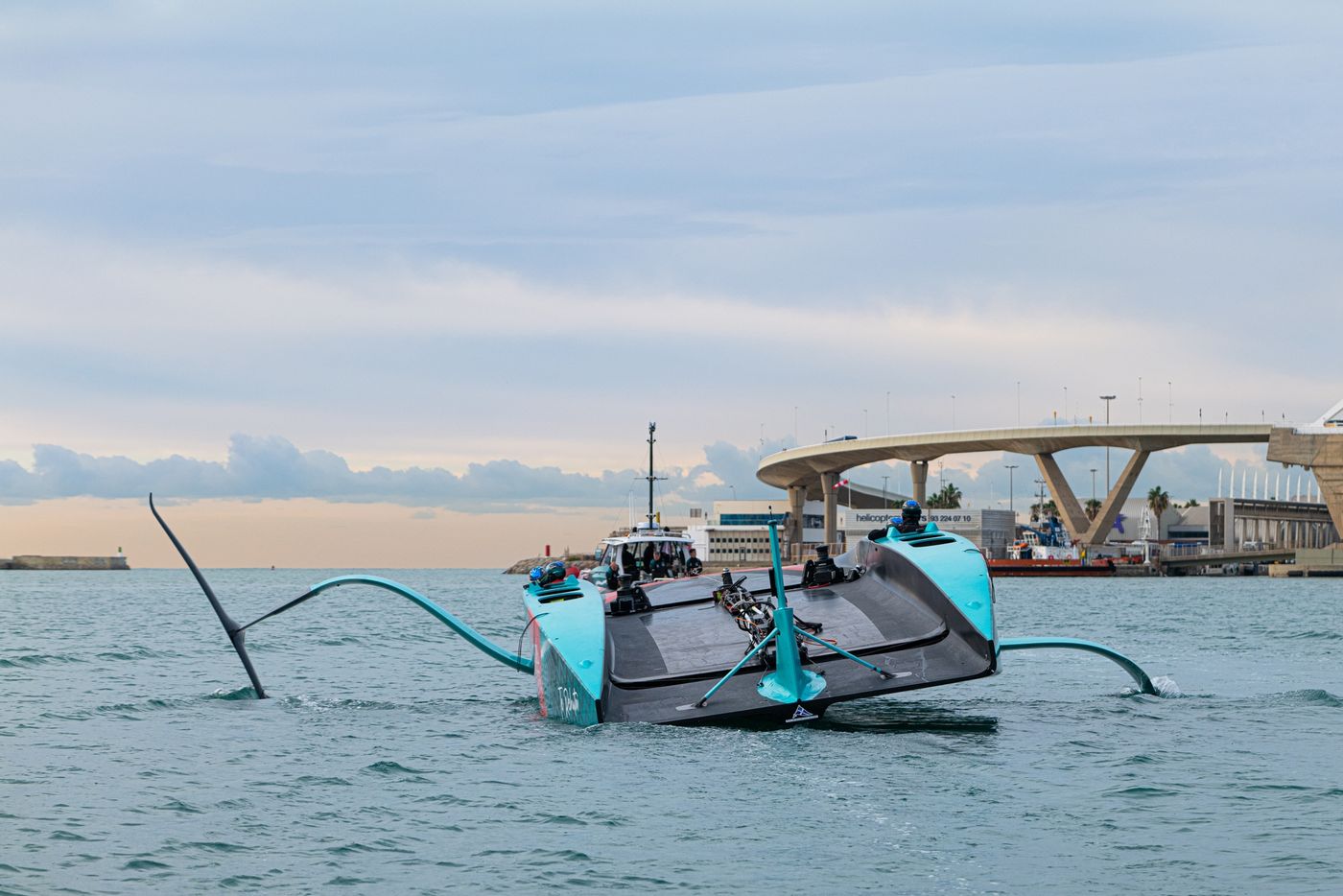
Before an AC75 ever hoists a sail, it gets dragged around the harbour behind a chase boat first. That is tow-testing, and it is one of the most useful tools in an America's Cup shore team's arsenal.
The AC75 is not a normal sailing yacht, not by any measure. It is a combination of naval architecture, aerodynamics, hydraulics, electronics and flight-control software, all operating on margins so narrow that even small faults can derail a day's sailing before it starts.
So before the sailing crew push the boat anywhere near its limits, designers and engineers need to know the systems actually work. Towing the yacht behind a powerful support vessel strips out the variables: no sails, no wind shifts, no manoeuvring loads, just the hull and foils moving through the water in a controlled setting.
That isolation is the whole point. It lets engineers check individual systems against computer predictions before committing to a full sailing programme.
**Understanding the foils**
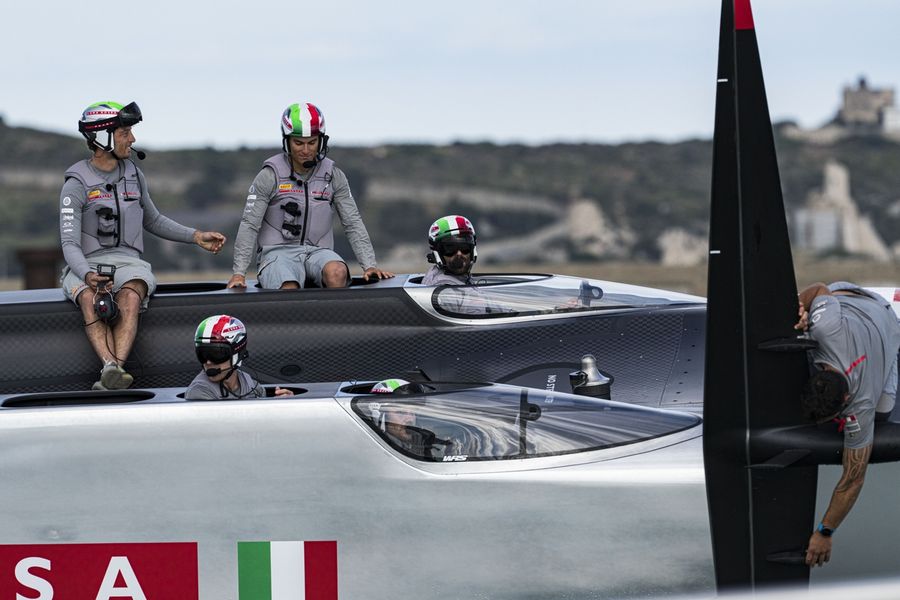
The main event is always the foil system. Each AC75 carries two articulated foil arms with wing sections designed to generate enough hydrodynamic lift to raise the hull clear of the water. How efficiently they do that underpins everything else about the boat's speed and stability.
During a tow, engineers watch the relationship between boat speed, foil immersion, flap settings, ride height and hydrodynamic drag. They are also watching the transition itself: how cleanly the yacht lifts from displacement mode into foiling flight.
What they really want to know is whether the foils behave as predicted by Computational Fluid Dynamics (CFD) and other design simulations. Even small gaps between prediction and reality are useful data.
**Testing the rudder and flight stability**
The rudder and its horizontal elevator matter just as much, since they govern pitch. Engineers vary rudder rake to see how the bow reacts, how stable the yacht sits at different ride heights, and how the elevator and main foils interact. Excessive pitching, oscillation, or an unexpected bow-down attitude is the kind of thing that sends everyone back to the settings sheet.
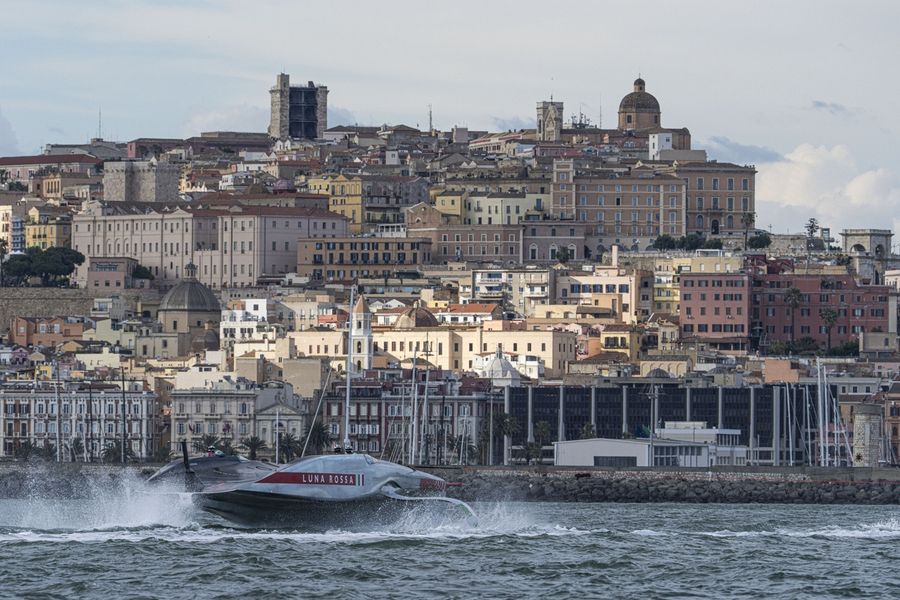
None of this is theoretical. During Luna Rossa's May 2026 tow test, the team ran speeds of 25, 30 and 32 knots as reported by the Recon team on the water, varying rudder rake and foil cant angles along the way. The French La Roche-Posay Racing Team put in several foiling runs in June examining pitch stability and flight-control behaviour, and tow-tested again in Naples in October 2027. Over the coming weeks GB1, ARC Team USA and Tudor Team Alinghi will all go through much the same process.
**Checking the electronics and hydraulics**
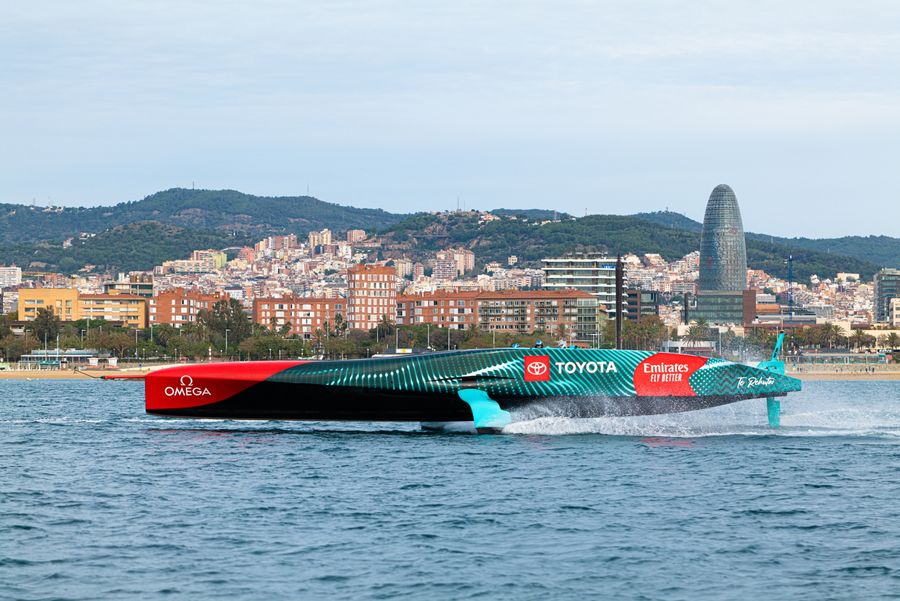
An AC75 runs on a dense network of sensors, actuators, hydraulics and electronic controls. Towing lets engineers confirm commanded foil movements are accurately executed and that the yacht responds predictably to control inputs.
The foil cant system gets particular attention. The arms need to move smoothly, hit their intended positions, and do so without excessive vibration or unexpected loads. These tests can also help validate control-system calibration and flag discrepancies between the yacht's physical behaviour and its digital instrumentation.
**Gathering the data**
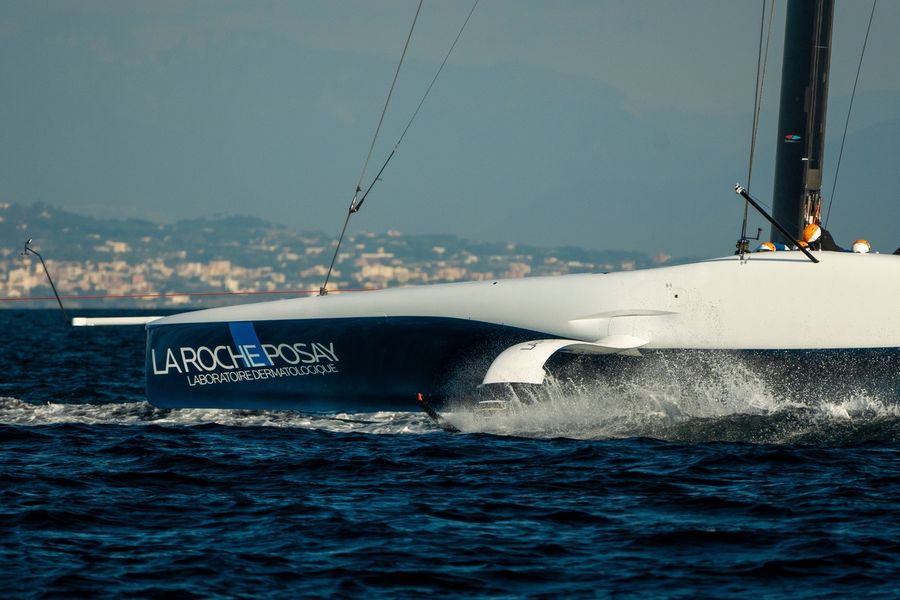
The data haul from a single tow test is substantial: boat speed, acceleration, foil position, rudder angle, pitch, roll, ride height, system pressures. All of it gets measured against prior testing and the design predictions. Cameras trained on the foil wings add another layer, showing surface ventilation and water-flow behaviour that the numbers alone will not reveal.
A tow test cannot replicate everything, though. Without the aerodynamic forces generated by the rig, it cannot fully reproduce sailing loads, manoeuvres or race conditions.
Still, it gives teams an invaluable baseline.
**The final safety check**
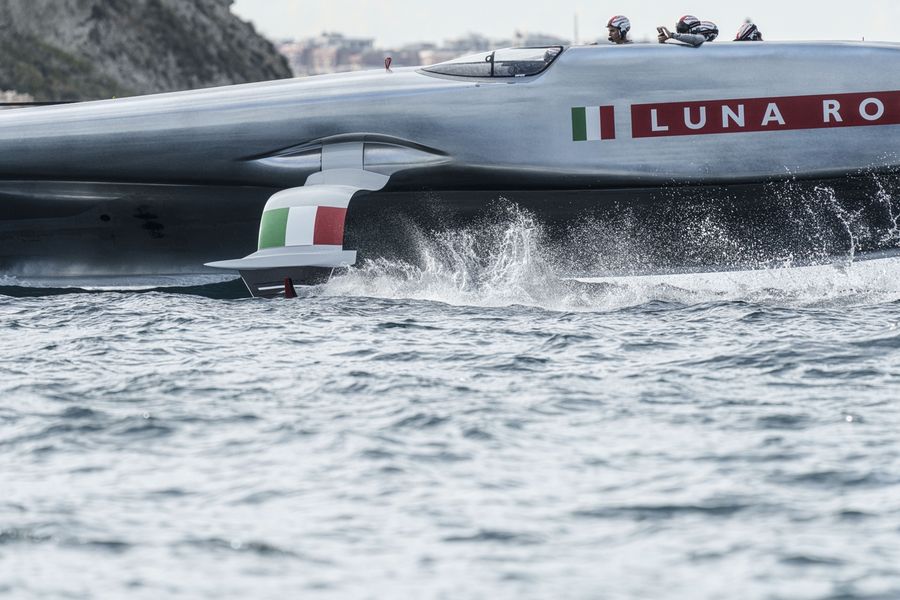
Tow-testing, in the end, is about managing risk on an extremely expensive and extremely sophisticated piece of equipment. Teams need confidence the yacht can foil, maintain controlled flight, and respond correctly to its control systems before they load it up under sail.
A successful tow test does not guarantee a successful first sail. But it substantially improves the team's understanding of the yacht, and it helps identify faults before they become serious problems.
Every run produces information. Every adjustment is an opportunity to improve performance.
In a competition where fractions of a knot can decide the outcome, the pursuit of victory begins long before the sails are hoisted.