As another year begins, a recent US boating industry report offers a useful lens for New Zealand's marine sector. The two markets differ considerably in scale and structure, yet many of the forces reshaping American recreational boating will feel immediately familiar to Kiwi boat owners, builders and dealers. Understanding where New Zealand tracks alongside these global shifts, and where local conditions send the market in its own direction, offers a useful starting point for the year ahead.
Outboards continue their ascent on both sides of the Pacific, though in New Zealand the reasons have always been grounded in practicality rather than trend-following. Coastal living, the trailerable boat culture and the widespread habit of keeping vessels at home have long made outboard-powered designs the natural choice. Inboards and sterndrives have not gone anywhere. They remain in production and clearly relevant across launches, larger cruisers and certain sportfishing platforms. For the bulk of the trailer boat fleet, however, outboards deliver flexibility, straightforward maintenance and genuine advantages when running in coastal and offshore conditions. As manufacturers push horsepower higher and layer in deeper digital integration, the expectation from New Zealand buyers stays consistent: technology should make ownership simpler, not more complicated.
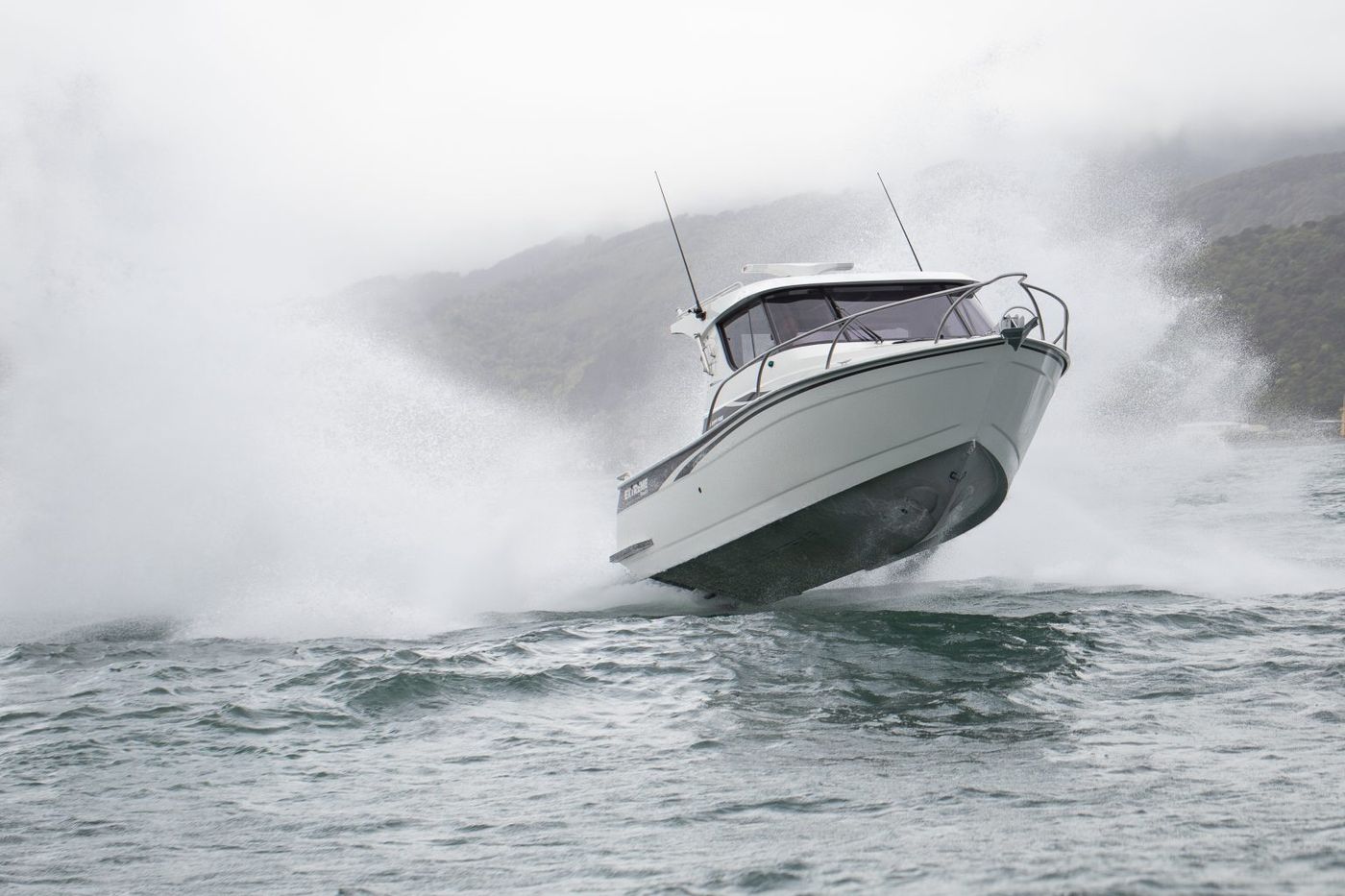
Fishing continues to pull strong weight as a purchase driver, even as hull designs grow more versatile. Alloy, pontoon, RIB and hardtop boats hold their dominant position because they suit long runs, exposed coastlines and the unpredictable conditions that come with them. Deck space, fishability, range and weather protection sit at the top of most buyers' criteria lists. A shift is underway, though. European brands, with their sharper focus on day boating and refined social layouts, are making their presence felt in how boats are marketed and configured locally, and increasingly in how they are built. Boating has always been a social activity. People go out with family and friends as a matter of course. What is changing is the growing appetite for more considered, comfortable and visually polished outings, without surrendering the core practicality that New Zealand conditions demand.
Marine technology is performing a similar function in both markets, lowering the skill barrier and broadening who can confidently operate a boat. Integrated helm systems, larger multifunction displays, advanced sonar and varying degrees of automation are becoming standard expectations across a wider range of vessels. In New Zealand, uptake is strongest where technology translates directly into reduced workload. Short-handed crews, older owners and offshore passages all benefit from systems that take complexity out of navigation, docking and situational awareness. Reliability remains the deciding factor. Buyers weigh redundancy, local service support and a proven track record heavily before committing.
The demographic picture is shifting in recognisable ways. Middle-aged and older owners make up the dominant purchasing group, with most looking to upgrade rather than enter boating fresh. Comfort, reliability and ease of use rank highest for these buyers. Younger people tend to find their way in through smaller trailer boats or personal watercraft, attracted by lower barriers to ownership and strong technology integration. First-time buyers across all ages are deliberate and well-researched, gravitating toward versatile boats that can fish, cruise and host friends without locking the owner into a single purpose.
Sustainability is a genuine influence on purchasing decisions, though the approach is measured rather than ideological. Lithium batteries, solar charging and fuel efficiency improvements are already widespread across the New Zealand fleet. Electric propulsion draws real interest, particularly for sheltered-water use, but range limitations, the lack of charging infrastructure and upfront costs continue to slow broader adoption. For most owners, incremental improvements to conventional propulsion make considerably more sense than wholesale change in the near term.
Dealer behaviour reflects much of what the US observations describe. Buyers are taking their time and arriving well-informed. New Zealand dealers are responding by investing more in demo days, boat shows, education and the kind of long-term relationships that build genuine trust. After-sales support and stock management have become as important as the initial sale, and the overall ownership experience now carries comparable weight to the boat itself when buyers are making their decision.
The global trends that translate most cleanly to New Zealand are outboard growth, technology integration, versatility in hull design and experience-led selling. Others remain peripheral, shaped by the specific environments New Zealand boaters operate in and the ownership patterns that have evolved here. The local market stays anchored in use rather than aspiration. Fishing, self-sufficiency and offshore capability continue to define what people want, with refinement increasingly layered on top.