The Bay of Biscay has a long record of destroying certainty at the worst possible moment, and the final act of the Vendée Arctique was a textbook example. Sam Goodchild commanded the race for eight days, only for a windless pocket to consume his lead and hand victory to Ambrogio Beccaria in a finish that almost nobody had predicted. It was a dramatic conclusion, but for the three skippers still racing, it may prove to be the most instructive thing they have witnessed all race.
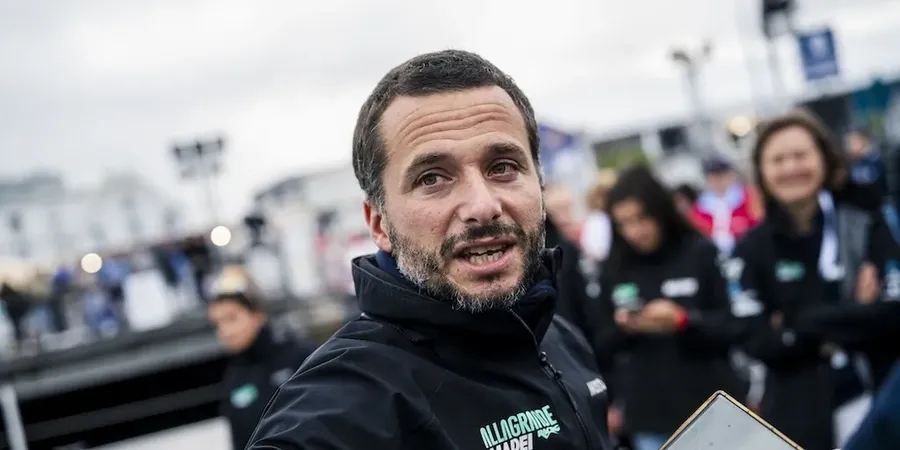
Nico d'Estais in Café Joyeux rounded the Fastnet Rock on Tuesday morning, New Zealand time, with Arnaud Boissières following within hours. A hundred nautical miles separates the two men, and the contest between them remains very much alive. Further back, Manu Cousin continues his own reckoning with the course. For all three, the same uncomfortable truth applies: a lead means nothing until the bow crosses the finish line.
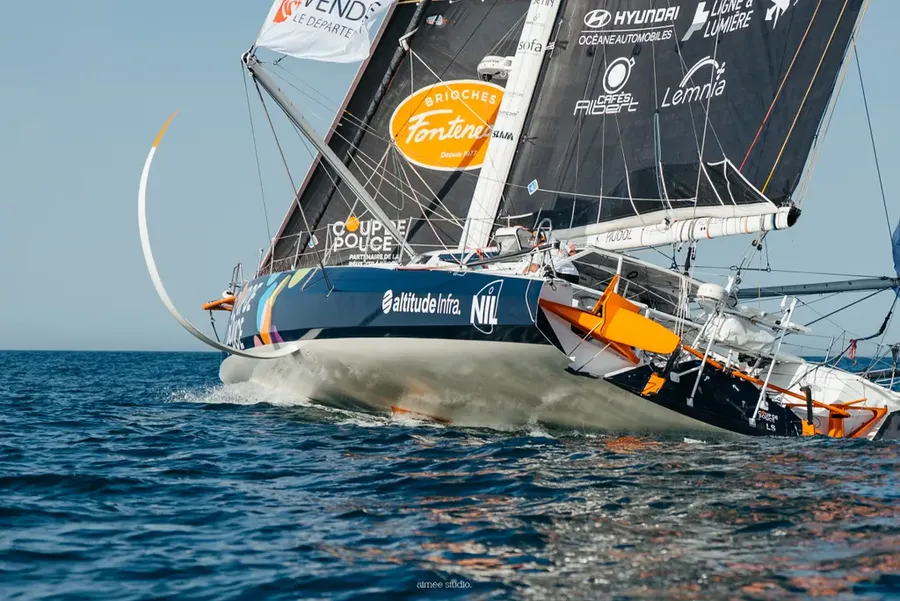
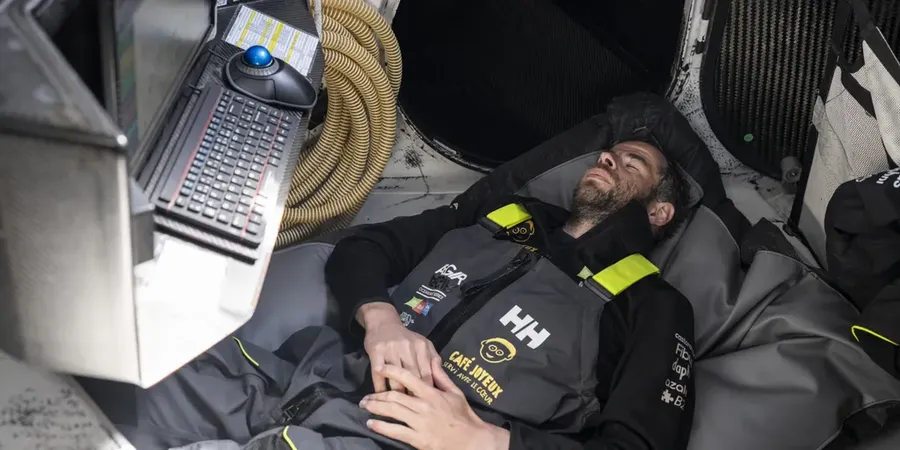
The gap between d'Estais and Boissières is the product of two completely different tactical responses to the same conditions. D'Estais kept close to the Irish coast, accepting lighter air and mounting fatigue rather than hunting breeze further out to sea. Boissières took the opposite view, pressing offshore in the hope that better wind would swing him back into contention. Both decisions were defensible. Neither produced a decisive advantage. "I had to choose between breaking course at ninety degrees to chase the new breeze or staying direct and letting it come to me," d'Estais said. "I picked the second option." The cost was considerable. "Ireland nearly finished me. I barely slept in a day and a half."
Neither skipper managed to open a gap the other could not close, and the race between them has stubbornly refused to settle, which feels almost defiant after watching the leaders ahead of them dissolve into a calm that dismantled everything.

Conditions have since improved for both sailors. Around twelve knots of breeze and relatively flat water have taken the edge off what had become a gruelling stretch. D'Estais was candid about the relief. "The boat runs easily. You don't have to squeeze it hard. After the last few days, that's almost luxury." Even so, he is not treating the improvement as a guarantee of anything. The Breton peninsula still lies ahead, and its combination of thermal effects and tidal complexity is more than capable of reshuffling the order one more time.
Boissières is not labouring under any false comfort, but he is reading the situation as opportunity rather than deficit. "My goal is simple: get back on him and push him hard to the finish. Anything's possible." He has recent evidence to support that confidence. Goodchild led this race for eight days and then, in a stretch of water that offered him nothing to sail with, he didn't. For every skipper still out there, that is the only fact that matters.