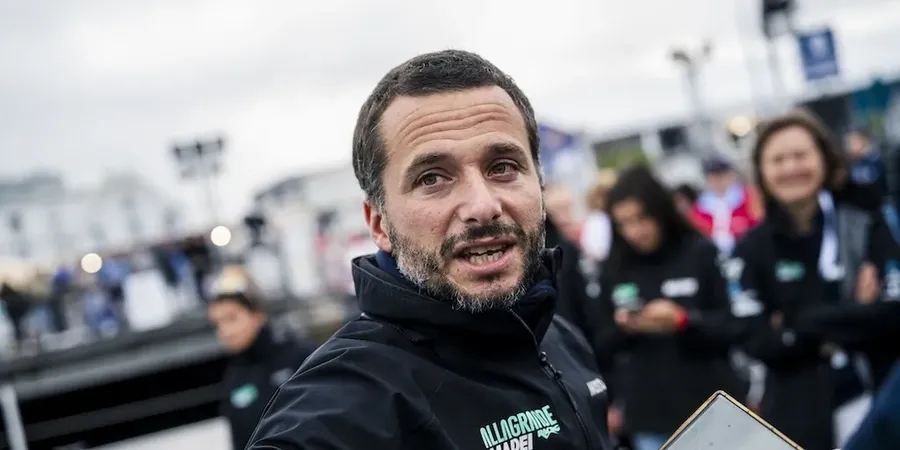
Ambrogio Beccaria's stomach is telling him something the routing software cannot factor in, and he is listening. That navigational choice, taken somewhere in the approaches to the British Isles, has become the defining story of the return leg of the Vendée Arctique.
Seven of the eight boats still racing have already crossed back south of the Arctic Circle. Only Manu Cousin, aboard Coup de Pouce, remains pressing northward. For every other competitor, the heading has reversed and Les Sables d'Olonne is drawing closer with every passing hour.
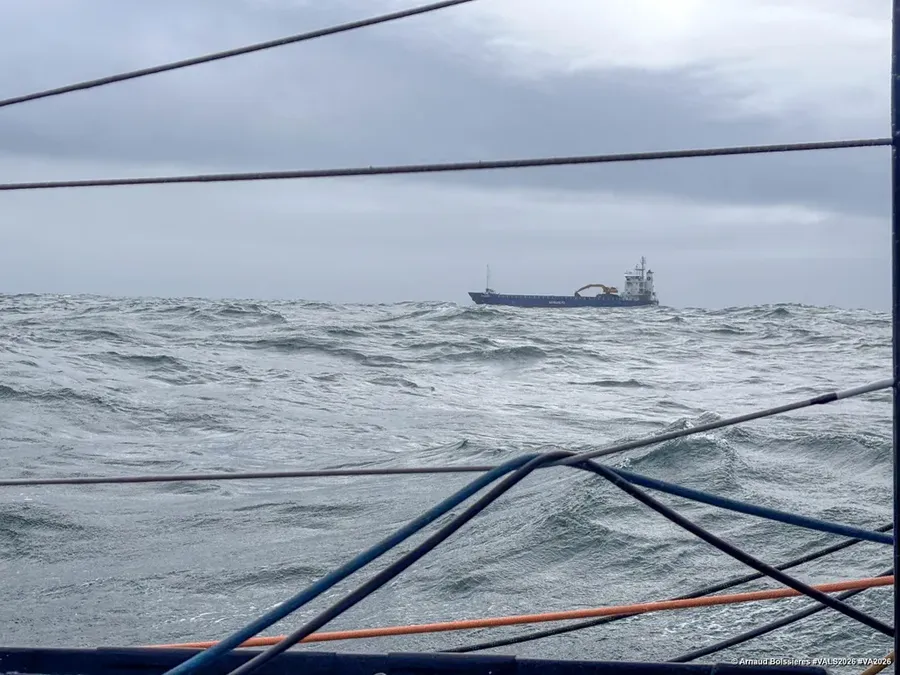
The conditions are not gentle. Twenty-five knots of breeze gusting to 30, seas building to four metres, and the IMOCA fleet pushing through at better than 20 knots, foils loading up, bows lifting clear, miles disappearing at a rate that flatters the sheer violence of what these boats are doing. But raw speed has become almost a side note. The real conversation happening on every boat is about the route home, and specifically about a narrow corridor of water tucked between Ireland and Britain that has split the fleet along lines of ambition, caution, and gut instinct.
The North Channel is where the race is being decided. At its tightest, near Moyle Strait, it squeezes to just 20 kilometres between the two coastlines. Fierce tidal streams run through it, commercial shipping fills the lanes, and separation schemes add another layer of complexity to an already demanding piece of water. There is mythology layered into these straits too. Irish legend credits Fionn Mac Cumhaill with raising a causeway here to reach Scotland. The IMOCAs threading the same passage at racing speeds are driven by rather less romantic motivations. The North Channel is not one option among many. It is the central tactical argument of the entire race.
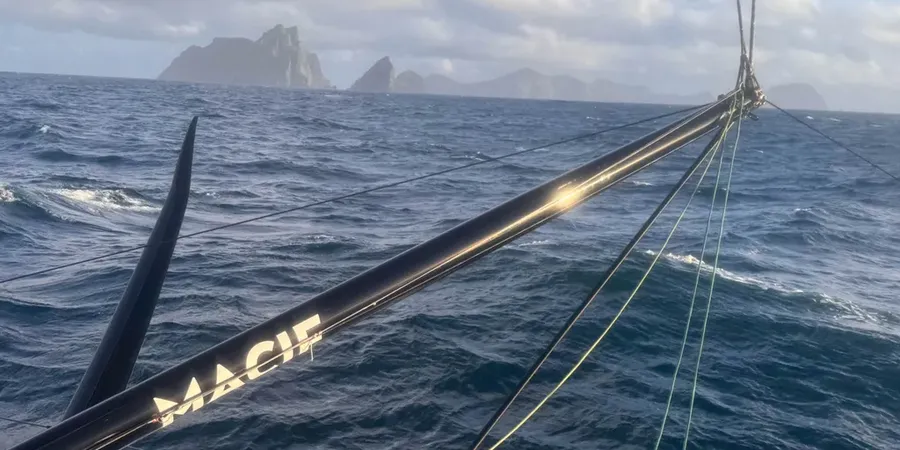
Sam Goodchild, leading the fleet aboard MACIF Santé Prévoyance, has committed to it. Élodie Bonafous is tracking the same line. The logic is clean on paper: it is shorter, more direct, and the routing software endorses it convincingly. Beccaria studied the same numbers and arrived at a different conclusion entirely. Having worked his way up to third overall after passing Violette Dorange and closing the gap to Bonafous, the Italian has chosen to go west around Ireland rather than follow the majority through the channel.
"When I look at what's waiting in there — strong wind, heavy sea, foul current, tight passage with all its complications," Beccaria said, "honestly, my stomach says no. I don't feel it."

He holds no illusions about the price of that call. His own routing software puts the North Channel advantage at somewhere between 50 and 60 nautical miles, a deficit that is hard to absorb at any point in a race, let alone one as compressed as this. The calculation is made more pointed by the fact that this is his first solo IMOCA campaign, and a recent autopilot fault has sharpened his thinking considerably about what can unravel when something fails in a confined, traffic-heavy passage. Losing steering in that bottleneck is not a theoretical risk.
"The worst part is knowing I'm probably throwing away the winning route," he said. "But if things go wrong in there, it goes wrong properly."
Beccaria knows the weight of what he has chosen. "I feel like I'm fighting the whole fleet on this one," he said, and yet there is no sign he is wavering. The gap in nautical miles is real, and he knows it. But some calculations run deeper than any routing software can reach.