Fisheries New Zealand is asking the public whether Whangārei Harbour should reopen to recreational scallop fishing, four years after the entire Northland scallop fishery was shut down over sustainability concerns.
Consultation opened on 24 August and runs until 5pm on 18 September 2026. Details are on MPI's website.
The wider Northland scallop fishery, known as SCA 1, has been fully closed to both commercial and recreational fishing since 2022, after a 2021 survey found scallop numbers had declined sharply across most of the fishery. Fisheries New Zealand controls harvest through what's called a Total Allowable Catch, or TAC, a yearly cap on how many scallops can legally be taken from a fishery. That cap is then carved up between commercial fishers, recreational fishers, customary Māori use and a small allowance for other fishing-related mortality. Since 2022, SCA 1's TAC has sat at 8.5 tonnes, but the recreational share of that has been zero, meaning no legal recreational harvest has been possible anywhere in the fishery for four years.
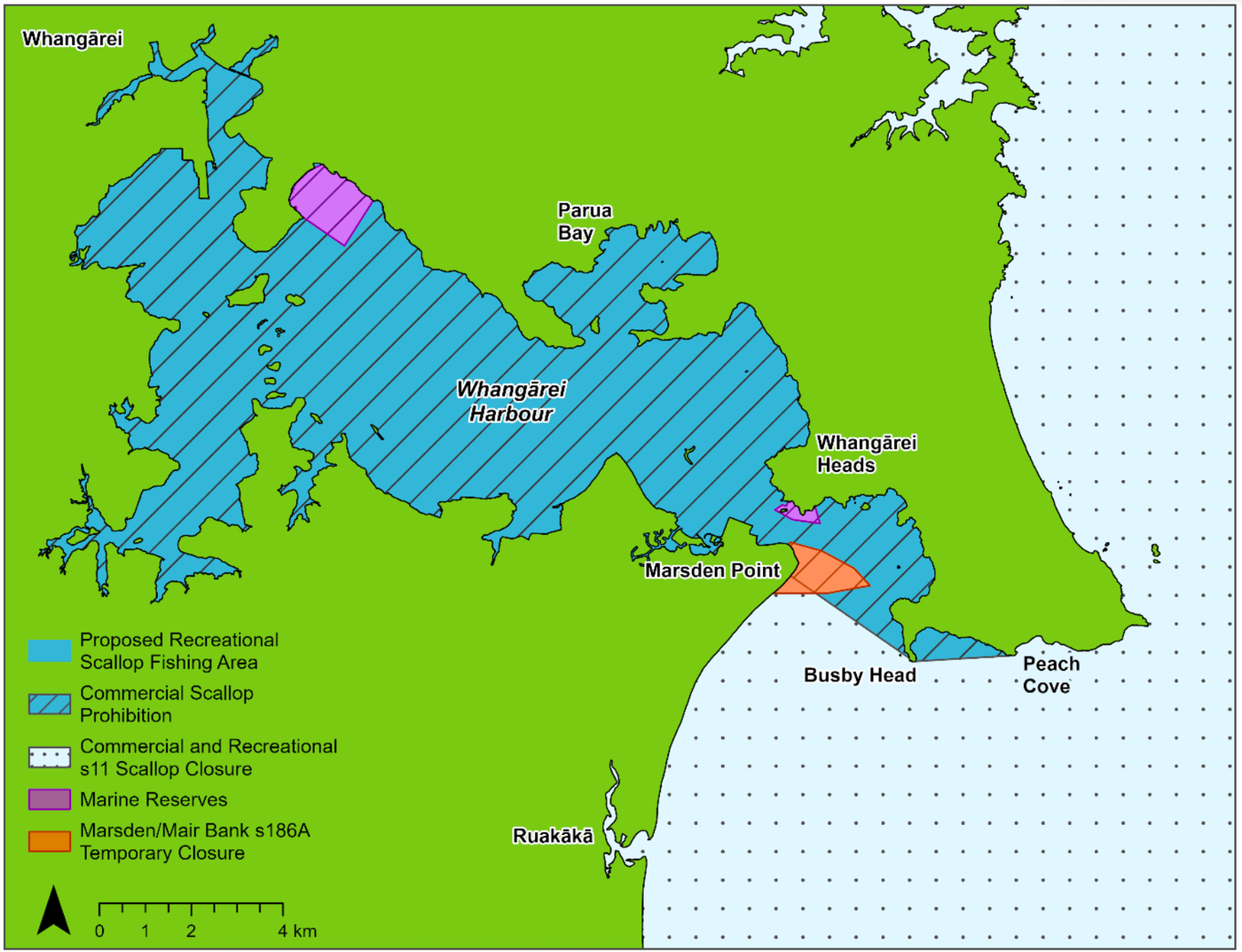
Two follow-up surveys, in 2024 and this year, have given Fisheries New Zealand enough confidence to consider a limited reopening, but only inside Whangārei Harbour itself. The rest of SCA 1, including nearby Bream Bay, would stay closed.
What the surveys found
The 2024 survey (New Zealand Fisheries Assessment Report 2025/16) was the first in New Zealand to use an underwater ROV and an AI detection model to count and measure scallops, alongside traditional dive and dredge sampling. It found genuine recovery in two spots: Eastern Coromandel around Mercury and Opito Bay, where biomass had climbed several times over since 2021, and Whangārei Harbour's Urquharts Bay, where biomass had roughly doubled over the same period. Elsewhere, including Bream Bay, there was little sign of improvement.
Preliminary results from a third survey this year, covering five of nine planned survey areas in the Harbour, suggest that stability has largely held since 2024. Combined, the surveyed areas hold an estimated 5.58 tonnes of scallops in meatweight above the current 100 mm minimum legal size, or 3.94 tonnes above a proposed new 105 mm size. Almost all of that sits in just two areas, Urquharts and McDonald Bank East (which covers McLeod and Munro Bays). Smugglers Bay, Frenchman's North and Urquharts deep have very few legal-sized scallops.
The density figures carry a warning sign, though. Density at Urquharts, a measure of how many scallops sit within a given patch of seabed, fell from 0.255 to 0.165 scallops per square metre between 2024 and 2026. Fisheries New Zealand puts this down to the smaller scallops counted in 2024 having grown into legal size since, without enough young scallops coming through behind them to replace that density. Scallops need to sit close together in reasonable numbers to spawn and fertilise successfully, so today's apparent stability could still taper off in future years regardless of what happens with the fishery.
The three options on the table
MPI has put forward three approaches, and submitters can support a combination of the second and third:
Option 1 keeps the current closure in place across all of SCA 1, including the Harbour, until a broader recovery strategy for Northland and Coromandel scallops is developed.
Option 2 would open a one-off four-week recreational season this fishing year, starting either 1 November 2026 or 14 February 2027, achieved through a temporary in-season lift to the TAC. Dredging would be banned for the season, leaving only diving and hand gathering. That temporary lift would expire automatically on 1 April 2027, taking the recreational allowance back to zero for the rest of the fishing year.
Option 3 would establish an ongoing eight-week season every year, beginning either 1 November 2027 or 1 February 2028, backed by a standing TAC increase and a package of permanent rule changes.
Under either reopening option, the TAC would rise from 8.5 to 9.7 tonnes, with the extra 1.2 tonnes going entirely to the recreational allowance. Fisheries New Zealand has based that figure on a conservative 15 percent harvest rate of the estimated available biomass, intended to leave the bulk of the population in the water to spawn.
Proposed changes to the fishing rules
If the Harbour reopens, MPI is also consulting on four changes to how scallops can be taken there:
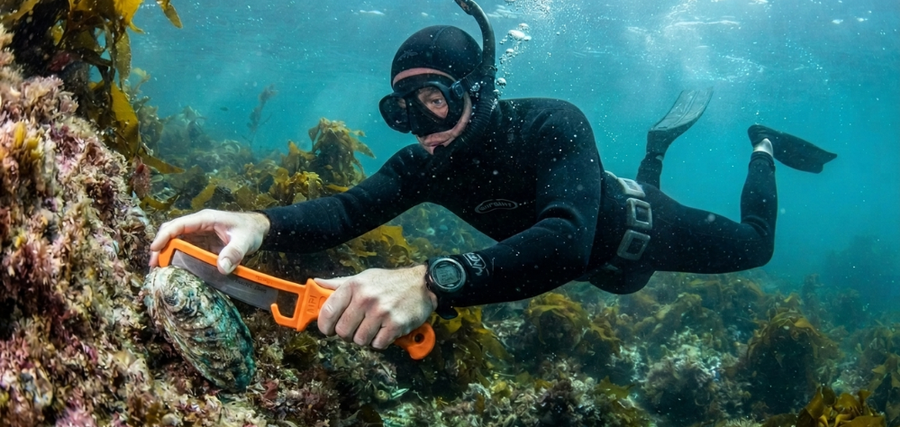
Dredging would be prohibited, leaving only diving and hand gathering. The Harbour is a recognised nursery habitat for snapper, and dredging disturbs the seabed and stirs up sediment that can clog scallops' gills and reduce feeding.
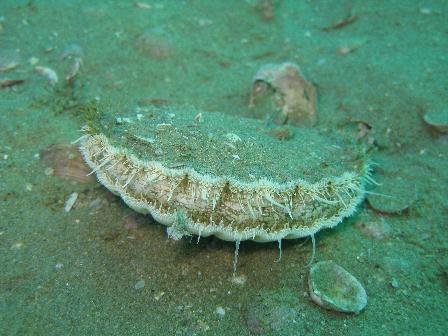
The daily limit would drop from 20 scallops per person to 10.
The minimum legal size would rise from 100 mm to 105 mm, giving more scallops the chance to reach the size where egg production climbs steeply. A year-one scallop carries roughly 500,000 eggs; by year four or five that figure can exceed 40 million.
A new accumulation limit would cap how many scallops a person can have in their possession at any time, set at three times the daily limit, aimed at discouraging stockpiling over multi-day trips.
The timing differs between these four changes. The dredging ban and reduced daily limit can both be put in place quickly through a Gazette notice, so either could feasibly apply to a season starting this coming spring or summer. The minimum legal size increase and the accumulation limit need a change to regulations instead, a slower process that MPI says realistically rules them out for a 2026 or early 2027 season, but which could be ready in time for a longer-term season from November 2027 or February 2028.
Why the caution
Fisheries New Zealand's main concern is that Whangārei Harbour would become the only place open to recreational scallop fishing anywhere on the northeastern coast, across both the Northland and Coromandel fisheries. Combined with four years of pent-up demand, that has FNZ expecting fishing pressure well above historical levels, potentially double. The agency points to the Kaikōura pāua fishery as a warning: when that fishery reopened after a lengthy closure, recreational pressure came in far higher than anyone had planned for.
The best available data on past recreational catch in the Harbour comes from a national panel survey conducted in 2017/18, which estimated around 149,300 scallops taken that season, though MPI notes the sample size behind that figure is small and the estimate carries real uncertainty.
Biosecurity is a factor too. Exotic Caulerpa, an invasive seaweed, has recently turned up in small patches within the Harbour. Both hand harvesting and dredging can fragment the weed and help it spread, and boat anchoring is considered a particularly high-risk way for it to move between sites.
Iwi with gazetted rohe moana in the Harbour, including Ngāti Kahu o Torongare, Te Parawhau, Ngāti Tu and Patuharakeke, told Fisheries New Zealand during initial engagement that they do not support a reopening at this stage, saying the fishery has not yet recovered enough to support the full exercise of customary fishing rights. Two mātaitai reserve applications covering parts of the proposed reopening area are also currently out for separate consultation.
Have your say
Submissions close 5pm, Friday 18 September 2026, and can be emailed to FMSubmissions@mpi.govt.nz using the submission template on the Fisheries New Zealand website, where the full consultation document and related survey reports are also published.